Info
Often referred to as the Combed Russula, this mushroom is a master of camouflage, blending perfectly into the golden-brown leaf litter of deciduous forests. While it lacks the flashy "stop-light" reds of some of its cousins, it is a fascinating find for those who appreciate the subtle architecture of fungi. Its name comes from the distinct, comb-like ridges at the edge of its cap, making it look like a piece of forest floor pottery.
🔍 How to Identify
- 👒 The Cap: Usually 4–8 cm wide, the cap is a muted ochre, straw-yellow, or dull brown. It starts convex but flattens out with a central dip as it matures, often feeling slightly sticky or "tacky" when damp.
- 🧶 Combed Margins: Look closely at the edge of the cap; you will see deep, radial grooves or ridges that look as though they were pressed with the tines of a fork. This "pectinate" margin is its signature trait.
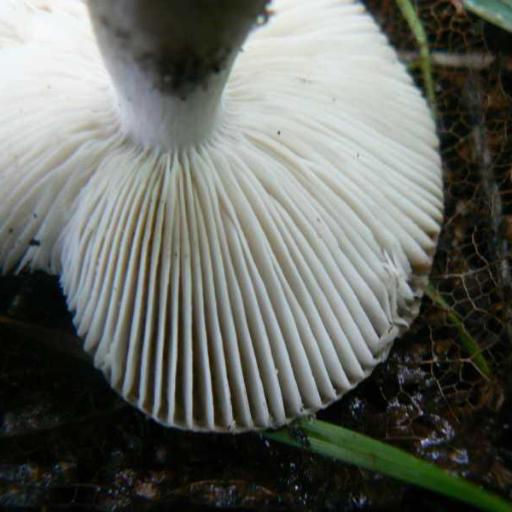
- 🥛 Gills and Stem: The gills are crowded and range from white to pale cream. The stem is white, cylindrical, and notably brittle—a classic "Russula" trait—snapping like a piece of chalk rather than bending.
🌲 Habitat & Ecology
- 🌳 Broadleaf Buddy: This fungus is mycorrhizal, forming a vital subterranean partnership with the roots of trees. It is most frequently found in the company of Oak, Beech, and occasionally Pine.
- 🍂 Seasonality: It is a summer and autumn specialist, typically popping up after heavy rains when the humidity in the forest floor peaks. You’ll find it nestled in moss or peeking through thick layers of fallen leaves.
⚠️ Safety & Toxicity
- 🛑 WARNING: This mushroom is considered inedible. Do not attempt to eat it.
- 🤢 Gastrointestinal Distress: While not usually fatal, Russula pectinata and its close relatives can cause significant stomach upset, nausea, and vomiting.
- 👅 The Taste Test: Mycologists often note that this species has an unpleasant, slightly acrid, or "oily" taste. In the world of Russulas, a peppery or acrid flavor is a biological "keep away" sign.
✨ Fun Fact
The specific name pectinata is derived from the Latin word pecten, which means "comb." If you were to look at the cap's edge under a magnifying glass, the ridges resemble the teeth of an ancient grooming comb!
More Details







