Info
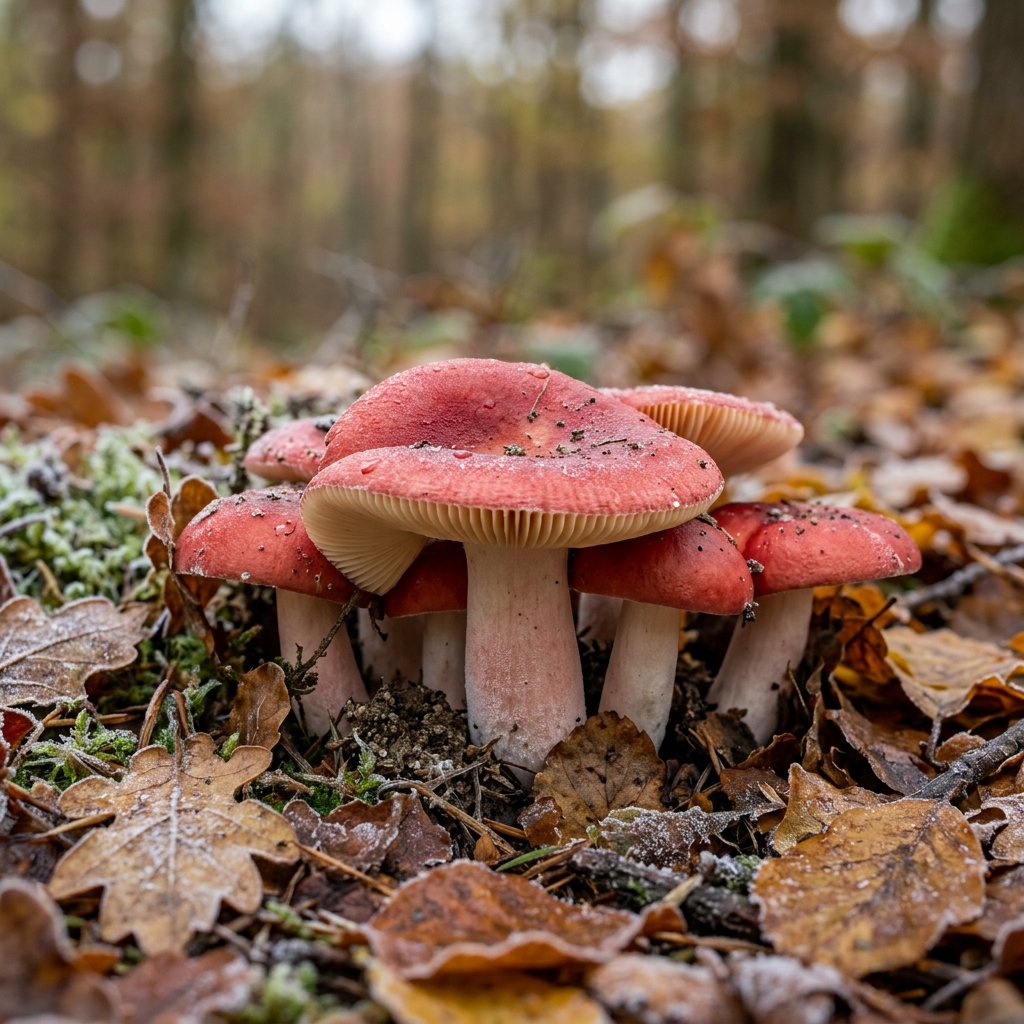
Known as the Rosy Russula, this mushroom looks like a delicate treasure dropped on the forest floor. With its matte, rose-pink cap and snow-white gills, it is often considered one of the most beautiful members of the Russulaceae family. In some circles, it is called the "Hard-fleshed Brittlegill" due to its surprisingly firm texture compared to its more fragile cousins.
🔍 How to Identify
- 🎨 The Cap: Displays a stunning range of rose-red, carmine, or pale pink. The surface is matte and felt-like, often cracking slightly in dry weather.
- ❄️ The Gills: Close together and brittle, these stay a brilliant white even as the mushroom ages, rarely showing the yellowing seen in other species.
- 🥛 The Stem: Usually pure white, but look closely—many specimens feature a soft "blush" of pink or red bleeding down from the cap onto the stalk.
🌲 Habitat & Ecology
- 🌳 Tree Partners: This mushroom is mycorrhizal, meaning it lives in a symbiotic relationship with trees. It is most commonly found under the shade of Beech and Oak trees in temperate forests.
- 🍂 Leaf Litter Explorer: It prefers well-drained, acidic soils and is often found peeking through thick layers of fallen leaves from mid-summer through late autumn.
⚠️ Safety & Toxicity
- 🛑 WARNING: While not classified as a "deadly" mushroom, the Rosy Russula is generally considered inedible.
- 🤢 The "Sickener" Risk: Red-capped Russulas are notoriously difficult to tell apart. Many similar-looking red species, such as Russula emetica (The Sickener), cause severe gastrointestinal distress, vomiting, and cramps.
- 👅 Bitter Taste: Russula rosea itself is known for having a very hard texture and a bitter, unpalatable flavor that does not improve with cooking.
✨ Fun Fact
Unlike most Russula mushrooms, whose skin can be peeled away from the cap like a banana, the Rosy Russula is a "rebel"—its skin is firmly attached to the flesh and almost impossible to peel without a knife!
More Details