Info
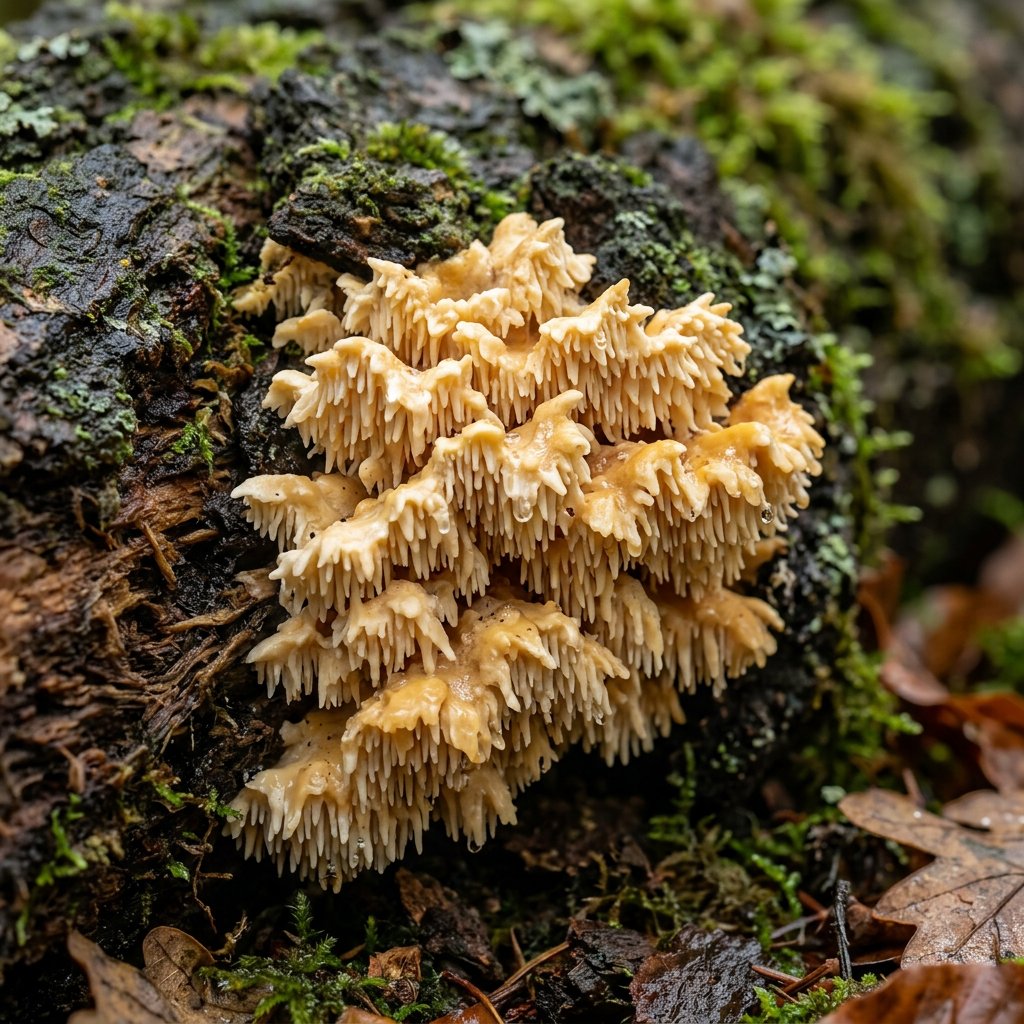
Often called the Marshmallow Polypore, this fungus is a master of disguise that transforms old hardwood trees into cascading displays of white, icicle-like teeth. While it looks soft and fluffy from a distance, its texture is surprisingly tough and resilient. In the world of forest ecology, it plays the role of a silent recycler, specializing in breaking down the heartwood of deciduous trees.
🔍 How to Identify
- 🦷 The Teeth: Unlike mushrooms with gills, this species features long, irregular "teeth" or flattened pores that hang downward, resembling dripping wax or tiny stalactites.
- ☁️ Color and Shape: It typically appears as a creamy-white or buff-colored mass. It often grows flat against the bark (resupinate) but can form small, overlapping shelves.
- 🧽 Texture: When young, it feels like a firm sponge or a marshmallow, but it becomes increasingly corky and tough as it matures.
🌲 Habitat & Ecology
- 🌳 The Tree Surgeon: It is primarily found on living or dead hardwoods, with a strong preference for Oaks and Maples. It causes a white heart-rot, meaning it slowly breaks down the structural center of the tree.
- 🔄 Perennial Presence: It is a hardy fungus that can often be found in the same spot year after year, slowly expanding its territory across the trunk as it processes nutrients.
⚠️ Safety & Toxicity
- 🚫 Status: NON-EDIBLE.
- ⚠️ Details: WARNING: While Sarcodontia pachyodon is not known to be deadly, it is considered inedible due to its tough, corky, and bitter nature. It is never recommended for consumption.
- 🐾 Pets and Kids: Because it often grows within reach on lower tree trunks, keep an eye on curious pets; while not highly toxic, it can cause significant digestive upset if chewed or swallowed.
✨ Fun Fact
The genus name Sarcodontia comes from the Greek words for "fleshy" and "tooth," perfectly describing the strange, meat-like toughness of its dental-looking underside!
More Details







