Info
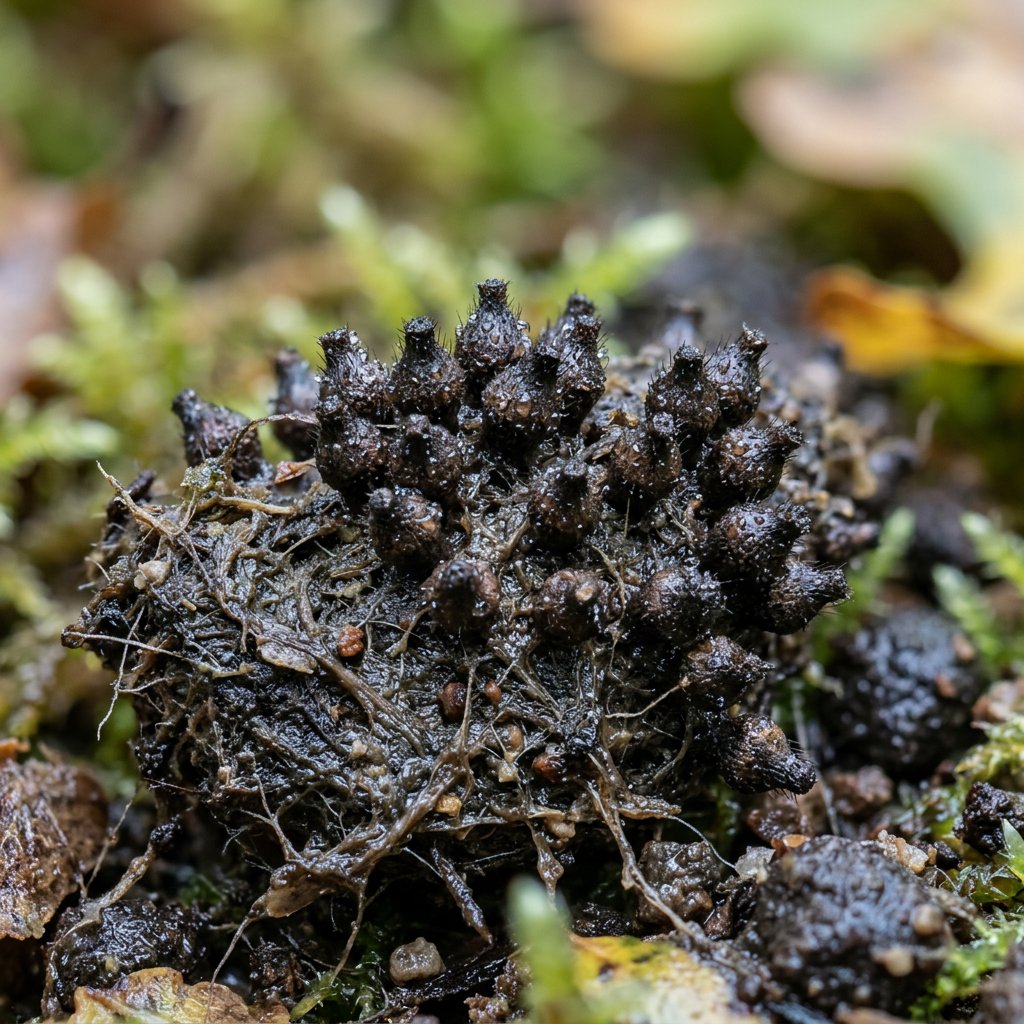
Often overlooked due to their microscopic size and "unconventional" choice of home, Schizothecium fungi are the unsung recycling specialists of the pasture. These tiny, flask-shaped organisms belong to a group known as "coprophilous" fungi—literally meaning "dung-loving"—and they play a vital role in breaking down animal waste into nutrient-rich soil. To the naked eye, they may look like mere black dots, but under a lens, they reveal a world of intricate scales and bristles.
🔍 How to Identify
- 🏺 The Perithecia: Unlike the classic umbrella-shaped mushroom, these appear as tiny, dark, flask-shaped structures (perithecia) that are often partially buried in their substrate.
- 🖤 Scaly Texture: Many species in this genus are covered in distinctive clumps of hairs or "squamules" (scales) around the neck of the flask, giving them a fuzzy or textured appearance.
- 🔬 Microscopic Spores: Their true identity is often hidden in their spores, which are dark, smooth, and possess a "primary appendage"—a tail-like structure visible only under a microscope.
🌲 Habitat & Ecology
- 🐄 The Dung Specialist: You will almost exclusively find Schizothecium growing on the manure of herbivores, such as horses, cows, rabbits, or sheep. They are a key part of the "succession" of fungi that appear as dung ages.
- 🌪️ Pressure Launchers: These fungi are masters of ballistics. As they mature, internal pressure builds up until they "shoot" their spores several centimeters away, aiming for clean grass so they can be eaten by another animal and begin their lifecycle again.
⚠️ Safety & Toxicity
- 🚫 WARNING: Not Edible. Schizothecium species are not considered culinary mushrooms. Their microscopic size makes them impossible to harvest, and their association with animal waste carries a high risk of bacterial contamination.
- 🧤 General Hygiene: While not known to be "poisonous" through skin contact, it is highly recommended to wear gloves and wash your hands thoroughly if you are handling the substrates (dung) where these fungi live to avoid pathogens like E. coli or parasites.
✨ Fun Fact
To ensure their offspring survive, Schizothecium and their relatives can sense light! They use "phototropism" to aim the necks of their flask-shaped bodies toward the sun, ensuring their spores are fired into open spaces rather than getting stuck in the shade of a nearby blade of grass.
More Details