Info
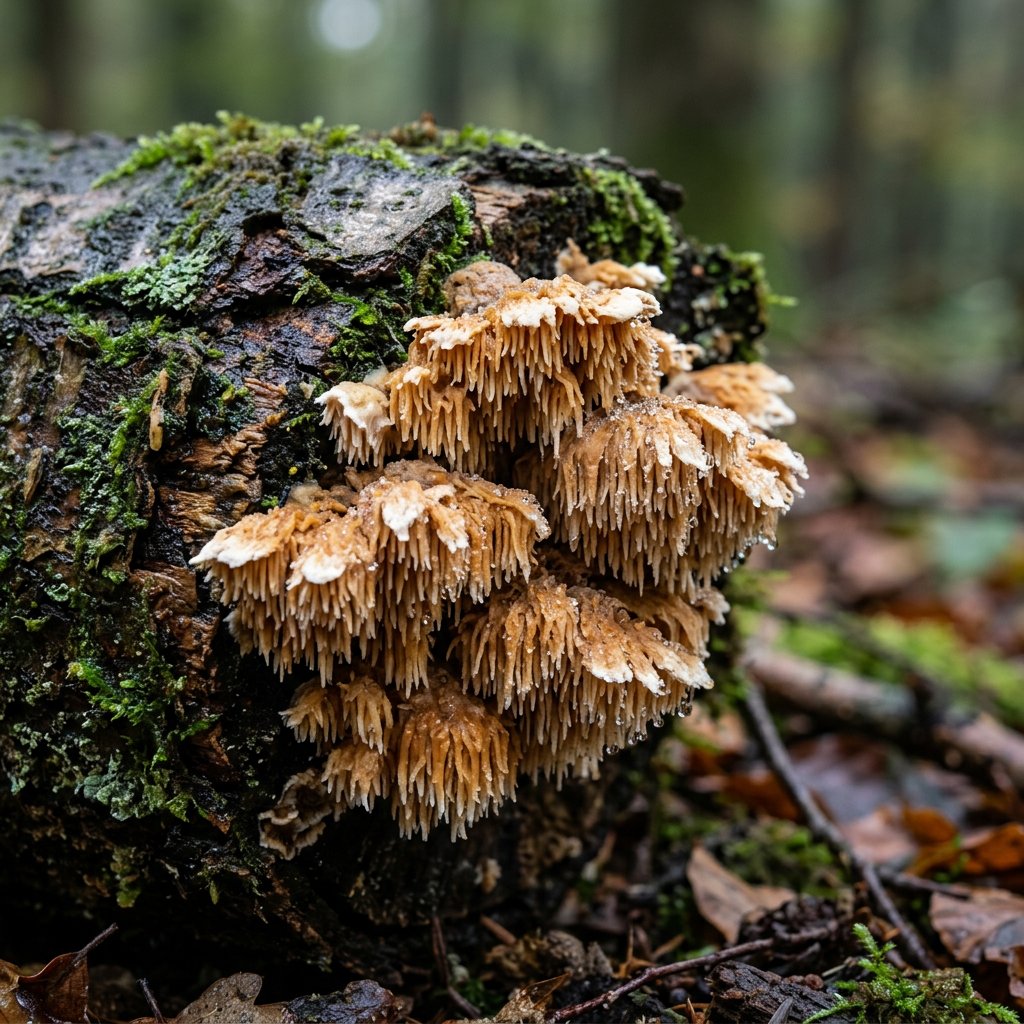
Commonly known as the Ochre Spreading Tooth, this fungus is a persistent decorator of fallen hardwood. It often appears as a spreading crust that looks like spilled ochre paint, occasionally curving outward at the edges to form tiny, velvet-capped shelves. In the hidden world of forest decomposers, this mushroom plays a vital role in recycling nutrients by breaking down old timber to feed the forest floor.
🔍 How to Identify
- 🦷 The "Teeth": Unlike common mushrooms with gills or pores, the underside of this species is covered in tiny, crowded spines (teeth) about 2mm long. They are typically a warm pinkish-ochre or orange-brown color.
- 👒 The Cap: When it forms caps, they are small, thin, and overlapping. The upper surface is velvety to the touch and usually displays concentric "zones" of cream, buff, and orange.
- 🪵 Growth Habit: It is "resupinate," meaning it often grows completely flat against the wood like a textured skin, only peeling away to form caps when it needs more room to release spores.
🌲 Habitat & Ecology
- 🍂 Substrate: This fungus is a specialist of dead deciduous wood. You will most often find it on the underside of fallen branches from oak, beech, or birch trees.
- ❄️ Resilience: It is a hardy survivor and can be found year-round. It often dries out and becomes brittle during droughts, only to "reanimate" and continue growing after a heavy rain.
⚠️ Safety & Toxicity
- 🚫 Status: WARNING: NOT EDIBLE. While Steccherinum ochraceum is not documented as being deadly, it is considered inedible due to its tough, leathery, and cork-like texture.
- 🐕 Details: There is no nutritional value for humans or pets. If your dog happens to chew on a branch covered in this fungus, it is unlikely to cause severe poisoning, but the tough fibers could cause mild digestive upset.
✨ Fun Fact
- 🇮🇹 Little Sticks: The genus name Steccherinum is derived from the Italian word "steccherino," which translates to "little stick" or "toothpick"—a perfect description for the tiny spines that cover its underside!
More Details