Info
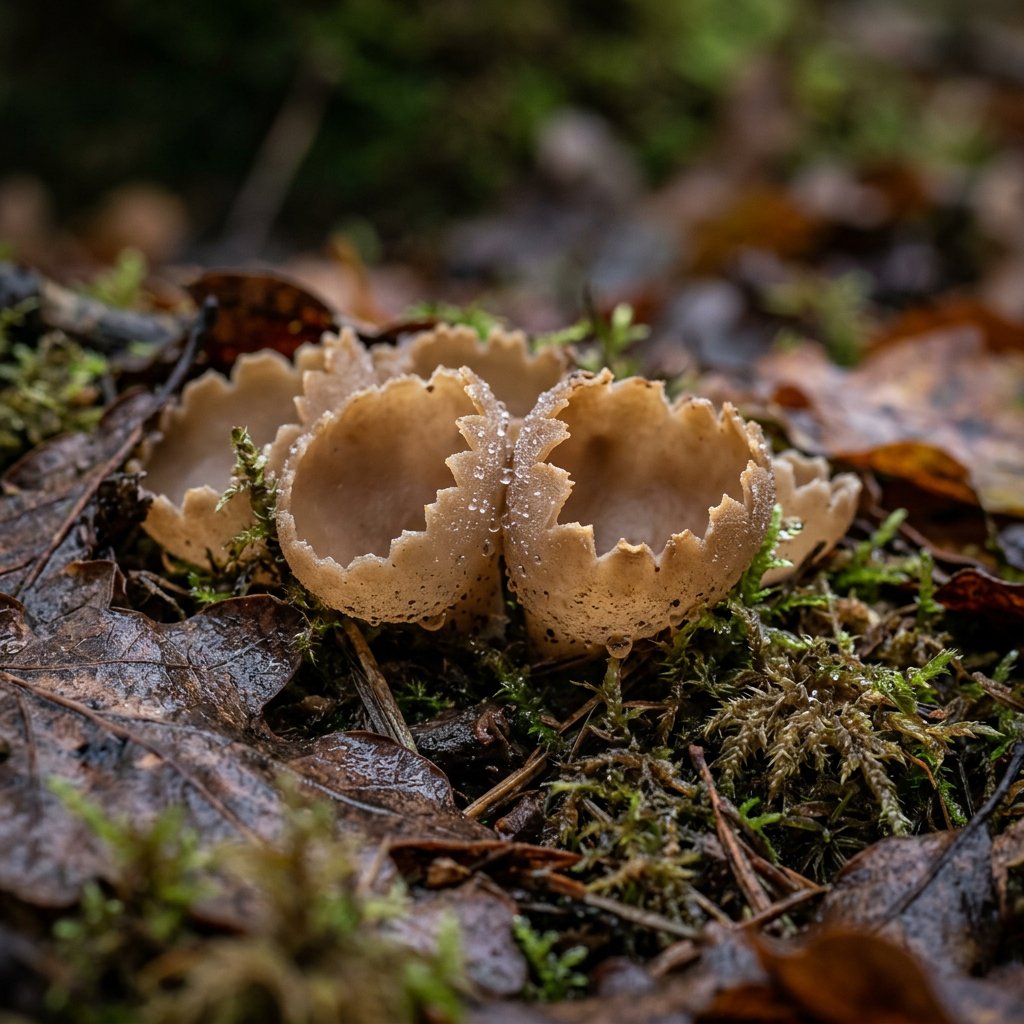
Looking like a lost piece of fine porcelain abandoned by a woodland sprite, Tarzetta catinus—commonly known as the Greater Cup—is a delicate marvel of the fungal world. These elegant, bowl-shaped fungi often huddle together in the leaf litter, appearing like tiny chalices waiting to catch the morning dew. While they lack the vibrant colors of some of their forest neighbors, their perfectly sculpted form makes them a favorite find for sharp-eyed foragers and nature photographers.
🔍 How to Identify
- 🥣 The Cup: It features a deep, bowl-like shape (reaching up to 5cm across) that is typically a pale cream, ochre, or sandy tan color.
- 〰️ The Margin: The rim of the cup is rarely smooth; it usually has a finely notched, "toothed," or scalloped edge that gives it a sophisticated, ruffled appearance.
- 🌱 The Base: Unlike some flat cup fungi, this species often has a short, distinct stem (stipe) that is frequently buried in the soil or hidden beneath decaying leaves.
🌲 Habitat & Ecology
- 🍂 Leaf Litter Lover: You will most likely spot these in the summer and autumn, tucked away in deciduous woodlands, particularly favoring the rich soil beneath Beech and Oak trees.
- ♻️ The Recycler: As a saprobic fungus, it plays a vital role in the forest ecosystem by breaking down complex organic matter, turning dead leaves into nutrient-rich soil for the trees above.
⚠️ Safety & Toxicity
- 🛑 WARNING: Inedible. Tarzetta catinus is not considered a food source and should never be consumed.
- 🧪 Chemical Risk: Many species of cup fungi contain unknown toxins or can be easily confused with highly poisonous "False Morels." Because it has no culinary value and carries a high risk of misidentification, it is strictly for "eyes only."
✨ Fun Fact
The specific epithet catinus is Latin for "a deep dish" or "bowl." This name is incredibly literal, as the fungus looks so much like a dinner plate that early mycologists couldn't resist the comparison!
More Details