Info
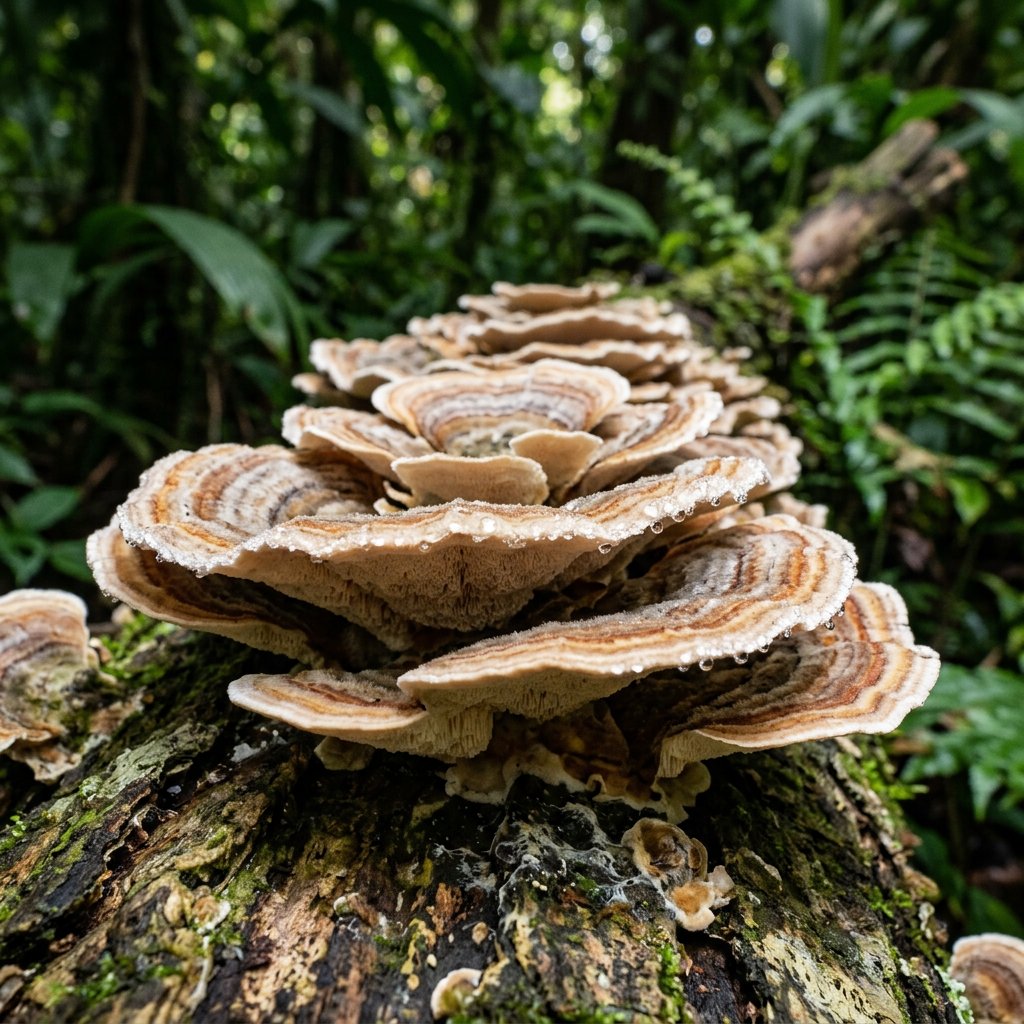
Often called the Cuban Trametes, this resilient shelf fungus is a master of the humid subtropics. Found clinging to fallen logs in warm, damp forests, it acts as one of nature’s most efficient cleanup crews. Its clean, fan-like appearance and subtle pastel hues make it a favorite for hikers and foragers exploring the woods of the Gulf Coast and the Caribbean.
🔍 How to Identify
- 🍄 The Shelf Shape: It grows as a sessile (no stem) bracket, often forming overlapping tiers or "shingles" that protrude horizontally from dead wood.
- 🎨 Zoned Colors: The upper surface is relatively smooth and features subtle concentric "zones" of color. These usually range from creamy white to a sun-baked tan or a soft, pale ochre.
- 🕳️ Pore Surface: If you flip it over, you won't find gills. Instead, the underside is covered in tiny, circular pores. In fresh, young specimens, this pore surface may have a delicate, waxy texture and a faint pinkish tint.
🌲 Habitat & Ecology
- 🌳 Hardwood Specialist: This fungus is a "white rot" agent, meaning it specializes in breaking down lignin in dead hardwood trees. It leaves the wood feeling soft, white, and stringy as it recycles nutrients back into the soil.
- 🌦️ Tropical Lover: Unlike many mushrooms that prefer cool autumn air, Trametes cubensis thrives in the heat. It is most commonly spotted in Florida, the Caribbean, and Central America after heavy tropical rainstorms.
⚠️ Safety & Toxicity
- 🚫 WARNING: Trametes cubensis is strictly considered inedible.
- 🪵 Tough as Wood: While not known to be "deadly" in the way some mushrooms are, its texture is extremely corky, tough, and woody. Attempting to eat it would be like chewing on a piece of leather or cardboard, and it may cause significant digestive upset.
- 🐾 Pet Safety: While unlikely to be attractive to pets due to its lack of scent and hard texture, it should still be kept away from curious dogs who might try to use it as a chew toy.
✨ Fun Fact
Trametes cubensis is a close relative of the famous medicinal "Turkey Tail" mushroom. While it doesn't share the same colorful, fuzzy stripes as its cousin, it is being studied by scientists for its potential ability to break down environmental pollutants in contaminated soil!
More Details







