Info
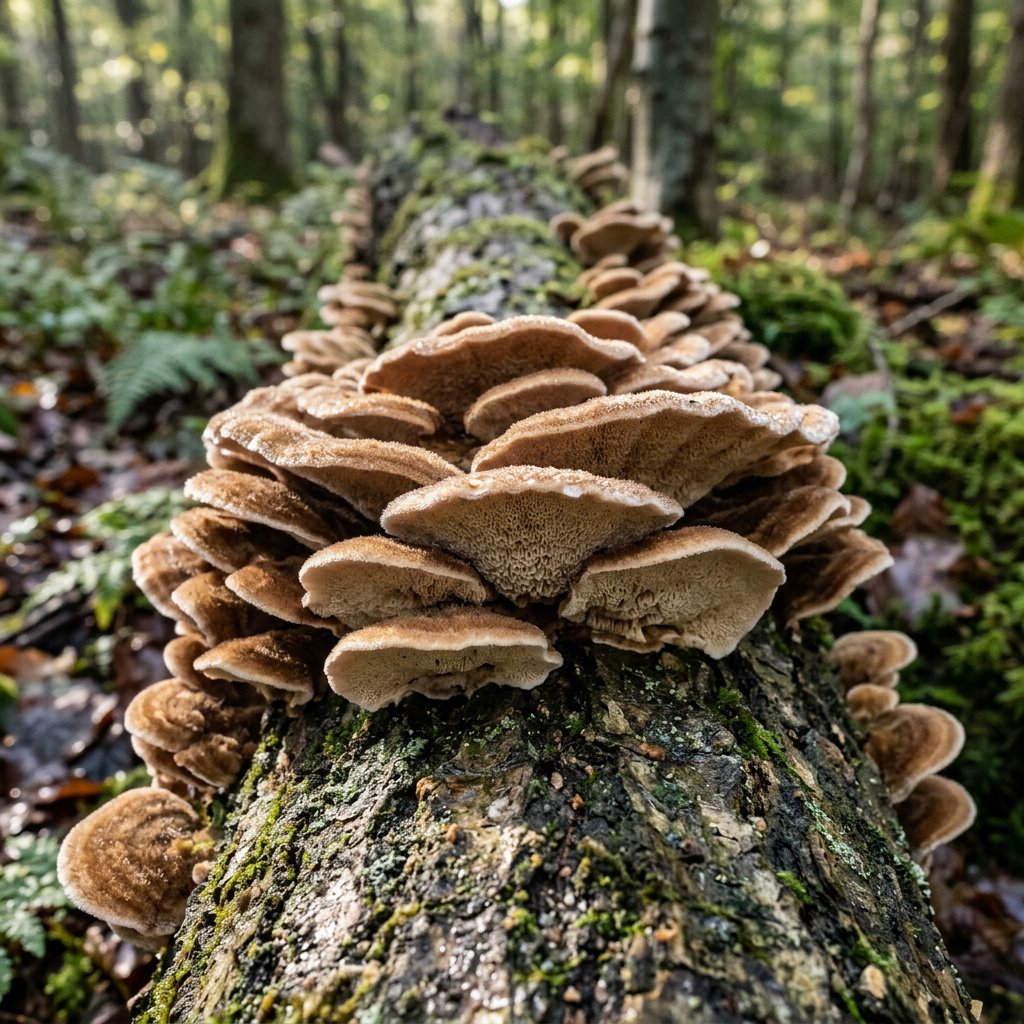
Trametopsis cervina is a subtle forest dweller often overlooked by casual hikers, but its velvety, "deer-colored" caps tell a story of forest decay and rebirth. Often called the Deer-colored Bracket, this fungus plays a vital role as a master decomposer, turning fallen hardwood back into nutrient-rich soil. It is a bit of a shape-shifter, appearing as a flat crust one day and curling into small, shelf-like brackets the next as it matures.
🔍 How to Identify
- 🍄 The Cap: The surface is velvety or hairy, usually featuring warm shades of tan, ochre, or "cervine" (a specific reddish-brown named after a deer’s coat).
- 🦷 The Pores: Look closely at the underside; what start as circular pores often become jagged and "toothy" (irpicoid) as the mushroom ages, resembling a miniature cave of stalactites.
- 🪵 The Growth Form: It often grows flat against the wood (resupinate) with the edges curling outward to form small, thin, overlapping shelves.
🌲 Habitat & Ecology
- 🌳 The Hardwood Specialist: You will almost exclusively find this fungus on dead deciduous wood. It is a "white rot" fungus, meaning it selectively breaks down lignin, eventually leaving the wood soft, white, and stringy.
- 🌦️ Year-Round Presence: While it primarily produces spores in the late summer and autumn, its tough, corky body is persistent and can often be seen clinging to fallen logs throughout the winter months.
⚠️ Safety & Toxicity
- 🚫 Status: WARNING: Inedible. While not considered a "deadly" mushroom, Trametopsis cervina is far too tough and leathery to be consumed. It has no culinary value.
- 🐾 General Caution: As with most wild bracket fungi, it should be kept away from curious pets. Ingesting tough, fibrous fungal matter can cause gastrointestinal distress or physical blockages in dogs or cats.
✨ Fun Fact
Although it looks remarkably similar to the common "Turkey Tail" or other Trametes species, DNA testing revealed it is distinct enough to merit its own genus. Its name Trametopsis literally means "looking like Trametes," proving that in the fungal world, looks can be very deceiving!
More Details