Info
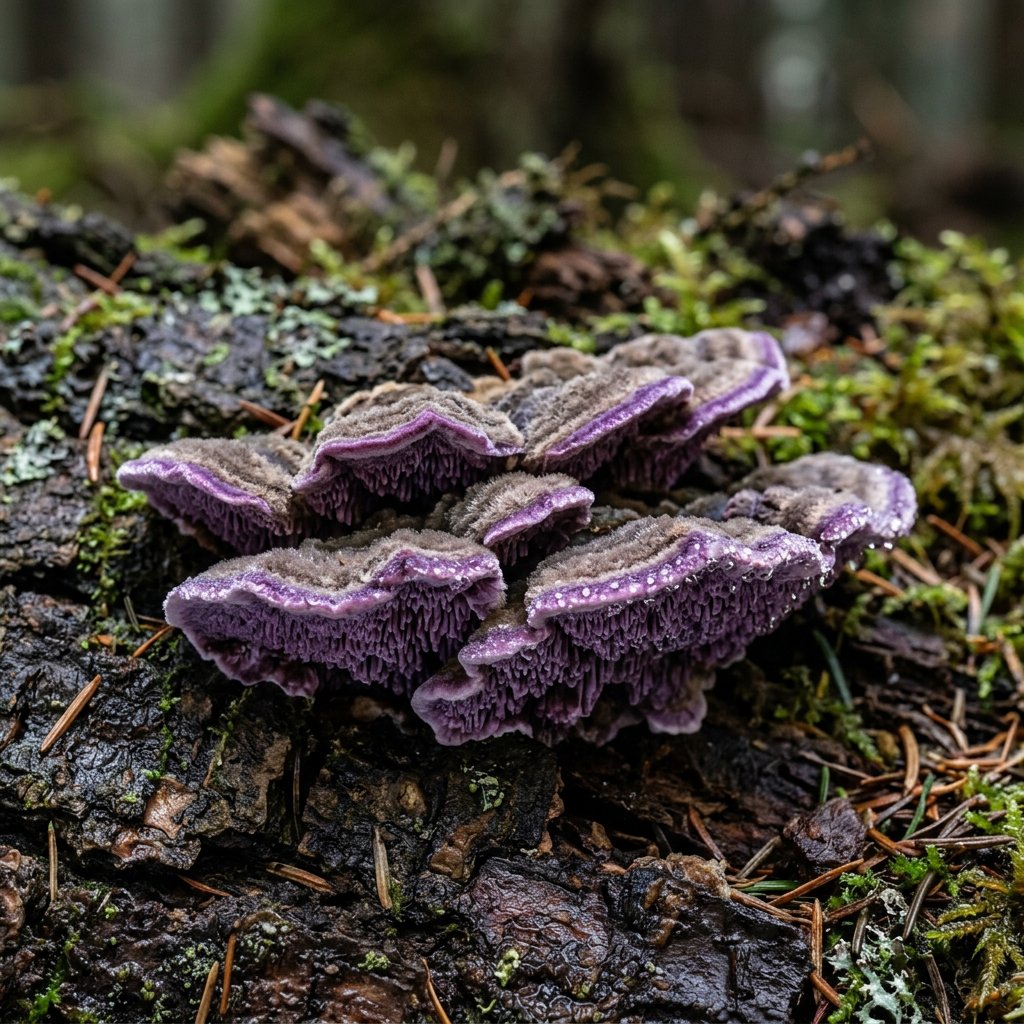
Known as the Violet Toothed Polypore, this fungus acts like a vibrant splash of neon paint on the decaying logs of evergreen forests. It is one of the most common "shelf" fungi you’ll encounter during a woodland hike, often covering entire fallen trees in tiered, purple-rimmed layers. In folklore, these colorful clusters were sometimes called "fairy steps" for their perfectly arranged, ascending growth.
🔍 How to Identify
- 🎨 The "Toothed" Underside: Unlike common mushrooms with gills, the underside of this fungus starts with tiny purple pores that eventually break down into jagged, tooth-like structures as it matures.
- ☁️ Hairy Caps: The top surface is typically grayish-white, felt-like or "hairy" to the touch, and often features faint concentric rings of color.
- 💜 The Violet Edge: When fresh and young, the outermost margin of the shelf glows with a distinct, vivid violet or lilac hue that fades to brown or tan as the specimen dries.
🌲 Habitat & Ecology
- 🌲 The Conifer Specialist: This mushroom is a "saprobe," meaning it eats dead wood. It specifically targets fallen conifers like Pine, Fir, and Spruce, playing a vital role in recycling nutrients back into the forest floor.
- 🏘️ Social Climbers: You will rarely find just one; they almost always grow in massive, overlapping "rosettes" or long rows that can colonize a single log for several years until the wood is fully decomposed.
⚠️ Safety & Toxicity
- 🚫 WARNING: Inedible. While Trichaptum abietinum is not considered a "deadly" poisonous mushroom, it is categorized as inedible due to its tough, leathery, and corky consistency.
- 🤢 Digestive Distress: Attempting to consume this fungus would likely result in significant digestive upset, and its texture is compared to chewing on flavored cardboard or rubber.
✨ Fun Fact
Look closely at the top of older specimens—they often appear green! This isn't the mushroom's natural color; because the cap is so fuzzy, it frequently traps moisture, allowing tiny colonies of green algae to grow right on top of the mushroom in a miniature symbiotic relationship.
More Details