Info
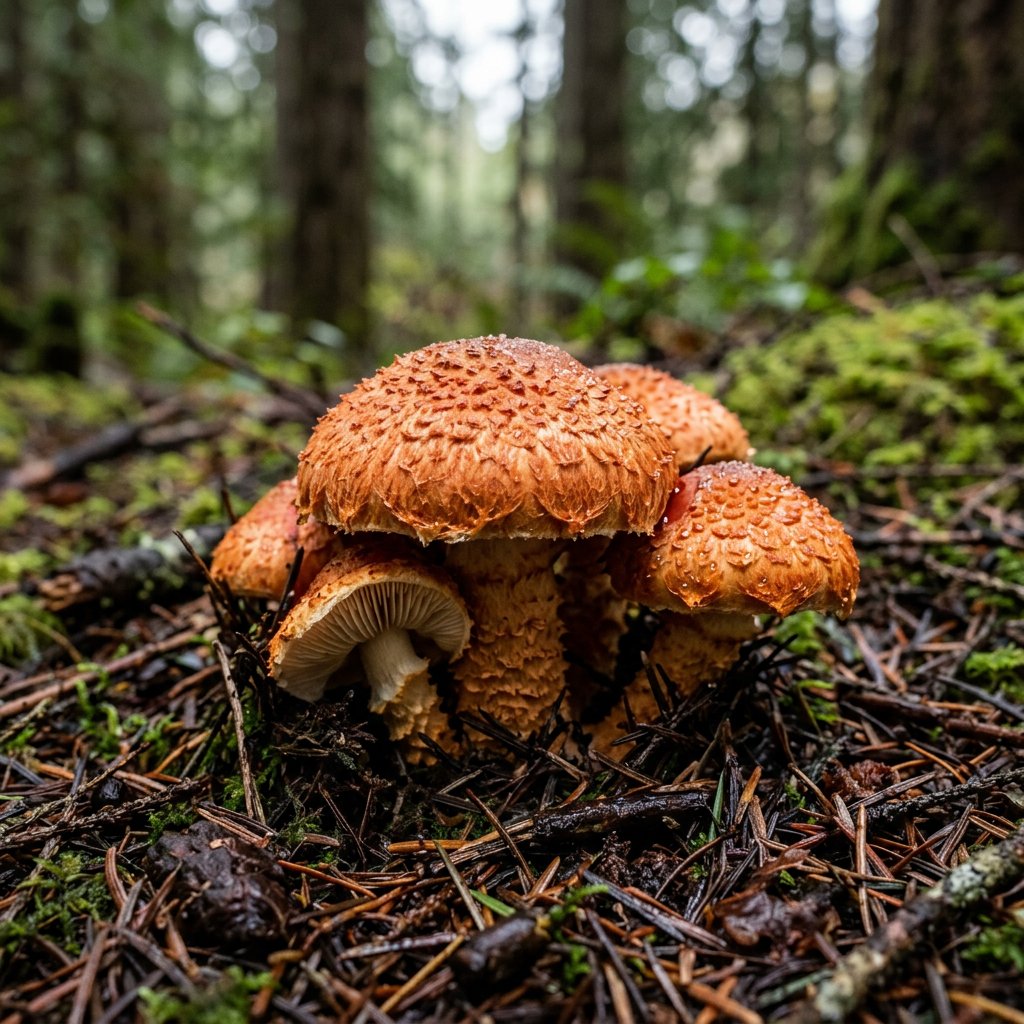
The Tricholoma aurantium, often called the "Golden Knight" or "Orange Knight," is a stunning autumnal find that looks as if it was dipped in liquid sunshine. Often found peeking through the needle cast of pine forests, its brilliant orange hues and intricately patterned stem make it a favorite for woodland photographers. While it adds a regal touch to the forest floor, this knight is more of a visual treat than a culinary one.
🔍 How to Identify
- 🍄 The Cap: A broad, convex cap that ranges from bright orange to burnt sienna; it often feels slightly sticky or "viscid" when the weather is damp.
- 🧣 The Girdled Stem: The most striking feature—the stem is covered in dense orange scales up to a distinct line, leaving a clean white zone at the very top, almost like it’s wearing a decorative sock.
- ⚪ The Gills: Crowded, white gills that may develop small brownish spots or stains as the mushroom matures.
🌲 Habitat & Ecology
- 🌲 Root Connections: This mushroom is mycorrhizal, meaning it lives in a symbiotic partnership with trees. It is almost exclusively found near conifers, particularly pines and spruces.
- 🪨 Soil Preference: It has a "refined" palate, preferring lime-rich (calcareous) soils. If you find one, it is a great indicator that the ground beneath your feet is alkaline.
⚠️ Safety & Toxicity
- 🚫 WARNING: Inedible. While not typically considered deadly, Tricholoma aurantium is documented to cause gastrointestinal distress in many individuals.
- 🤢 The Reaction: Consuming this mushroom can lead to severe nausea, cramping, and vomiting. Additionally, its bitter taste and strong, mealy odor make it very unappealing to the palate.
✨ Fun Fact
- 🥒 The Pastry Sniff: If you crush a piece of the flesh, you’ll notice a very distinct scent. It smells remarkably like fresh cucumber or raw pastry dough—a common trait in the Tricholoma family known as a "farinaceous" odor!
More Details