Info
The Matsutake, or "Pine Mushroom," is the crown jewel of the fungal world, especially in Japanese culture where it symbolizes longevity and the arrival of autumn. Often referred to as "the king of mushrooms," it is famous for its intoxicating, spicy-sweet aroma that enthusiasts describe as a mix of cinnamon-scented "red hots" and earthy pine. Historically, it was reserved for the nobility, and even today, finding one hidden under pine needles is like discovering buried treasure.
🔍 How to Identify
- 👃 The Scent: This is its most famous trait—a powerful, spicy aroma that smells like a combination of cinnamon, pine resin, and "clean" earth.
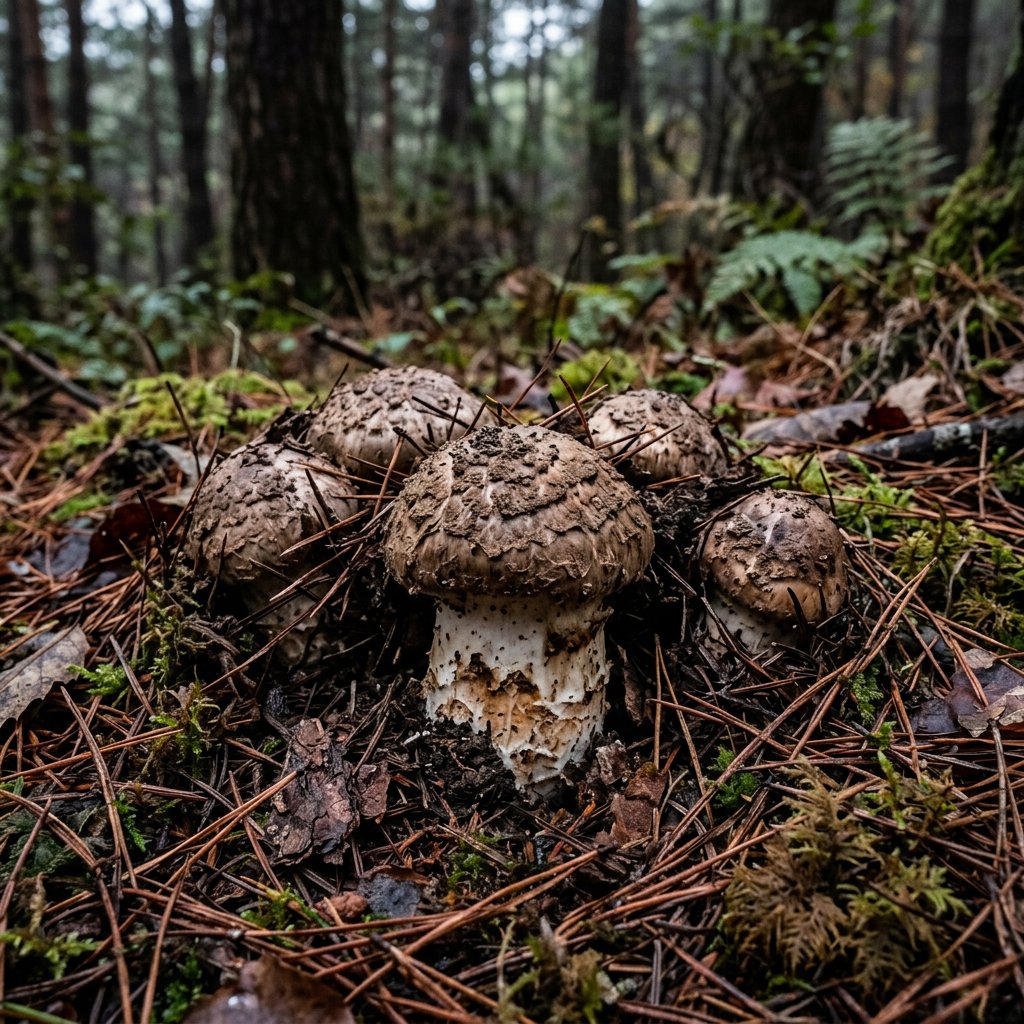
- 🍄 The Cap: Broad and convex, ranging from cinnamon-brown to off-white. It is often covered in fine, brownish scales that look slightly shaggy.
- 🪵 The Stem: Extremely firm, thick, and white. Unlike many mushrooms that snap easily, the Matsutake is dense and "meaty," often featuring a brownish ring (annulus) where the veil was attached.
- ⚪ The Gills: The underside features close, white gills that are often tucked behind a protective cottony veil when the mushroom is young.
🌲 Habitat & Ecology
- 🤝 The Symbiotic Marriage: This mushroom is mycorrhizal, meaning it lives in a complex partnership with trees—specifically Red Pine, Hemlock, and Douglas Fir. It swaps minerals for sugars through the tree's roots.
- 🍂 Hidden Shiro: It grows from an underground fungal mat called a "shiro." Because it often stays partially buried under thick layers of fallen needles (duff), foragers have to look for subtle "mush-bumps" on the forest floor rather than fully visible caps.
⚠️ Safety & Toxicity
- 🚨 WARNING: While the Matsutake is a world-class edible, it has dangerous look-alikes. Beginners often confuse it with the toxic Amanita smithiana or various Catathelasma species.
- 🛑 Professional ID Required: Because some white mushrooms can be deadly, never consume a wild mushroom unless it has been identified by a local mycologist. The Amanita look-alike can cause severe kidney failure.
- 🐕 Pet Safety: While non-toxic to humans (if correctly identified), wild mushrooms should generally be kept away from pets as their digestive systems may react differently.
✨ Fun Fact
- 🌲 In Japan, the finest Matsutake specimens can sell for over $1,000 per kilogram! They are considered such a prestigious gift that they are often presented in elaborate wooden boxes lined with moss and ferns.
More Details
| Hymenium Type | Lamella |
| Stipe Character | Ring Stipe |
| Spore Print Color | White |
| Mushroom Cap Shape | Convex Mushroom Cap |
| Hymenium Attachment | Adnexed Hymenium Attachment |
| Mushroom Ecological Type | Mycorrhiza |







