Info
Often called the Soap Tricholoma or the Soap-scented Knight, this mushroom is a master of disguise in the fungal world. Its physical appearance is famously variable, ranging from drab olive to pale grey, leading many foragers to mistake it for other species. However, its most defining characteristic is its unmistakable scent—reminiscent of old-fashioned laundry soap or freshly scrubbed floors.
🔍 How to Identify
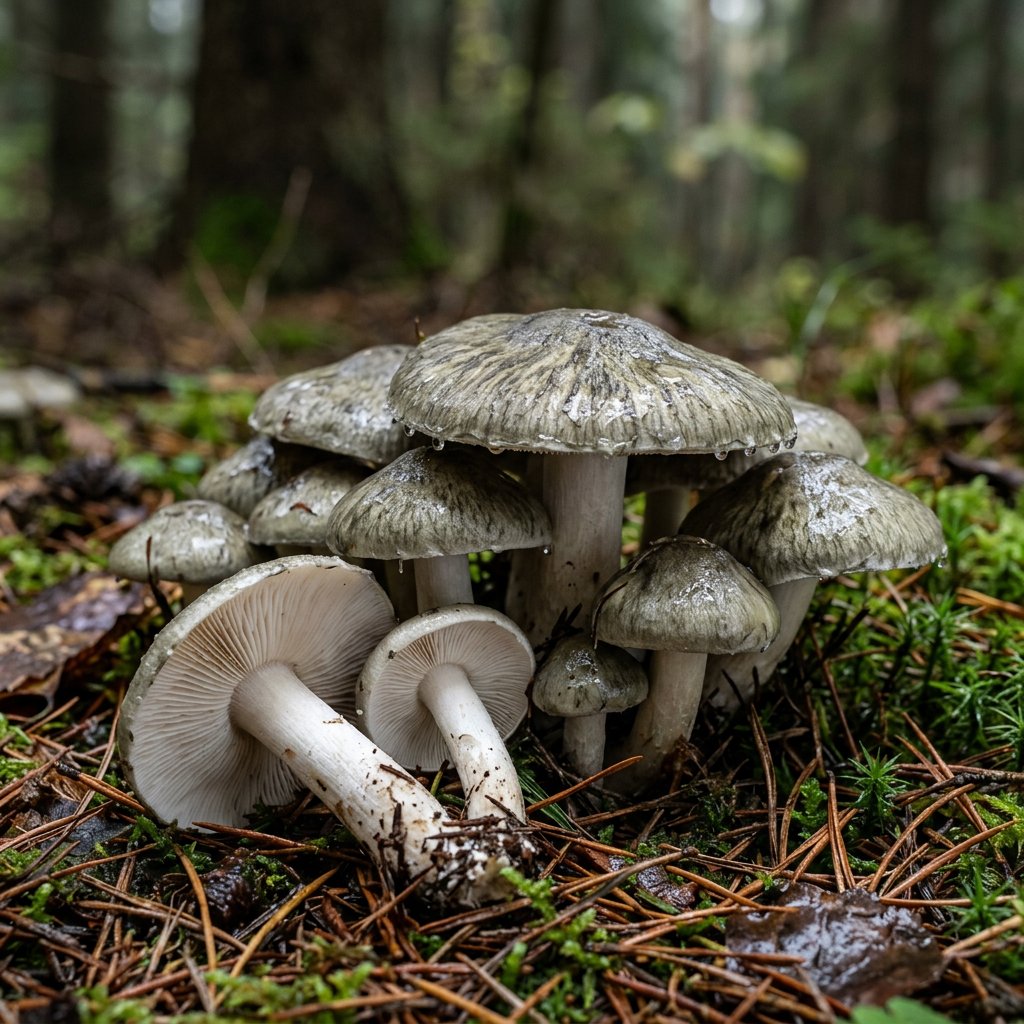
- 🧼 The Soapy Cap: The cap is smooth and slightly waxy, typically measuring 5–10 cm across. Its color is highly inconsistent, often appearing as a marbled mix of olive-green, grey, or brownish tones.
- 🌸 Bruising Gills: The gills are relatively distant and pale cream to greenish-white. A key ID feature is that they often develop pinkish or reddish tints as the mushroom ages or when they are bruised.
- 🪵 Robust Stem: The stem is solid and often tapers toward the base. If you cut into the flesh at the very bottom of the stem, it frequently turns a faint salmon-pink or reddish color after a few minutes.
🌲 Habitat & Ecology
- 🌳 The Tree Partner: This mushroom is mycorrhizal, meaning it lives in a symbiotic relationship with trees. It is surprisingly versatile, appearing in both deciduous forests (under Beech and Oak) and coniferous woods (under Pine and Spruce).
- 🍄 Forest Floor Patterns: You will rarely find just one; they tend to grow in scattered groups or occasionally in "fairy rings" across the mossy forest floor during the late summer and autumn months.
⚠️ Safety & Toxicity
- 🚫 WARNING: Not edible. While its clean, soapy smell might seem pleasant, Tricholoma saponaceum is considered mildly to moderately toxic.
- 🤢 The Risk: Consuming this mushroom typically leads to significant gastrointestinal distress, including nausea, vomiting, and stomach cramps. Because it looks so similar to some edible "Knight" mushrooms, it is a frequent cause of accidental poisonings for novice foragers.
✨ Fun Fact
The specific epithet saponaceum is derived from the Latin word sapo, meaning soap. Interestingly, the "soapy" scent often intensifies as the mushroom begins to dry out or if it is kept in a sealed container for a short time.
More Details
| Hymenium Type | Lamella |
| Stipe Character | Bare Stipe |
| Spore Print Color | White |
| Mushroom Cap Shape | Convex Mushroom Cap |
| Hymenium Attachment | Adnexed Hymenium Attachment |
| Mushroom Ecological Type | Mycorrhiza |