Info
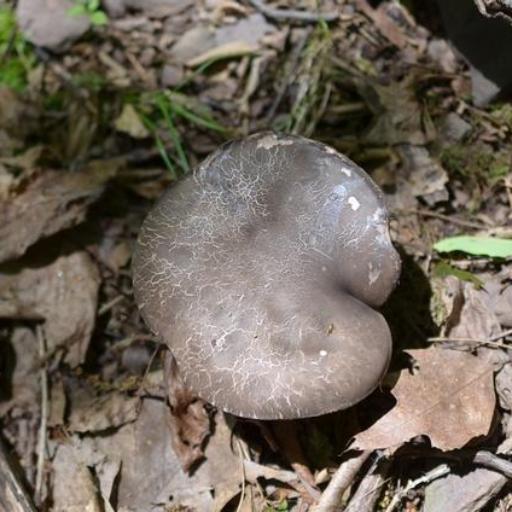
Often called the Black Velvet Bolete, this mushroom looks like it stepped straight out of a gothic fairytale. Unlike many of its bitter relatives in the Tylopilus genus, this species is a hidden gem for foragers, prized for its dense, meaty texture and surprisingly mild flavor. Its charcoal-colored cap and "suede" finish make it one of the most elegant finds on the forest floor.
🔍 How to Identify
- 🎩 The Cap: Deep charcoal to grayish-black. It has a distinctive dry, felt-like or velvety texture that feels remarkably like suede to the touch.
- 🧽 The Pores: Instead of gills, the underside features tiny pores. These start off grayish-white but slowly blush to a soft pink or muddy flesh color as the spores mature.
- 🦵 The Stem: Thick, solid, and club-shaped. It is usually the same dark color as the cap, or slightly paler, and does not have the prominent raised "netting" (reticulation) found on many other boletes.
🌲 Habitat & Ecology
- 🌳 Hardwood Companion: This mushroom is mycorrhizal, meaning it lives in a symbiotic partnership with trees. It specifically prefers hardwoods, especially Oak and Beech trees, in North America and parts of Asia.
- ☀️ Summer Sentinel: You will most likely spot these during the humid peaks of summer and early autumn. They love the "sauna-like" weather that follows heavy rainstorms.
⚠️ Safety & Toxicity
- 🛑 WARNING: Never consume any wild mushroom unless you have confirmed its identity with a local expert. Accurate identification is a life-or-death matter.
- 🍽️ Edibility: Tylopilus alboater is considered a "choice" edible mushroom by many enthusiasts. Unlike its cousin, the "Bitter Bolete," which can ruin an entire meal with a single acrid bite, the Black Velvet is mild and savory.
- 🐾 Wildlife: While safe for humans when cooked properly, wild mushrooms can cause digestive upset in dogs and cats. Keep pets away from your foraging haul.
✨ Fun Fact
When you slice into the stark white flesh of a Black Velvet Bolete, it performs a slow-motion magic trick: the interior flesh slowly stains pinkish-gray before eventually bruising to a deep, dark purple or black.
More Details
| Hymenium Type | Pores |
| Stipe Character | Bare Stipe |
| Spore Print Color | Pink |
| Hymenium Attachment | Adnate Hymenium Attachment |
| Mushroom Ecological Type | Mycorrhiza |







