Info
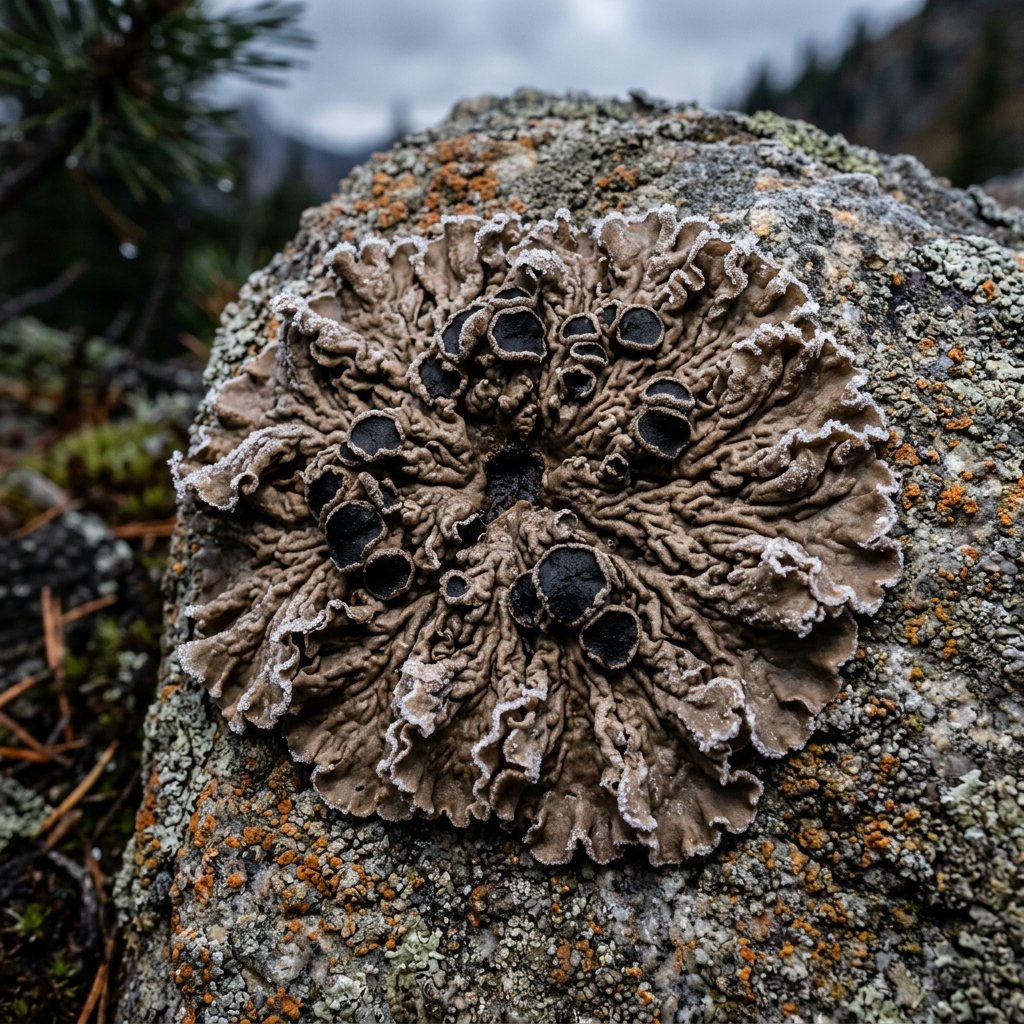
Often called "Rock Tripe," Umbilicaria americana is not a typical mushroom but a hardy, leathery lichen that looks like a piece of charred parchment clinging to a cliffside. It is a biological marvel—a symbiotic partnership between a fungus and an alga—famed for its ability to survive in the harshest mountain environments. Historically, it is known as the "last resort" meal that saved many early explorers from starvation.
🔍 How to Identify
- 🔘 The "Belly Button": It is "umbilicate," meaning the entire leaf-like body is attached to the rock by a single, central cord on the underside, much like a navel.
- 📜 Leathery Thallus: The upper surface is a dusty grey to brownish-grey, often looking "frosted" or granular, while the edges often curl upward when the lichen is dry.
- 🌑 Dark Underside: If you gently lift the edge, you will see a dark, often soot-black underside that is covered in tiny, velvety structures.
🌲 Habitat & Ecology
- 🏔️ Cliff Dweller: This species is a specialist of vertical surfaces, found almost exclusively on large, acidic rocks and boulders in cool, high-elevation forests across North America.
- 💧 Moisture Master: It can survive long periods of total dehydration, looking brittle and dead, only to "wake up" and turn flexible and leathery within minutes of a rainstorm.
⚠️ Safety & Toxicity
- ⚠️ WARNING: While historically classified as edible "Rock Tripe," this lichen should not be eaten casually. It contains bitter lichen acids that can cause severe digestive upset and stomach cramps.
- 🤢 Preparation Required: In survival situations, it must be washed and boiled multiple times to leach out the acids. Even then, it is described as having a rubbery, gelatinous texture that is difficult to digest.
✨ Fun Fact
❄️ Military Rations: During the legendary "Starving Time" at Valley Forge, George Washington’s Continental Army reportedly boiled Umbilicaria species to make a thick, bitter broth to stave off hunger during the brutal winter of 1777.
More Details