Info
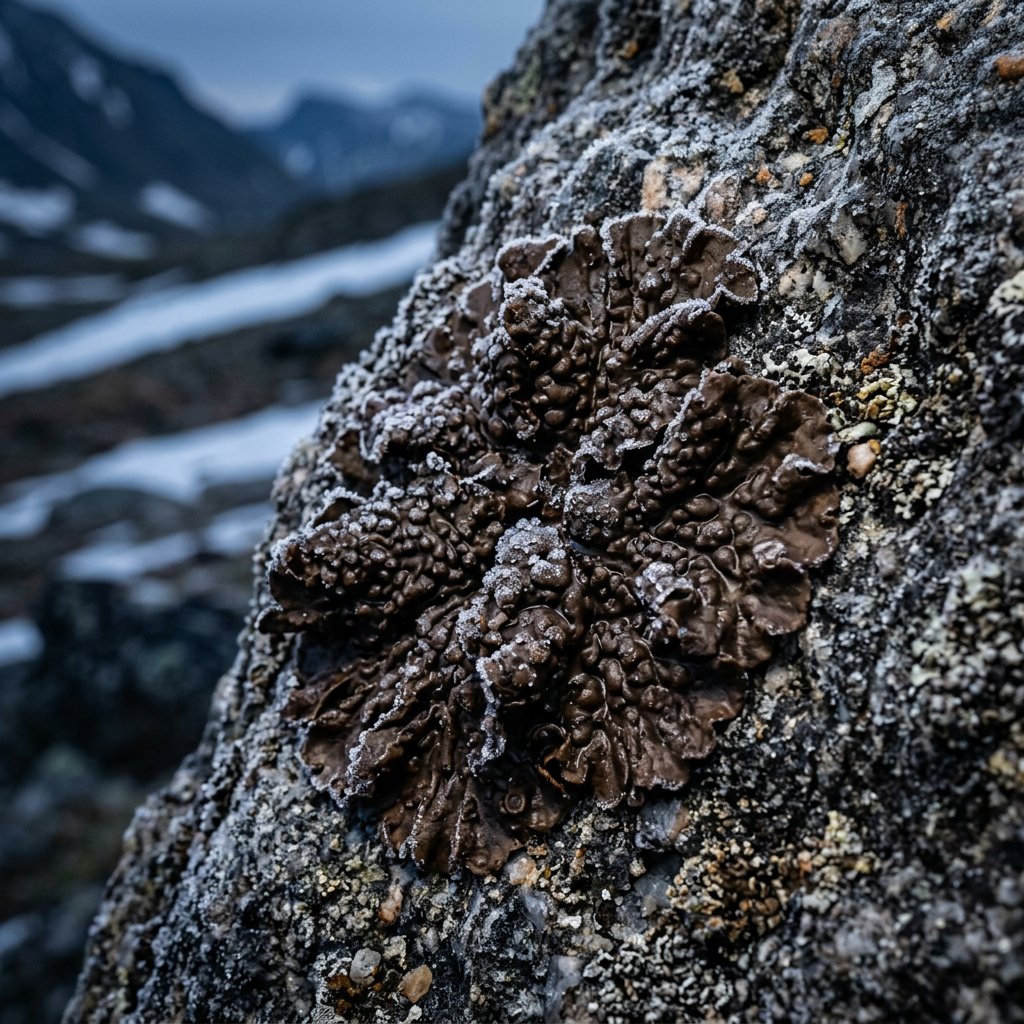
Known as the Blistered Rock Tripe, Umbilicaria hyperborea is a rugged survivor of the extreme north. This lichen looks like a scrap of charred, wrinkled leather clinging tenaciously to sun-scorched mountain summits. In the annals of polar exploration, it is famous as a "famine food"—a bitter, rubbery last resort for those lost in the frozen wilderness.
🔍 How to Identify
- 🕳️ The Umbilicus: Unlike many lichens that spread flat, this species attaches to the rock at a single central point (an "umbilicus"), allowing the edges to curl upward like a tiny, dark saucer.
- 🌋 Pustulate Surface: The top of the body (thallus) is covered in a network of ridges and "blisters" that give it a rough, papery texture, distinguishing it from smoother rock tripes.
- 🌑 Color Shift: When dry, it appears a dark, chocolate brown or charcoal black. However, after a rain, it softens and takes on a subtle, olive-green hue as the internal algae begin to photosynthesize.
🌲 Habitat & Ecology
- 🏔️ Alpine Specialist: You will primarily find this species on acidic rocks, such as granite, in windswept alpine or arctic-tundra regions. It thrives where most other life forms would wither from the cold.
- 🐢 Slow Growth: These lichens are incredibly long-lived and grow at a glacial pace, sometimes adding only a fraction of a millimeter to their diameter each year.
- 💨 Air Quality Indicator: Like most lichens, it absorbs nutrients directly from the atmosphere, making it a sensitive indicator of air purity in high-altitude ecosystems.
⚠️ Safety & Toxicity
- 🥣 WARNING: While Umbilicaria species are technically edible and have been used as survival food, they contain bitter lichen acids that can cause severe digestive upset or "lichen poisoning" if eaten raw.
- 🧼 Preparation Required: To make it palatable, it must be thoroughly washed and boiled several times to leach out the acids. Even then, its rubbery consistency and earthy taste make it a food of last resort.
- 🐾 Pet Safety: While not acutely toxic to dogs or cats, the leathery texture and acids could cause vomiting if ingested during a hike.
✨ Fun Fact
During Sir John Franklin’s disastrous 1819 Arctic expedition, his crew survived for weeks by eating rock tripe. They described the flavor as "not very prepossessing" and noted that it frequently caused internal distress, yet it likely saved them from total starvation!
More Details







