Info
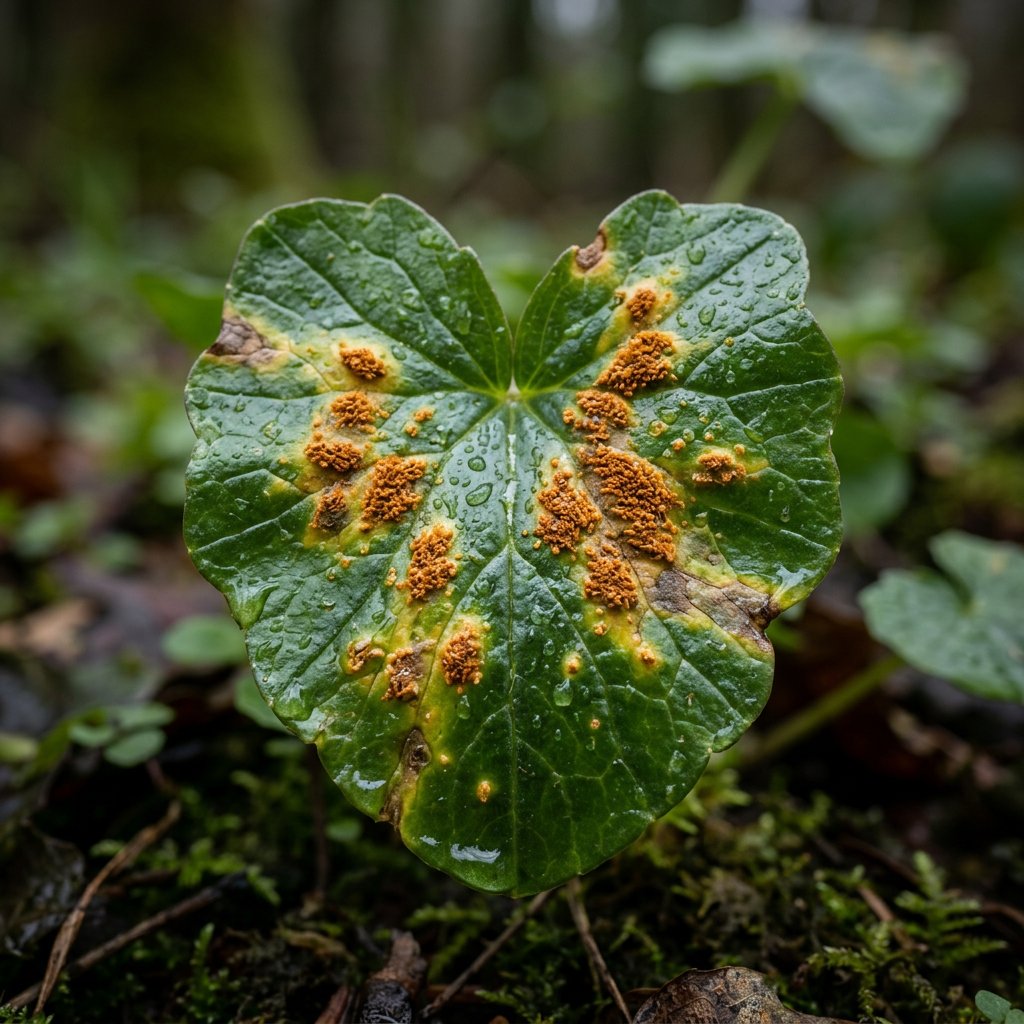
Known as the Celandine Rust, Uromyces ficariae is a master of disguise that doesn't look like your typical cap-and-stem mushroom. Instead, it appears as tiny, dark "freckles" on the vibrant green leaves of the Lesser Celandine plant. In the world of folklore, these strange spots were sometimes seen as a sign that the ground was "breathing" or that the plant was aging prematurely.
🔍 How to Identify
- 🟤 Dark Pustules: Look for small, raised, chocolate-brown to blackish spots (called sori) on the undersides of leaves and along the stems.
- 🌿 The Host Plant: This fungus is highly specific; it will only be found on the Lesser Celandine (Ficaria verna). If the plant isn't a Celandine, it’s likely a different rust species.
- 🌀 Leaf Distortion: Infected leaves often look slightly stunted, yellowish, or curled compared to their healthy neighbors, as the fungus drains the plant's energy.
🌲 Habitat & Ecology
- 💧 Damp Woodlands: You will find this rust in the same places its host thrives—moist, shady banks, woodland floors, and garden edges during the early spring.
- 🦠 A Specialized Parasite: Unlike many fungi that decompose dead wood, this is an "obligate parasite," meaning it needs a living host to survive. It completes its entire life cycle on this single plant species.
⚠️ Safety & Toxicity
- 🚫 WARNING: Do not consume. While it is a micro-fungus and not a large mushroom, it is considered inedible.
- 🐾 Host Toxicity: The host plant itself (Lesser Celandine) is toxic to humans and pets if ingested, and the presence of the rust does not change this. Always wash your hands after handling wild plants and fungi to avoid skin irritation.
✨ Fun Fact
Unlike many other "rust" fungi that require two different plant species to complete their life cycle (like the Cedar-Apple rust), Uromyces ficariae is autoecious, meaning it is a homebody that spends its whole life and all its reproductive stages on just the Celandine!
More Details