Info
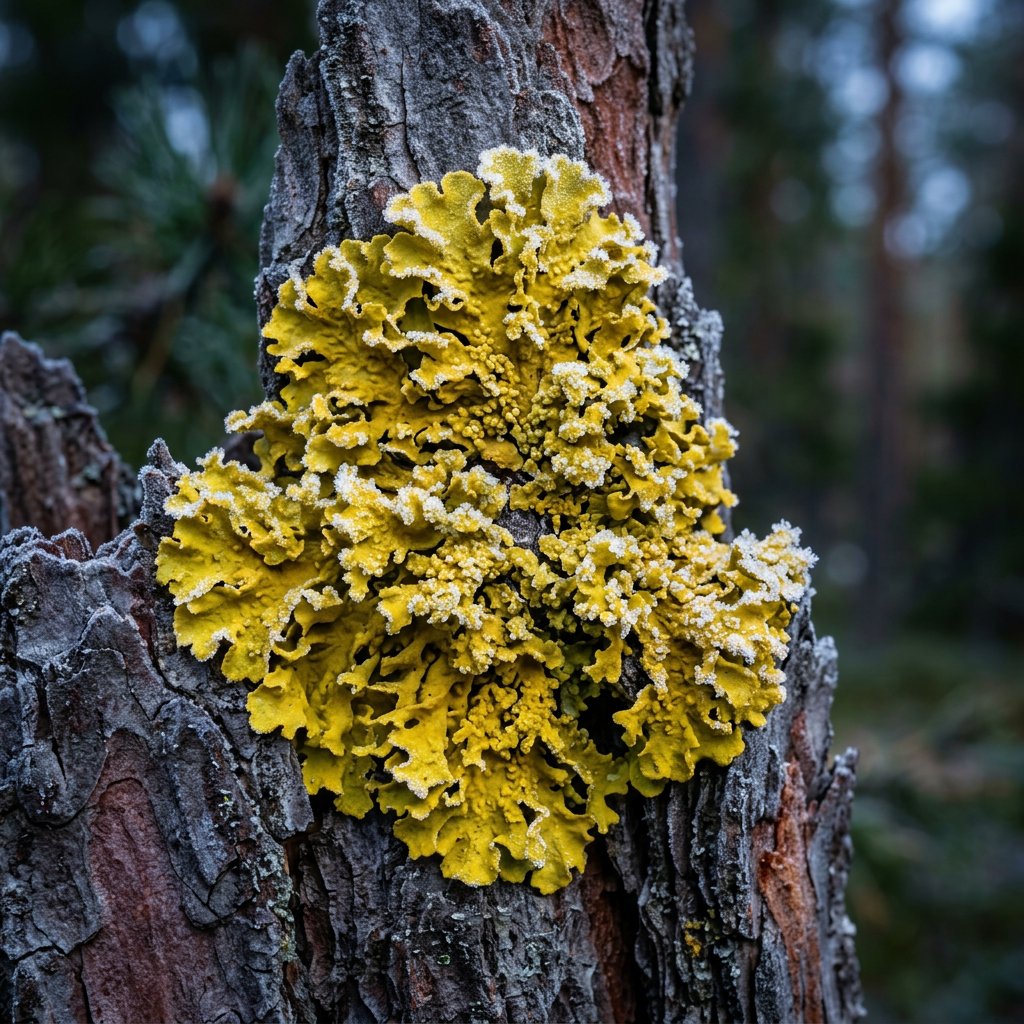
Commonly known as the Powder-headed Sunshine Lichen, this vibrant organism looks like a splash of neon-yellow paint against the muted bark of forest trees. While it belongs to the fungal kingdom, it exists as a lichen—a beautiful partnership between fungus and algae. In Scandinavian folklore, this "Sunshine Lichen" had a much darker reputation, as it was famously used to create lethal baits for predators.
🔍 How to Identify
- ☀️ Vibrant Color: The most striking feature is its brilliant lemon-yellow to greenish-yellow body (thallus), which stands out vividly against dark bark.
- 🍃 Leafy Structure: It is a "foliose" lichen, meaning it grows in small, flattened, leaf-like lobes that hug the surface of its host.
- ✨ Powdery Edges: Look closely at the margins of the lobes; they are often covered in fine, sulfur-yellow dust called soredia, which the lichen uses to reproduce.
🌲 Habitat & Ecology
- 🌲 Tree Preferences: You will most often find it clinging to the acidic bark of coniferous trees like Pine and Spruce, though it frequently migrates to Birch trees in colder climates.
- ❄️ Winter Resilience: This lichen is incredibly hardy and is a common sight in boreal forests and mountainous regions, providing a rare pop of color during the bleak winter months.
- 🤝 Ecological Role: As a lichen, it doesn't "eat" the tree; it simply uses the bark as a home while producing its own energy through photosynthesis, acting as a tiny, self-sustaining oxygen factory.
⚠️ Safety & Toxicity
- 🚫 WARNING: Highly Toxic if ingested. This species contains vulpinic acid, a potent toxin that affects the central nervous system and respiratory organs of mammals.
- 🦊 Historical Use: It was traditionally mixed with fat and crushed glass to create poisonous bait for wolves and foxes, which is how it earned its scientific name.
- 🐾 Pet Safety: While safe to touch, ensure that curious dogs or livestock do not graze on bark where this lichen is present.
✨ Fun Fact
The name Vulpicida literally translates to "Fox-killer." Despite its cheerful, sunny appearance, it is one of the few lichens in the world historically utilized as a chemical weapon in the struggle between farmers and forest predators.
More Details







