Info
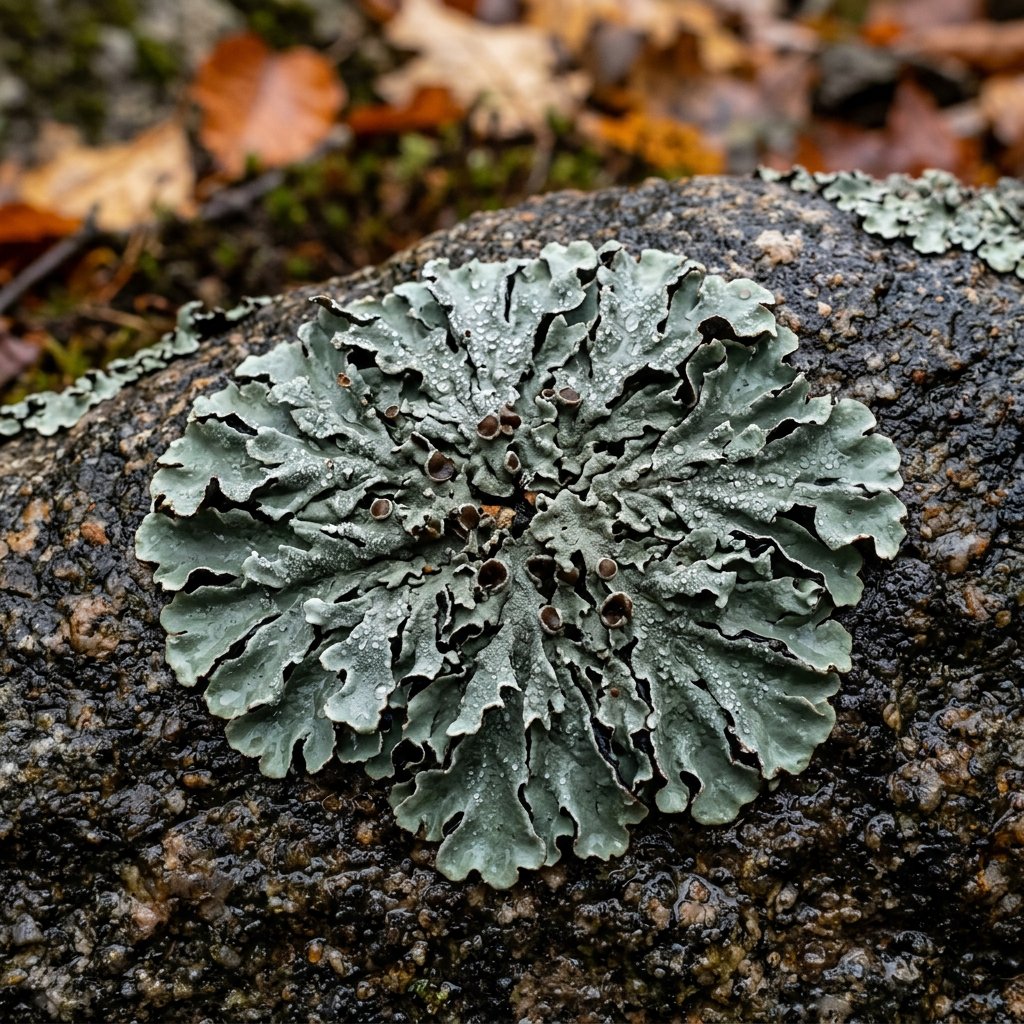
Commonly known as the Peppered Rock Greenshield, Xanthoparmelia conspersa isn’t actually a mushroom in the traditional sense—it is a lichen, a fascinating "partnership" between a fungus and an alga. Often seen decorating granite boulders like ancient, pale-green lace, this species is a master of survival in the harshest sun. In some cultures, it has been historically (and controversially) used in folk medicine, earning it a reputation as a "stone flower."
🔍 How to Identify
- 🟢 The Body (Thallus): It forms circular, leafy (foliose) patches that hug the rock surface tightly. The color is a distinct pale yellowish-green when dry, turning a more vibrant green when wet.
- 🌶️ The "Peppers": If you look closely at the center of the lichen, you’ll see tiny, finger-like bumps called isidia. These look like a dusting of black or dark green pepper and are used for reproduction.
- 🖤 The Underside: Unlike the pale top, the bottom of this lichen is usually dark brown to black, anchored to the rock by tiny root-like structures called rhizines.
🌲 Habitat & Ecology
- 🪨 Rock Lover: You won't find this growing on trees; it specifically prefers "non-calcareous" rocks, such as granite, sandstone, or schist. It thrives in open, sunny areas where other plants might wither.
- ☀️ Sun Shield: The yellow-green pigment (usnic acid) acts like a natural sunscreen, protecting the delicate algae living inside the fungal layers from intense UV radiation.
- 🐌 Micro-Forest: To a tiny insect or mite, a patch of Xanthoparmelia is a sprawling forest providing both shelter and a slow-growing food source.
⚠️ Safety & Toxicity
- 🚫 Not Edible: While not "deadly" like some forest mushrooms, this lichen contains secondary metabolites that are extremely bitter and can cause digestive distress if ingested.
- 🧪 Chemical Concentrator: Lichens are like sponges for the environment; they absorb heavy metals and pollutants from the air. Eating them can lead to the ingestion of concentrated toxins from the surrounding atmosphere.
- 🐾 Pet Safety: While unlikely to be eaten by pets due to its tough, crusty texture and location on rocks, it should not be used as a supplement or snack for animals.
✨ Fun Fact
Lichens like the Peppered Rock Greenshield are incredibly slow growers—some colonies only expand by 1 to 5 millimeters per year. This means a patch the size of your dinner plate could be over a century old!
More Details