Info
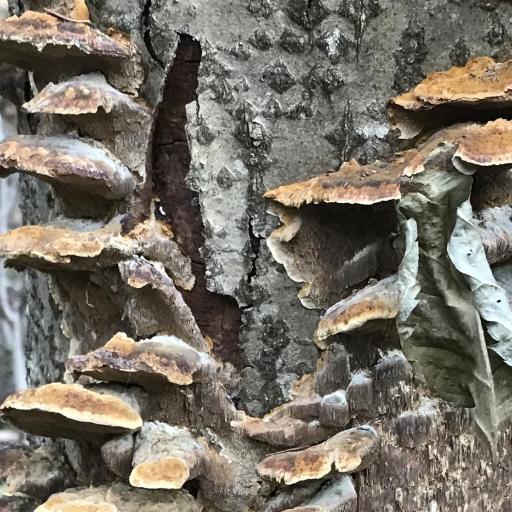
Commonly known as the Alder Bracket, Xanthoporia radiata is a golden-hued architect of the forest. This bracket fungus is often seen tiered like a staircase on the trunks of deciduous trees, looking as though the tree itself has sprouted a series of rust-colored shingles. In the light of a damp morning, its velvety surface can almost seem to glow, earning it a reputation as a subtle but beautiful "tree jewel."
🔍 How to Identify
- 🍄 The Cap: Semicircular and shelving, the surface is distinctively marked with radial wrinkles or furrows that fan out from the point of attachment. Its color shifts from a bright tawny yellow when young to a deep, rusty brown as it ages.
- 🕳️ The Pores: Instead of gills, the underside features tiny, angular pores. They start out yellowish-silver and have a slight shimmer; if you bruise them, they slowly turn a darker brown.
- 🪵 Texture & Flesh: When fresh, the mushroom is somewhat watery and soft, but it quickly becomes corky, tough, and fibrous. It lacks a traditional stem, growing directly out of the bark.
🌲 Habitat & Ecology
- 💧 Preferred Hosts: As its name suggests, it is most frequently found on Alder trees, particularly in wet woodlands or along riverbanks. However, it isn't picky and will also colonize Birch, Beech, and Hazel.
- 🍂 The Recycler: This fungus plays a vital role in the ecosystem as a "white-rot" agent. It breaks down the tough lignin in wood, recycling nutrients back into the soil to feed the next generation of the forest.
⚠️ Safety & Toxicity
- 🚫 WARNING: Inedible. While Xanthoporia radiata is not typically classified as deadly, it is not considered a food source.
- 🤚 Texture Issue: Its woody, corky consistency makes it impossible to chew or digest.
- 🐾 General Safety: While not known to be highly toxic to touch, it is best to keep pets and children from sampling it, as many similar-looking bracket fungi can cause severe gastric distress.
✨ Fun Fact
The specific epithet radiata refers to the beautiful "radiating" lines on its cap. Interestingly, this mushroom is a master of camouflage; as it ages and loses its velvety sheen, it can become so dark and weathered that it looks exactly like a natural knot or burl in the tree's bark!
More Details







