Info
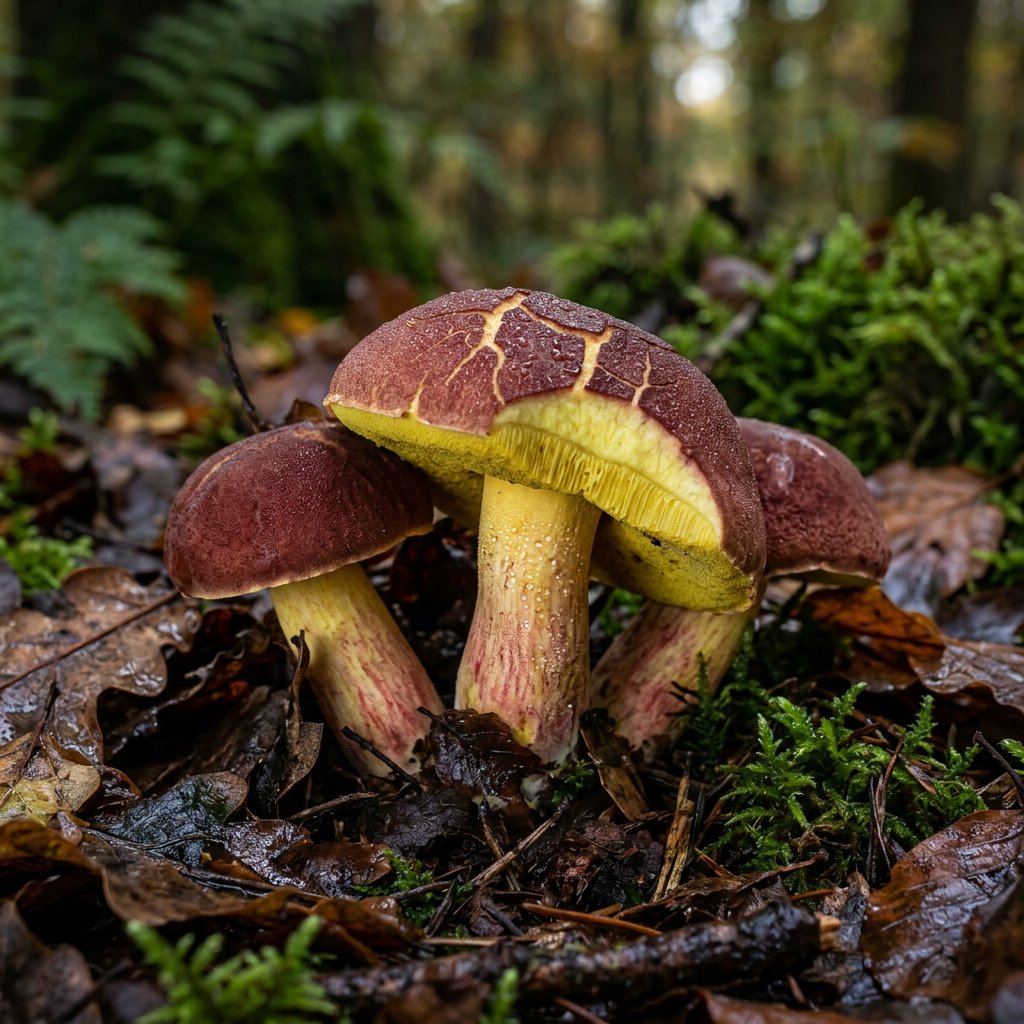
Often called the Blue-staining Bolete, Xerocomellus cisalpinus is a master of disguise hidden among the leaf litter. At first glance, it looks like a typical, unassuming brown mushroom, but it holds a vivid secret: a "magical" color shift. This fungus is a relatively recent addition to the scientific books, having been officially distinguished from its lookalike cousins only in the early 2000s.
🔍 How to Identify
- 🎨 The Cracking Cap: The cap is typically a mousy brown or olive-grey. As it matures, the skin often cracks like parched earth, revealing a subtle hint of pinkish-red flesh underneath.
- 🧽 The Yellow Pores: Unlike many mushrooms with gills, this species has a sponge-like underside. These pores start bright yellow and turn a dingy greenish-yellow with age.
- 🧪 The Indigo Reaction: If you press the pores or cut the base of the stem, the flesh will quickly stain a distinct, moody blue. This oxidation is its most famous identifying trait.
🌲 Habitat & Ecology
- 🌳 Oak & Beech Allies: This mushroom is "mycorrhizal," meaning it lives in a symbiotic partnership with trees. It is most commonly found huddled near the roots of Oak, Beech, and occasionally Pine.
- 🏡 Garden Guest: While it loves deep forests, it is a frequent visitor to urban parks and large gardens, often popping up in the grass after a heavy summer or autumn rain.
⚠️ Safety & Toxicity
- 🍄 WARNING: While Xerocomellus cisalpinus is generally considered edible, it is not recommended for foraging. It is easily confused with other "red-cracking" boletes, some of which can cause severe gastrointestinal distress.
- 🧪 Bio-Accumulator: Like many boletes, it can soak up heavy metals from the soil. If found in a city park or near a road, it should never be consumed.
- 🐾 Pets: Keep curious dogs away; while not "deadly" like an Angel of Death, wild mushrooms often cause vomiting and lethargy in pets.
✨ Fun Fact
The species name cisalpinus literally means "this side of the Alps." Although it was first described in Italy, it has since been found across most of Europe and even parts of North Africa!
More Details







