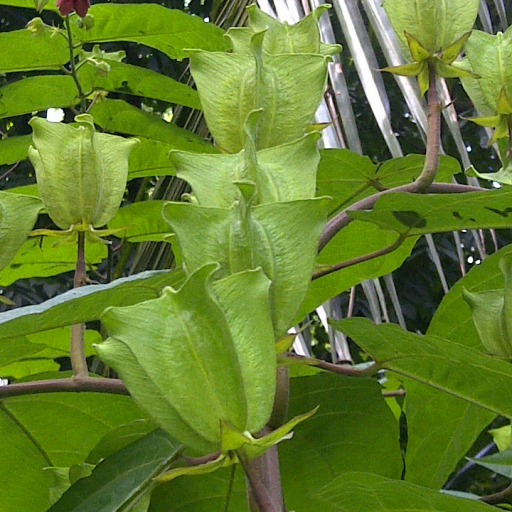
Plant Overview
Known widely as Devil's Cotton, Abroma augustum is a striking tropical shrub that bridges the gap between medicinal powerhouse and ornamental curiosity. Its name comes from the soft, fiber-rich bark and its slightly "wicked" appearance when the dark, maroon flowers hang heavily from its branches. In its native Southeast Asian habitats, it is revered in traditional medicine for its roots, which have been used for centuries to treat various ailments.
🔍 How to Identify
- 🍃 Velvety Foliage: The large, heart-shaped leaves are covered in fine, soft hairs, giving them a distinct matte texture that feels like expensive velvet to the touch.
- 🔔 Nodding Blooms: It produces unique, bell-shaped flowers that transition from dark purple to a deep, chocolatey maroon. They hang downwards, hiding their beauty from above.
- 📦 Winged Seed Pods: After flowering, it develops five-angled, papery seed capsules that look like small, green lanterns before they dry and turn brown.
🏡 In Your Garden
- 💧 Thirsty Temperament: This is a water-loving plant. It thrives in moist, well-draining soil and will quickly "faint" or droop its leaves if the soil dries out completely, though it usually bounces back once watered.
- ☀️ Sun Seeker: While it enjoys bright light to produce its famous flowers, in hotter climates, it prefers "dappled" shade. Too much direct, scorching midday sun can burn the delicate hairs on its leaves.
- 🪴 Rapid Growth: Be prepared for a fast-grower! It can reach the size of a small tree quite quickly, so it requires regular pruning if you are keeping it in a greenhouse or a large patio container.
⚠️ Safety & Toxicity
- 👐 Skin Irritant: While not "poisonous" in the traditional sense, the seed pods and stems are covered in tiny, bristly hairs. These can cause significant skin irritation and itching if handled without gloves.
- 🐾 Pet Safety: There are no common reports of high toxicity to cats or dogs, but due to the irritating hairs and its medicinal chemical compounds, it is best kept out of reach of curious chewers.
✨ Fun Fact
The "Cotton" in its name isn't just for show! The bark of the Abroma augustum produces a silky, white fiber that is remarkably strong—so strong, in fact, that it was historically used to make cordage and fishing nets that could withstand the heavy pull of a catch.

Detailed Care Instructions
To grow Abroma augustum plants, follow these steps:
- Choose a suitable location: Abroma augustum plants prefer full sun to partial shade. Select a spot in your garden that receives at least 6 hours of direct sunlight each day.
- Prepare the soil: Abroma augustum plants prefer well-draining soil. Loosen the soil in the selected area and remove any weeds or rocks. You can enrich the soil by adding compost or organic matter.
- Sow the seeds: Abroma augustum can be grown from seeds. Plant the seeds directly into the soil at a depth of about 1 inch. Space the seeds at least 12-18 inches apart.
- Watering: Keep the soil consistently moist but not waterlogged. Water the plants regularly, especially during dry periods. Avoid overwatering, as it can lead to root rot.
- Fertilization: Fertilize the plants once a month with a balanced fertilizer. Follow the manufacturer's instructions for proper dosage. This will help promote healthy growth and flowering.
- Pruning: Abroma augustum plants benefit from regular pruning. Trim back any dead or damaged branches to maintain a neat appearance and to encourage new growth.
- Pests and diseases: Keep an eye out for common garden pests such as aphids, scale insects, or spider mites. If any infestation occurs, treat the plants with appropriate organic or chemical insecticides.
- Winter care: Abroma augustum plants are sensitive to frost. If you live in a region with cold winters, it is best to grow them in containers that can be moved indoors during colder months. Provide enough light during winter, either through a sunny window or with artificial grow lights.
By following these steps, you can successfully grow Abroma augustum plants and enjoy their beautiful flowers.
To water the Abroma Augustum plant, it is important to provide it with sufficient moisture while ensuring that you avoid overwatering. Here are some guidelines to help you water this plant effectively:
- Observe the soil: Before watering your Abroma Augustum plant, check the moisture level of the soil. Stick your finger about an inch deep into the soil to assess whether it feels dry or moist.
- Watering frequency: Typically, Abroma Augustum plants require watering once the top inch of soil feels dry. This can vary based on various factors such as climate, location, and the season, so it is essential to monitor the soil's moisture level regularly.
- Watering technique: When watering, pour water evenly onto the soil surface around the base of the plant. Avoid wetting the leaves excessively as this can lead to fungal diseases. Aim to water the plant thoroughly to ensure that the water reaches the roots.
- Drainage: It is crucial to guarantee that the container or planting area has proper drainage. Excess water should be able to flow freely to prevent waterlogging, which can damage the plant's roots. Ensure that there are drainage holes in the pot or, if planted in the ground, ensure the soil has good drainage.
- Consider the climate: Abroma Augustum plants prefer a humid environment, so it may be necessary to increase the humidity levels around the plant. Misting the leaves occasionally or placing the plant's pot on a tray filled with water and pebbles can help raise the moisture levels.
- Seasonal adjustments: During the plant's growing season, which is typically spring and summer, the watering frequency may need to be slightly increased. However, reduce the watering frequency in the colder months when the plant is in a dormant phase.
Remember, these guidelines provide general recommendations for watering the Abroma Augustum plant. It is essential to consider the specific needs and conditions of your plant, as individual factors may require adjustments in watering routines.
To fertilize the Abroma Augustum plant, follow these instructions:
- Choose a balanced, water-soluble fertilizer with an NPK ratio of 10-10-10 or 20-20-20.
- Dilute the fertilizer according to the package instructions or use a half-strength solution.
- Water the plant thoroughly before applying fertilizer to ensure it is well-hydrated.
- Pour the diluted fertilizer solution evenly onto the soil around the base of the plant.
- Take care not to let the fertilizer come into direct contact with the plant's leaves or stems.
- Repeat the fertilization process every two to three weeks during the active growing season (spring and summer).
- During the dormant months (fall and winter), reduce the frequency of fertilization to once every one to two months.
- Monitor the plant closely for any signs of nutrient deficiency or excess. Adjust the fertilizer application if needed.
- Always follow the specific instructions on the fertilizer packaging and consider the plant's individual needs and growing conditions.
Abroma augustum, also known by its common names, is a perennial plant that has specific soil requirements for optimal growth. It thrives in well-draining soil that is rich in nutrients and organic matter. Here are the details regarding the appropriate soil for Abroma augustum without using its common names:
- Soil Type: Abroma augustum prefers loamy or sandy soil. It should ideally have a slightly acidic to neutral pH level ranging from 6.0 to 7.5.
- Soil Texture: The soil should be well-draining to prevent waterlogging, which can lead to root rot. It should neither be too compact nor too loose but should have a loose, crumbly texture.
- Organic Matter: The soil needs to be enriched with organic matter such as compost or well-rotted manure. This helps in enhancing soil fertility, moisture retention, and overall plant health.
- Nutrient Content: The soil should contain a balanced mix of essential macronutrients (nitrogen, phosphorus, and potassium) and micronutrients like iron, magnesium, and zinc. Fertilizers specifically formulated for flowering plants can also be added, following the recommended dosage.
- Moisture Retention: While the soil should be well-draining, it should also have the capacity to retain moisture. Adequate moisture is crucial for Abroma augustum's growth and survival. Mulching the soil surface with organic materials can help conserve moisture and regulate soil temperature.
- Soil Aeration: It is important for the soil to be well-aerated, allowing the roots to access oxygen. This can be ensured by avoiding over-watering or water stagnation and providing adequate spacing between plants.
- pH Level: Abroma augustum prefers a slightly acidic to neutral pH range. Conducting a soil pH test using a kit available at gardening stores can help determine the acidity or alkalinity of the soil. If the pH is too high or low, appropriate soil amendments can be added to adjust the pH level.
Remember, providing the right soil conditions is crucial for the successful growth of Abroma augustum. By maintaining well-draining, nutrient-rich soil with adequate moisture levels, you can create an ideal environment for this plant to thrive.
Propagation of Abroma augustum plant can be achieved through several methods:
- Seed propagation: Collect mature seeds from the plant. Soak the seeds in warm water overnight to enhance germination. Sow the seeds in a well-draining potting mix, ensuring they are not buried too deep. Maintain a warm and humid environment, ideally using a heating mat or placing the containers in a greenhouse. Keep the soil consistently moist until germination occurs, which usually takes a few weeks. Once the seedlings grow a few inches tall, they can be transplanted into individual pots.
- Stem cuttings: Take a stem cutting from a mature and healthy Abroma augustum plant. The cutting should be around 6-8 inches long with at least two nodes. Remove the lower leaves, leaving just a few at the tip. Dip the bottom end of the cutting in a rooting hormone powder to encourage root development. Place the cutting in a container filled with a well-draining potting mix, ensuring that at least one node is buried in the soil. Keep the cutting in a warm and humid environment, misting it regularly to maintain moisture levels. After a few weeks, roots should start to develop, signaling successful propagation.
- Division: This method can be used when the Abroma augustum plant forms multiple stems or clumps. Carefully dig up the plant, trying to minimize root damage. Gently separate the clump into smaller sections, ensuring each section has a good amount of roots and stems. Replant each division into its own pot or in a designated garden area. Water the divisions thoroughly and provide them with proper care to encourage new growth.
- Air layering: Select a healthy branch of the Abroma augustum plant that is relatively straight and has a diameter of around 1 inch. Make a 1-inch-long upward cut through the bark on the branch, ensuring it reaches the inner layer. Dust the cut with rooting hormone powder. Wrap the cut area with moist sphagnum moss or a similar rooting medium, covering it with plastic wrap to create a sealed environment. Secure the ends of the plastic wrap to keep it in place. Check the moisture regularly and mist the moss if necessary. After a few months, roots should develop from the cut area. Once well-established, the rooted portion can be carefully cut from the main plant and potted separately.








