Plant Overview
The Acacia burkei, widely known as the Black Monkey Thorn, is a majestic sentinel of the African savanna. With its gnarled, character-filled bark and delicate, feathery foliage, it tells a story of survival in rugged landscapes. Whether it is providing a nesting site for weaver birds or acting as a natural fortress with its hooked thorns, this tree is a cornerstone of biodiversity and a favorite for those wanting to bring a piece of the wild into their landscape.
🔍 How to Identify
- 🌳 Bark & Trunk: Older trees develop a deeply fissured, yellowish or dark grey bark. On younger branches, look for "knob-like" protrusions where thorns have grown, giving the trunk a unique, "warty" texture.
- 🪝 The Thorns: True to its defensive nature, it features small, sharp, blackish hooked thorns (resembling a monkey's claw) that usually occur in pairs just below the leaf stalks.
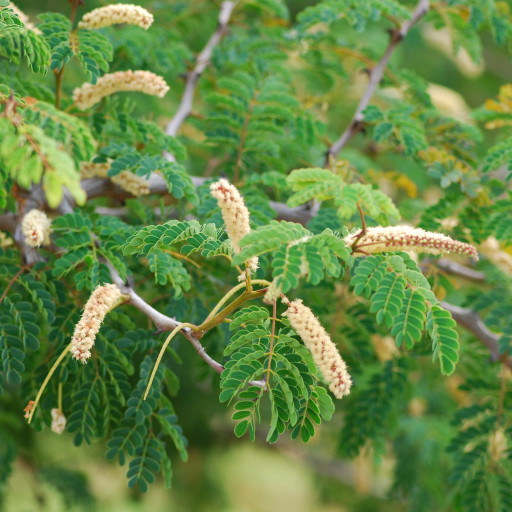
- ☁️ Flowers: During late spring and summer, the tree erupts in creamy-white to pale yellow flower spikes. These look like soft, fuzzy "bottlebrushes" and emit a subtle, sweet fragrance.
🏡 In Your Garden
- 🦒 Wildlife Magnet: This tree is a five-star hotel for nature. It provides high-protein nectar for butterflies and bees, while its thorny canopy offers a safe, predator-proof haven for nesting birds.
- 🪴 Space & Soil: It is incredibly hardy and drought-tolerant once established. Because of its vigorous root system and sharp thorns, it is best planted away from foundations and high-traffic pathways. It prefers well-drained soil and thrives in full sun.
- ✂️ Growth Habit: It has a somewhat "weeping" or spreading canopy when mature. Because it develops character quickly, it is a highly prized species for large-scale bonsai enthusiasts who love its rugged, aged appearance.
⚠️ Safety & Toxicity
- 🛡️ Status: Generally non-toxic but physically defensive.
- 🩹 Details: While the leaves and seed pods are safe (and even nutritious for livestock), the hooked thorns are the primary concern. They can easily snag clothing or skin, so care should be taken when pruning or if children are playing nearby.
✨ Fun Fact
- 🦋 Butterfly Nursery: The Black Monkey Thorn is a vital host plant for the Deudorix butterfly family, commonly known as "Playboys." The caterpillars actually live inside the seed pods, feeding on the seeds while remaining perfectly hidden from hungry birds!

Detailed Care Instructions
To grow Acacia Burkei plants, you can follow these steps:
- Climate: Acacia Burkei plants are native to Africa and prefer warm and tropical climates. Ensure that your region has a similar climate before attempting to grow them.
- Soil: Acacia Burkei plants thrive in well-draining soils with a pH level ranging from slightly acidic to neutral. Sandy soils are suitable for their growth.
- Planting: Select a suitable location with plenty of sunlight for your Acacia Burkei plant. Dig a hole twice as wide and deep as the root ball. Place the plant in the hole and backfill with soil, gently firming it around the roots.
- Watering: Provide regular watering to the newly planted Acacia Burkei to help establish its roots. Once established, these plants are drought-tolerant and do not require excessive watering. However, it is still important to water them during extended dry periods.
- Pruning: Pruning is not generally required for Acacia Burkei plants. However, you can trim off any dead or damaged branches to maintain a neat appearance.
- Fertilization: These plants do not require heavy fertilization. However, you can apply a balanced slow-release fertilizer once or twice a year during the growing season to promote healthy growth.
- Protection: Protect young Acacia Burkei plants from frost and strong winds until they have established.
- Pests and diseases: Acacia Burkei plants are relatively resistant to most pests and diseases. However, be on the lookout for potential issues like aphids or fungal infections. Treat any problems promptly.
- Propagation: Acacia Burkei can be propagated through seeds or cuttings. Collect seeds from ripened pods and sow them in well-draining soil. For cuttings, take semi-hardwood cuttings in summer and use a rooting hormone before planting them in suitable potting mix.
Remember to always research and familiarize yourself with the specific needs and requirements of Acacia Burkei plants to ensure their successful growth and health.

Place in a bright room that is sun drenched almost all day. Or directly in a south-facing window.

Acacia Burkei plants require regular watering, especially during the summer months when the soil can dry out quickly. When watering, it is important to soak the soil through the entire root zone, but avoid waterlogging the plant. To determine when it is time to water, you can check the soil moisture level by inserting your finger about an inch into the soil. If it feels dry, then it's time to water. When watering, use a gentle flow of water and avoid splashing water onto the leaves or branches as this can lead to leaf damage or disease. You should also ensure that the water drains away from the plant to prevent waterlogging. During periods of drought or low rainfall, you may need to water more frequently to ensure the plant stays healthy.
- Choose a balanced fertilizer with equal ratios of nitrogen, phosphorus, and potassium.
- Begin fertilizing in the spring when new growth appears.
- Apply the fertilizer evenly around the base of the plant, avoiding direct contact with the stem.
- Water the plant thoroughly after fertilizing to help nutrients penetrate the soil.
- Repeat fertilizing every 4-6 weeks during the growing season.
- Do not fertilize in the winter months when growth is dormant.
Acacia Burkei plant prefers well-draining soil enriched with organic matter. The ideal soil pH for the plant ranges from slightly acidic to slightly alkaline, between 6.0-7.5. It is best to use sandy-loamy soil that is not too compact, which will allow for good drainage and aeration.
The soil should be moist but not waterlogged, as the plant does not tolerate waterlogged soil. The plant is adapted to semi-arid conditions and can tolerate periods of drought, but the soil should not completely dry out.
It is recommended to mix organic matter such as compost or aged manure into the soil before planting to improve soil structure, fertility and water-holding capacity.
The plant does not require heavy fertilization, but you can add a slow-release fertilizer high in phosphorus and potassium during the growing season to encourage healthy growth and flowering.
Overall, the soil for Acacia Burkei plant should be well-draining, slightly acidic to slightly alkaline, and enriched with organic matter.
Acacia Burkei is a plant species that can be propagated through several methods. One method is through seed propagation which involves collecting mature pods, extracting the seeds, sowing them in a well-draining potting mix, and keeping the soil moist until the seeds germinate.
Another method is through softwood stem cuttings. This involves taking cuttings from the new growth of the plant during the summer months. The cuttings should be about 10-15cm in length and should be treated with a rooting hormone before being planted in a well-draining potting mix. These cuttings should be kept in a sheltered location and misted regularly until they develop roots.
Layering is another propagation method that involves bending a low-growing branch of the plant down to the ground and covering it with soil. The branch will then develop roots at the point of contact with the soil. After a few months, the new plant can be separated from the parent plant and transplanted.
Lastly, Acacia Burkei can also be propagated through grafting, which involves joining a cutting from the desired plant onto the rootstock of another plant. Grafting is typically done by experienced gardeners and requires a lot of skill and knowledge to be successful.
Common pests of the black monkeythorn include Scale insect, mealybugs, spider mites, thrips. Make a habit of checking your black monkeythorn frequently for pests so that any infestations can be caught and managed early.







