Plant Overview
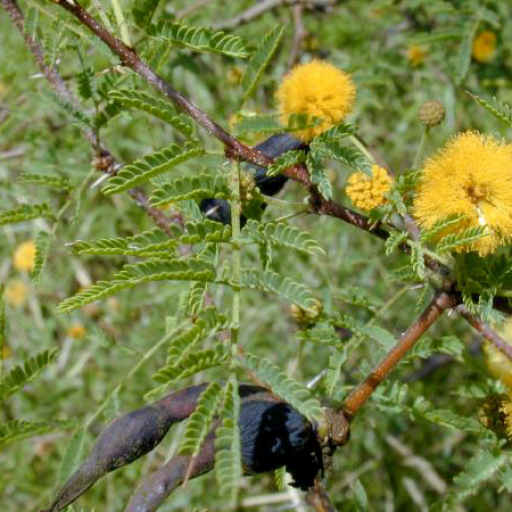
Known as the Sweet Acacia or Huisache, this plant is a sensory powerhouse that bridges the gap between rugged desert survivalist and delicate floral beauty. In the early spring, it erupts into thousands of golden-yellow puffball blossoms that release a scent so sweet it has been a staple of French perfumery for centuries. While its feathery foliage looks soft, this plant is a tough-as-nails survivor that can thrive in heat and drought where others might wither.
🔍 How to Identify
- 🌼 The Blooms: Look for brilliant golden-yellow, globose flower heads that resemble tiny pom-poms. They appear in clusters and are famously fragrant.
- 🌿 The Foliage: The leaves are bipinnately compound, giving them a delicate, fern-like appearance that closes up slightly at night or during extreme heat.
- ⚔️ The Thorns: Check the base of the leaves; you will find pairs of straight, grayish-white spines. These "stipular thorns" are sharp and provide the plant with a natural defense.
- 🫘 The Pods: After flowering, it produces dark brown or black woody seed pods that are thick, cylindrical, and slightly curved.
🏡 In Your Garden
- ☀️ Sun & Space: This plant craves full sun and is exceptionally drought-tolerant once established. Because of its spreading, airy canopy, it makes a fantastic "light shade" tree that allows grass or smaller shrubs to grow underneath it.
- 🌱 Soil Improver: As a member of the legume family, it is a "nitrogen fixer." It works with soil bacteria to pull nitrogen from the air and deposit it into the ground, naturally fertilizing the surrounding soil.
- 🦋 Pollinator Hub: It is a vital early-season nectar source for bees and butterflies. Its thorny branches also provide a protected fortress for small songbirds to build nests away from climbing predators.
⚠️ Safety & Toxicity
- 🛡️ Physical Hazard: The primary safety concern is the sharp thorns. It is best planted away from high-traffic walkways, play areas, or paths where people might accidentally brush against it.
- 🐾 Pet & Child Safety: While the plant is generally considered non-toxic, the seed pods should not be consumed in large quantities as they can cause mild digestive upset. Always supervise pets that have a habit of chewing on garden debris.
✨ Fun Fact
The flowers of Acacia farnesiana are the source of the famous "Cassie" perfume. In Grasse, France—the perfume capital of the world—the blossoms are harvested to create a fragrant absolute that is used as a base for some of the world’s most expensive floral scents.

Detailed Care Instructions
| Humidity | Dry |
| Lighting | Full Sun |
| Toxicity | Poisonous |
| Difficulty | Medium |
| Hibernation | Cold Period |
| Hardiness Zones | 9 - 11 |
To grow Acacia farnesiana (also known as the sweet acacia or mimosa bush), you can follow these steps:
- Climate and location: Determine if your climate is suitable for growing Acacia farnesiana. This plant thrives in USDA hardiness zones 8-11. It requires full sun and well-drained soil.
- Seed collection or nursery purchase: Acacia farnesiana can be grown from seeds or purchased as a nursery plant. If collecting seeds, wait for the seedpods to mature before harvesting them.
- Preparing the pot or planting area: If planting in a pot, choose a container with drainage holes and fill it with a well-draining potting mix. If planting in the ground, ensure the soil is loose, well-draining, and enriched with organic matter.
- Germinating seeds: If starting from seeds, soak the seeds in hot water overnight to help with germination. Sow the seeds in a nursery pot or directly in the planting area, covering them lightly with soil. Keep the soil consistently moist.
- Watering: While Acacia farnesiana is drought-tolerant, it's important to establish young plants by watering regularly until they establish root systems. Once established, reduce watering frequency to occasional deep waterings, as the plant prefers drier conditions.
- Pruning: Prune Acacia farnesiana to maintain its shape and remove dead or damaged growth. This plant has thorns, so use gloves and exercise caution when pruning.
- Fertilization: Use a balanced fertilizer formulated for flowering plants once or twice a year during the growing season.
- Pests and diseases: Acacia farnesiana is generally resistant to pests and diseases. However, keep an eye out for common garden pests such as aphids, scale insects, or spider mites. Use appropriate insecticides or natural remedies if necessary.
- Harvesting: Acacia farnesiana produces fragrant, golden-yellow flowers that can be harvested for fragrance or culinary use.
By following these steps, you should be able to successfully grow Acacia farnesiana and enjoy its beautiful flowers and fragrance in your garden.
To water this plant, you should first make sure that the soil is dry to the touch before watering. Once you have determined that the soil needs watering, slowly pour water around the base of the plant, being careful not to water the leaves or stem directly. You should continue watering until you see water coming out of the drainage holes at the bottom of the container. It is important not to overwater this plant, as it can lead to root rot. It is recommended to water Acacia Farnesiana approximately once a week, but this may vary depending on factors such as humidity and temperature.
To fertilize Acacia Farnesiana, use a balanced, slow-release granular fertilizer with equal amounts of nitrogen, phosphorus, and potassium. Apply the fertilizer in early spring, just before new growth starts. Scatter the granules evenly around the base of the plant, taking care not to let them touch the stem. Water the plant thoroughly after fertilizing to help nutrients reach the roots. Avoid over-fertilizing, as it can cause excessive growth and may harm the plant. Monitor the plant's response to the fertilizer and adjust the frequency or amount accordingly.
Acacia farnesiana prefers well-draining soil that is not consistently wet or soggy. It is also adaptable to a variety of soil types, including sandy, loamy, and clayey soils, as long as they are not compacted. To provide the plant with optimal growing conditions, it is recommended to use a soil mix that includes a combination of organic matter, such as compost or peat moss, and sand or perlite to aid in drainage. The pH level of the soil should be slightly acidic to neutral, ranging from 6.0 to 7.5. It is important to avoid using heavy soils that retain too much moisture or lack proper drainage, which can cause root rot and other fungal diseases.
To propagate Acacia farnesiana, you can follow these steps:
- Choose a healthy parent plant: Select a well-established and healthy Acacia farnesiana plant from which you can collect cuttings for propagation.
- Collect cuttings: Use clean, sterilized pruning shears or a sharp knife to take cuttings from the parent plant. Ideally, choose semi-hardwood cuttings, which are taken from the current year's growth that is partially matured. Cuttings should be around 4-6 inches long with 2-3 sets of leaves.
- Prepare the cuttings: Remove the lower leaves from the bottom set, ensuring there are at least 1-2 leaves remaining on the cutting. This is to prevent excessive moisture loss and promote root development.
- Stimulate root growth: Dip the bottom end of the cutting in a rooting hormone powder or liquid. This will help stimulate root development and increase the chances of successful propagation.
- Prepare the rooting medium: Choose a well-draining rooting medium, such as a mix of perlite and peat moss. Fill small pots or trays with this medium, ensuring there are drainage holes at the bottom.
- Plant the cuttings: Make a hole in the rooting medium with a pencil or your finger. Insert the bottom end of the cutting into the hole, burying it about halfway.
- Provide appropriate conditions: Place the pots or trays in a warm and bright location, ideally receiving indirect sunlight. Avoid excessive direct sunlight as it can stress the cuttings. Maintain a temperature of around 70-80°F (21-27°C), ensuring the humidity is moderately high.
- Mist and water: Mist the cuttings gently every day or every other day to keep the humidity levels high and prevent them from drying out. Avoid overwatering, as it can lead to rotting. Water the cuttings when the top inch of the rooting medium feels dry.
- Wait for root development: It may take several weeks to several months for the cuttings to develop roots. You can gently tug on the cuttings after a few weeks to check for resistance, indicating root growth.
- Transplanting: Once the cuttings have developed a healthy root system, they can be transplanted into individual pots or directly into the garden. Ensure the new planting location has well-draining soil and provides adequate sunlight for the Acacia farnesiana to thrive.
Remember, while Acacia farnesiana can be propagated through cuttings, it may also be propagated through seeds, which have their own specific requirements and methods.








