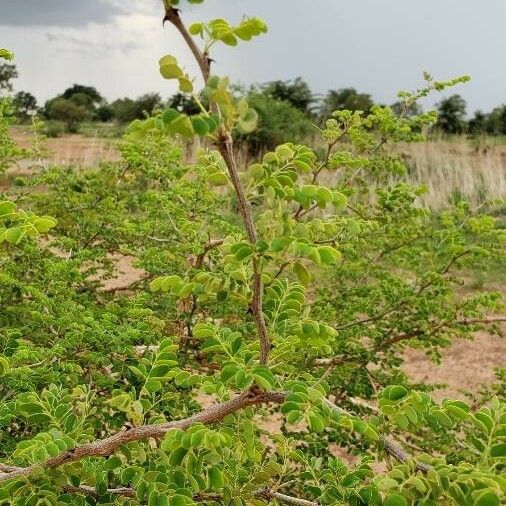
Plant Overview
The Gourma Acacia is a rugged survivor of the West African savanna, often referred to as the "Gourma Thorn." Thriving in some of the harshest, rockiest landscapes, this resilient shrub or small tree is a symbol of endurance. In its native lands, it plays a vital role in stabilizing soil and providing nutritious forage for livestock during the lean dry seasons.
🔍 How to Identify
- 🪝 The "Cat-Claw" Thorns: One of its most distinct features is the paired, hooked thorns located just below the leaf nodes. They are curved like talons and can easily snag clothing or skin.
- 🌿 Delicate Foliage: Despite its tough nature, the leaves are soft and bipinnate (feather-like), consisting of many tiny, oblong leaflets that give the tree a light, airy appearance.
- 🍦 Creamy Flower Spikes: Unlike some Acacias that have round "puffball" flowers, the Gourma Acacia produces elegant, elongated spikes of creamy-white or pale yellow blossoms.
- 🍫 Paper-Thin Pods: Its fruit consists of flat, papery brown pods that rattle in the wind when mature, often containing several small, flat seeds.
🏡 In Your Garden
- 🧱 The Ultimate Rock Star: This plant is genetically programmed to thrive in poor, stony, or lateritic soils where other plants would wither. It is an excellent choice for xeriscaping or "wild" African-style gardens.
- ⚓ Deep-Rooted Stability: It develops a powerful taproot very early in life. Because of this, it hates being moved; once you plant a Gourma Acacia, it intends to stay there for decades.
- 🐐 Natural Boundary: Due to its fierce, hooked thorns, it is traditionally used in rural areas to create "living fences" that keep livestock in and intruders out.
⚠️ Safety & Toxicity
- 🩹 Physical Hazard: While not chemically toxic to the touch, the thorns are exceptionally sharp and hooked. They can cause deep scratches or "hook" into skin, making pruning a task for heavy-duty leather gloves.
- 🐾 Pet & Child Safety: The plant is generally considered non-toxic if nibbled by animals (it is common livestock fodder), but the thorns pose a significant risk of eye injury or skin puncture for playful pets and children.
✨ Fun Fact
In West African traditional medicine, the bark and leaves of the Gourma Acacia are often brewed into a tea used to treat stomach aches and digestive issues, acting as a natural remedy provided by the savanna.

Detailed Care Instructions
To grow Acacia gourmaensis, you will need to follow these steps:
- Obtain seeds: Acacia gourmaensis seeds can be obtained from specialized nurseries or from reputable online seed suppliers. Make sure to choose healthy seeds from a reliable source.
- Prepare the soil: Acacia gourmaensis prefers well-drained, sandy soil with a slightly acidic to neutral pH level. Prep your soil by loosening it and removing any weeds or debris. You can also add organic matter like compost to improve soil fertility.
- Sow the seeds: Fill small pots or seed trays with a well-draining potting mix. Moisten the soil and sow the Acacia gourmaensis seeds on the surface, pressing them lightly into the soil. Sow the seeds at a depth of approximately twice their size.
- Provide optimum conditions: Place the pots or trays in a warm and bright location with indirect sunlight. Acacia gourmaensis prefers temperatures between 68-86°F (20-30°C). Keep the soil consistently moist but not waterlogged. Use a spray bottle to mist the soil regularly.
- Germination: Acacia gourmaensis seeds may take anywhere from weeks to months to germinate. Be patient and ensure that the soil remains moist during this period.
- Transplanting: Once the seedlings have developed a few sets of leaves and are strong enough to handle, you can transplant them into larger pots or directly into your garden, if suitable outdoor conditions exist. Acacia gourmaensis requires ample space for spreading its roots, so make sure you provide enough room.
- Care and maintenance: Water your Acacia gourmaensis plant regularly, especially during dry periods. However, avoid overwatering, as it can lead to root rot. Apply a balanced fertilizer during the growing season to promote healthy growth. Prune any dead or damaged branches as required.
- Protect from frost: Acacia gourmaensis is not frost-tolerant, so if you live in a region with cold winters, you may need to protect the plant by moving it indoors or providing a frost cover.
Remember that Acacia gourmaensis is native to specific regions and may have specific growth requirements. It's always a good idea to research the specific needs of the plant and adapt your care accordingly.
- Acacia gourmaensis is a plant that requires careful watering to ensure its health and growth.
- Before watering the plant, it is important to check the moisture level of the soil. Stick your finger about an inch deep into the soil around the plant to feel if it is dry or moist.
- If the soil feels dry to the touch, it is time to water the Acacia gourmaensis. However, if it still feels moist, it is better to wait a little longer before watering.
- When watering the plant, use a watering can or a gentle spray nozzle that disperses the water evenly. Avoid using a heavy stream of water as it can disturb the plant's delicate roots.
- Give the plant a thorough watering, ensuring that the water reaches the root zone. Water until you see it coming out of the drainage holes at the bottom of the pot or until you have slowly drenched the soil around the plant if it is planted directly in the ground.
- Be mindful not to overwater the Acacia gourmaensis, as this can lead to root rot and other issues. It is better to underwater slightly than to overwater.
- Depending on the climate and humidity levels, Acacia gourmaensis may require watering once or twice a week during warmer months, and less frequently during cooler months. This schedule can vary, so always check the soil's moisture level before watering.
- Additionally, it is essential to provide good drainage to the plant. Make sure the pot has drainage holes or that the planting area has well-draining soil. This helps to prevent water from pooling around the roots, which can be harmful to the plant.
- Pay attention to any signs of water stress in the plant, such as wilting leaves or discolored foliage. This may indicate that the Acacia gourmaensis needs more water or adjustments in its watering routine.
- Lastly, it is worth noting that the water requirements may differ for newly planted Acacia gourmaensis compared to established ones. Newly planted ones may require more frequent watering initially until they establish their root system.
Remember, it's always important to consult specific care instructions for your particular Acacia gourmaensis plant, as they may have slight variations in their watering needs.
To successfully fertilize Acacia Gourmaensis plants, follow these general instructions:
- Choose a well-draining soil mix: Acacia Gourmaensis prefers sandy or loamy soils with good drainage. Ensure the soil is suitable for the plant's growth by providing a well-balanced mixture.
- Determine the appropriate fertilizer: Before applying any fertilizer, consider the specific needs of Acacia Gourmaensis. Use a balanced, slow-release fertilizer with an N-P-K ratio of 10-10-10 or similar composition. This balanced blend will provide essential nutrients without promoting excessive foliage growth.
- Apply fertilizer during the growing season: Start fertilizing in spring once the plant enters the active growth phase. Avoid fertilizing during winter or periods of dormancy.
- Dilute the fertilizer: Follow the recommended dosage according to the instructions on the fertilizer packaging. It is better to err on the side of caution and use less fertilizer rather than risking over-fertilization. Acacia Gourmaensis generally prefers moderate nutrient levels.
- Distribute the fertilizer evenly: Evenly spread the diluted fertilizer around the base of the plant, avoiding direct contact with the stems or leaves. Apply the fertilizer in a circular pattern to encourage uniform nutrient absorption.
- Water thoroughly: After applying the fertilizer, thoroughly water the plant to help the nutrients penetrate the soil and reach the plant's roots. Ensure the water reaches deep into the soil to prevent nutrient runoff.
- Avoid excessive fertilization: Over-fertilizing Acacia Gourmaensis can lead to nutrient burn or other adverse effects. Monitor the plant's response to the fertilizer and adjust the frequency and dosage if necessary.
- Employ organic alternatives (optional): If preferred, you can use organic fertilizers such as compost or well-rotted manure. These natural options also provide essential nutrients and improve soil structure.
- Observe the plant's growth and health: Regularly monitor your Acacia Gourmaensis for signs of nutrient deficiencies or excesses. Adjust the fertilization regime accordingly to maintain optimal growth and vigor.
Remember, it is important to consult specific guidelines or recommendations from experienced gardeners or horticulturists to address the unique fertilization needs of Acacia Gourmaensis.
The Acacia Gourmaensis plant is a species that thrives in certain types of soil conditions. To ensure optimal growth and development, it is important to provide it with a suitable soil environment.
This species prefers a well-draining soil with medium texture. A loamy soil mix that consists of a combination of sand, silt, and clay would be ideal. This type of soil allows good water drainage while still retaining enough moisture for the plant's roots.
The pH level of the soil should be slightly acidic to slightly alkaline, ideally ranging from 6.0 to 7.5. Testing the soil's pH before planting can help determine if any amendments are needed for optimal growth.
Adding organic matter, such as compost or well-rotted manure, to the soil can greatly improve its fertility and nutrient content. This will provide the necessary nutrients for the Acacia Gourmaensis plant's healthy growth.
It is also important to consider the soil's ability to retain moisture. While the soil should be well-draining, it should not dry out too quickly. Therefore, incorporating some moisture-retaining materials, such as coconut coir or peat moss, into the soil mix can help maintain adequate moisture levels for the plant.
Regularly monitoring the soil moisture levels and adjusting watering practices accordingly is crucial for maintaining a healthy soil environment for the Acacia Gourmaensis plant. It is generally recommended to keep the soil evenly moist but not overly saturated, as excessive moisture can lead to root rot and other issues.
Overall, a well-draining loamy soil mix with slightly acidic to slightly alkaline pH, enriched with organic matter, and capable of retaining moisture without becoming waterlogged is best suited for the Acacia Gourmaensis plant's growth and overall well-being.
Acacia gourmaensis is a plant that can be propagated using various methods such as seeds, cuttings, and grafting. Here are the details on how to propagate Acacia gourmaensis:
- Seeds:
- Collect mature seeds from a healthy Acacia gourmaensis plant.
- Soak the seeds in warm water for 24 hours to soften the hard seed coat and enhance germination.
- Sow the seeds in a well-draining potting mix, burying them at a depth of about 1 inch.
- Place the pot in a warm and bright location while protecting it from direct sunlight.
- Keep the soil consistently moist but not waterlogged.
- Germination typically occurs within 1 to 3 weeks.
- Once the seedlings have grown a few inches tall, they can be transplanted into individual pots or directly into the desired location.
- Collect mature seeds from a healthy Acacia gourmaensis plant.
- Cuttings:
- Take semi-hardwood cuttings from a healthy Acacia gourmaensis plant during the growing season.
- Select a branch that is neither too young nor too old, ideally with leaves that have slightly hardened but are not fully mature.
- Make a clean cut just below a node using a sterilized sharp knife or pruning shears.
- Remove the lower leaves, leaving only a few at the top.
- Dip the base of the cutting in a rooting hormone powder to encourage root development.
- Place the cutting in a well-draining potting mix or a mixture of perlite and peat moss.
- Mist the cutting and cover it with a plastic bag or place it in a propagator to maintain high humidity.
- Put the cutting in a bright and warm location but avoid direct sunlight.
- Keep the soil or growing medium slightly moist, not excessively wet.
- Rooting may take a few weeks to a couple of months, after which the rooted cutting can be potted up or transplanted.
- Take semi-hardwood cuttings from a healthy Acacia gourmaensis plant during the growing season.
- Grafting:
- For more advanced propagation, Acacia gourmaensis can also be propagated through grafting onto rootstock of a compatible Acacia species.
- Select a healthy rootstock plant with a stem diameter similar to that of the scion (the desired Acacia gourmaensis cultivar).
- Prepare the scion by taking a clean, slanted cut just below a bud.
- Make an identical slanted cut on the rootstock, ensuring that the cuts match precisely when joined together.
- Attach the scion to the rootstock by joining the cambium layers, making sure there are no gaps between the two.
- Secure the union with grafting tape or grafting clips to hold them firmly in place.
- Protect the graft union by applying grafting wax or a similar product to prevent drying out.
- Place the grafted plant in a warm and sheltered location, providing high humidity and diffused light.
- Remove any shoots emerging from the rootstock to allow the energy to focus on the grafted scion.
- Over time, if successful, the scion will grow and establish itself on the rootstock.
Remember, different propagation methods may have varying success rates depending on various factors such as environmental conditions, plant health, and expertise.
- For more advanced propagation, Acacia gourmaensis can also be propagated through grafting onto rootstock of a compatible Acacia species.








