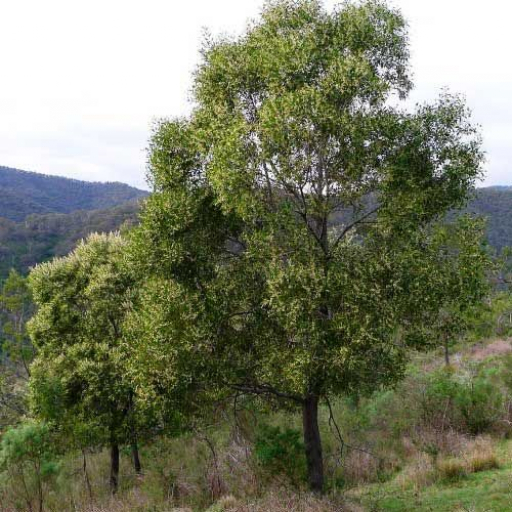
Plant Overview
Known as the Lightwood or Hickory Wattle, this resilient Australian native is often mistaken for a willow at first glance due to its graceful, weeping habit. It is a favorite for those wanting a fast-growing shade tree that isn't afraid of a bit of heat or poor soil. In the wild, it stands as a rugged survivor, often found clinging to rocky hillsides or lining the edges of dry forests.
🔍 How to Identify
- 🍃 The "Leaves": What look like leaves are actually flattened stems called "phyllodes." They are long, narrow, and distinctly curved like a sickle or a boomerang, with a smooth, leathery texture.
- ☁️ The Blooms: Unlike many wattles that bloom in spring, the Lightwood waits for summer to show off. It produces clusters of soft, creamy-yellow flower balls that look like tiny pom-poms.
- 🥨 The Pods: Its scientific name implexa means "entwined," referring to the seed pods. After flowering, the tree produces long, woody pods that twist and curl into tangled knots as they dry.
🏡 In Your Garden
- 💪 A Tough Neighbor: This tree is famously hardy and can handle heavy clay soils and frost better than most wattles. However, it has a shallow, wide-spreading root system, so it is best to plant it away from pipes or paved garden paths.
- 🧪 Self-Sufficient: Like most members of the pea family, it is a "nitrogen-fixer." It works with soil bacteria to create its own fertilizer, meaning it can thrive in nutrient-poor ground where other trees might struggle.
⚠️ Safety & Toxicity
- 🐾 Pet Safety: The Lightwood is generally considered non-toxic to cats, dogs, and horses. It is a safe choice for a pet-friendly backyard.
- 🛡️ Mild Irritants: While not poisonous, the bark and leaves contain high levels of tannins. If a curious pet or child chews on them, it may cause a bitter taste or a mild stomach ache. The summer pollen can also be a minor trigger for hay fever sufferers.
✨ Fun Fact
Indigenous Australians traditionally used the tannin-rich bark of the Lightwood as a medicinal wash for skin sores, and even used crushed bark in shallow pools to stun fish, making them easier to catch!

Detailed Care Instructions

Place in a bright room that is sun drenched almost all day. Or directly in a south-facing window.

Some plants require more regular watering than others, which should be done every few days. It's critical to maintain the soil moist all of the time. The water requirements of the same plant placed in pots with varying sizes will differ. Because the water in the smaller pot evaporates faster than the water in the larger pot, it will require more watering. Regardless of pot size, the surface should constantly be maintained moist.








