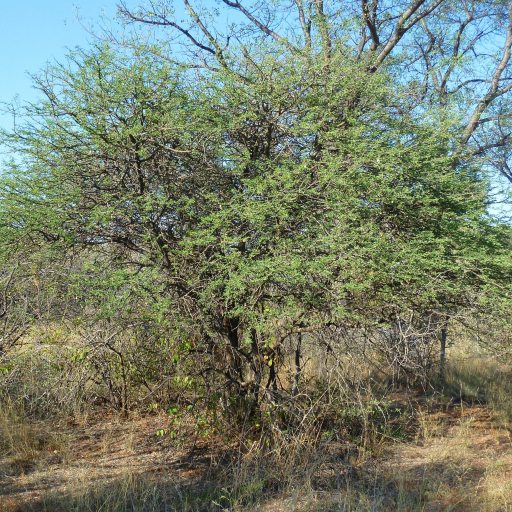
Plant Overview
Known across the African savanna as the "Blackthorn" or "Hook-thorn," Acacia mellifera is a hardy survivor famous for its sweet-scented flowers and wicked thorns. In many regions, it is nicknamed the "Wait-a-bit" tree because its curved spines are so effective at snagging clothing that you have no choice but to stop and untangle yourself. Despite its prickly nature, it is a cornerstone of its ecosystem, providing vital nectar for honeybees and high-protein forage for wildlife.
🔍 How to Identify
- 🌑 The Thorns: Sharp, paired spines that are distinctively hook-shaped and turn a glossy black or deep brown as they mature.
- 🍃 Leaf Structure: Small, rounded leaflets arranged in pairs (usually only two pairs per leaf), giving the canopy a delicate, blue-green, and airy appearance.
- ☁️ Floral Spikes: Produces elongated, cream-to-white flower spikes that look like miniature "bottlebrushes" and emit a heavy, intoxicating honey fragrance.
🏡 In Your Garden
- 🛡️ Natural Security: Because of its dense growth habit and aggressive thorns, it makes an impenetrable "living fence." It is often used on larger properties to create a natural barrier that no intruder (human or animal) would want to push through.
- 🏜️ Drought Master: This plant evolved with a massive taproot system designed to find water deep underground. It hates "wet feet" and thrives in rocky or sandy soil where other plants might wither.
- 🦋 Wildlife Magnet: It is a premier choice for "wildlife gardening." It attracts a vast array of pollinators and provides incredibly safe nesting sites for small birds, as the thorns keep tree-climbing predators at bay.
⚠️ Safety & Toxicity
- 🩹 Physical Hazard: While the plant is not chemically toxic to humans or pets, the hooked thorns are a significant physical danger. They are shaped to pull deeper into the skin if you pull away too quickly.
- 🐾 Pet Safety: It is non-toxic if nibbled by pets, but it should be planted away from high-traffic play areas or paths to avoid accidental scratches or eye injuries to dogs and cats.
✨ Fun Fact
🍯 The species name mellifera literally translates to "honey-bearing" in Latin. Beekeepers highly prize this tree because it produces a pale, exceptionally high-quality honey with a delicate floral flavor that is considered a delicacy in its native regions.

Detailed Care Instructions








