Plant Overview
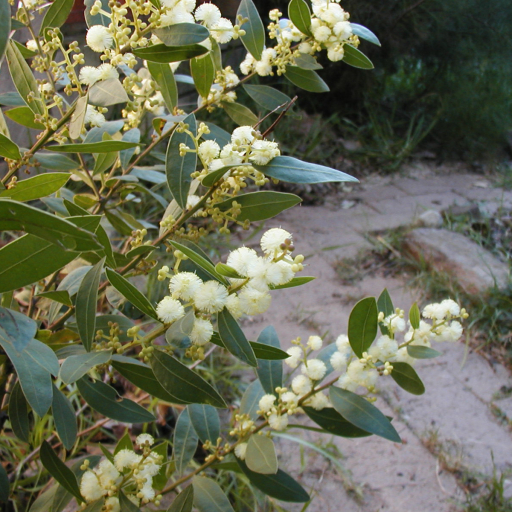
Commonly known as the Myrtle Wattle or Red-stemmed Wattle, this Australian native is a showstopper for its architectural contrast. It is one of the earliest wattles to bloom, often signaling the transition from winter to spring with a flurry of creamy "pom-pom" blossoms. Its stiff, leathery foliage and striking reddish stems make it a favorite for gardeners looking for structural beauty that thrives in rugged conditions.
🔍 How to Identify
- 🌿 The "Leaves": It doesn't actually have true leaves; instead, it has "phyllodes." These are thickened leaf stalks that look like elliptical myrtle leaves—dark green, leathery, and featuring a prominent central vein.
- 🔴 The Stems: One of its most identifying features is the distinctive reddish or purplish tint on its branches, especially on young growth, which provides a beautiful contrast against the green foliage.
- 🟡 The Blooms: In late winter and spring, the plant is covered in clusters of 3 to 8 pale yellow or creamy-white spherical flower heads that look like soft, fuzzy globes.
🏡 In Your Garden
- 🧱 Coastal Toughness: This wattle is incredibly hardy and salt-tolerant, making it an ideal choice for coastal gardens or windy spots. It prefers well-drained soil and, once established, can handle significant dry spells without drooping.
- ✂️ Shape & Longevity: While it is a relatively short-lived shrub (often lasting 10-15 years), you can extend its "neat" look by pruning it lightly after the flowers fade. This prevents the plant from becoming leggy and encourages a denser, more privacy-friendly habit.
⚠️ Safety & Toxicity
- 🐾 Pet Friendly: The Myrtle Wattle is generally considered non-toxic to dogs, cats, and horses. It lacks the high levels of cyanogenic glycosides found in some other Acacia species.
- 🤧 Hay Fever Warning: Like many wattles, the heavy, fluffy pollen can be a trigger for people with sensitive respiratory systems. If you suffer from seasonal allergies, avoid planting it directly under bedroom windows.
✨ Fun Fact
The name myrtifolia literally means "Myrtle-leaved." This plant was actually one of the first Australian species to be grown in Europe, having been successfully cultivated in English gardens as early as 1789!

Detailed Care Instructions
To grow Acacia Myrtifolia, also known as Myrtle Wattle, you can follow these steps:
- Climate and soil conditions: Acacia Myrtifolia thrives in warm climates like Mediterranean or subtropical regions. It prefers well-draining soils and can tolerate both sandy and clayey soils.
- Selecting a planting location: Choose a sunny spot in your garden where the plant can receive at least 6-8 hours of direct sunlight. Ensure that the area has good air circulation.
- Propagation: Acacia Myrtifolia can be propagated from seeds or cuttings.
- Seeds: Soak the seeds in water for 12-24 hours to facilitate germination. Sow the seeds in a small pot or seed tray filled with a well-draining potting mix at a depth of ¼ inch. Keep the soil consistently moist and place the pot in a warm location. Germination usually takes 2-4 weeks. Once the seedlings have grown stronger, they can be transplanted into larger pots or directly into the ground.
- Cuttings: Take semi-hardwood cuttings from a healthy Acacia Myrtifolia plant. Remove the lower leaves from the cutting and dip the cut end in rooting hormone. Plant the cutting in a pot filled with a well-draining potting mix. Keep the soil slightly moist and place the pot in a warm and bright location. Rooting usually occurs within 6-8 weeks. Once rooted, the cutting can be transplanted into a larger pot or directly into the ground.
- Planting and care:
- Dig a hole in the soil, larger than the root ball of the plant.
- Place the plant in the hole, making sure it is positioned at the same depth as it was in its previous container.
- Backfill the hole with soil, gently firming it around the roots.
- Water the plant thoroughly after planting and continue to water it regularly, especially during dry spells.
- Pruning: Acacia Myrtifolia generally does not require much pruning. However, you can lightly prune to shape the plant and remove any dead or damaged branches. Pruning should be done in late winter or early spring, before the plant starts actively growing.
- Maintenance: Mulching around the base of the plant with organic matter can help retain moisture and suppress weeds. Regular watering during dry periods is essential to keep the plant healthy.
Remember to check for specific regional guidelines and recommendations for growing Acacia Myrtifolia in your area, as some guidelines may vary depending on the climate and soil conditions.

Place in a bright room that is sun drenched almost all day. Or directly in a south-facing window.

To water the Acacia Myrtifolia plant effectively, you need to consider its specific needs and the best practices for watering indoor plants. Here's a detailed guide:
1. Observe the soil moisture: Before watering, check the moisture level of the soil. Insert your finger about an inch into the soil, and if it feels dry, it's time to water the plant.
2. Use a well-draining potting mix: Ensure the plant is potted in a well-draining potting mix. A mix that contains perlite or sand helps prevent waterlogged soil, which can lead to root rot.
3. Watering method: Acacia Myrtifolia plants prefer deep, thorough watering rather than frequent, shallow watering. This encourages proper root development.
4. Watering frequency: Water the plant deeply once every 7-10 days during the growing season (spring and summer). Adjust the frequency based on environmental factors such as temperature and humidity. Monitor the plant's reaction to watering to determine the optimal schedule.
5. Watering technique: To prevent water from splashing on the foliage, use a watering can, a narrow spout, or a drip irrigation system. Pour water around the base of the plant, allowing it to soak into the soil slowly.
6. Water quantity: Water the Acacia Myrtifolia plant until you see water coming out of the drainage holes at the bottom of the pot. This ensures thorough penetration of water throughout the soil and encourages root development.
7. Avoid waterlogging: It's crucial to avoid overwatering and waterlogging the plant. Excessive moisture can cause root rot and other fungal diseases. Always ensure the top inch of soil has dried out before watering again.
8. Adjust watering during dormant period: During the plant's dormant period (fall and winter), reduce the watering frequency. Acacia Myrtifolia plants prefer drier conditions during this time, so water only when the soil is completely dry.
Remember, the focus is on providing enough water to keep the plant healthy and hydrated without drowning the roots. Adjust your watering practices according to the specific needs of your Acacia Myrtifolia plant and the environmental conditions it is kept in.
To fertilize the Acacia Myrtifolia plant, you can follow these instructions:
- Choose a balanced, slow-release fertilizer formulated for woody plants or native shrubs. Make sure it does not have high levels of phosphorus.
- Apply fertilizer to the plant during the growing season, which is typically spring for most Acacia plants.
- Prior to fertilizing, water the plant thoroughly so it is well-hydrated, but avoid overwatering.
- Follow the recommended dosage instructions on the fertilizer packaging. Generally, it is best to use a granular or pelletized fertilizer and apply it evenly around the base of the plant.
- Use a garden fork or small shovel to work the fertilizer into the top inch of soil without damaging the roots.
- Water the plant after applying the fertilizer to help dissolve it into the soil and prevent any potential burn from concentrated fertilizer.
- Repeat the fertilization process once or twice during the growing season, but do not over-fertilize as it can lead to excessive growth or nutrient imbalances.
- Monitor the plant's response to the fertilizer over time. If you notice any signs of over-fertilization, such as leaf burn or stunted growth, reduce the amount or frequency of fertilization.
Remember, it is important to always read and follow the specific instructions provided with the fertilizer product you choose, as different formulations may have slightly different application guidelines.
When it comes to choosing the appropriate soil for Acacia Myrtifolia, it is advisable to consider certain factors. The plant prefers a well-draining soil mix that does not retain excessive moisture. A mix with good drainage characteristics ensures that water does not pool around the roots, which might cause root rot or other related issues.
Acacia Myrtifolia generally thrives in sandy or loamy soils that are slightly acidic to mildly alkaline in nature. Such soils provide a balanced environment for the plant's growth and enable it to absorb nutrients effectively. Sandy soils are often preferred due to their excellent drainage properties, preventing waterlogging, while also providing necessary aeration for the roots.
Additionally, amending the soil mixture with organic matter, such as compost or well-rotted manure, can significantly enhance its nutrient content and moisture retention abilities. This amendment also aids in improving soil structure and fertility, promoting the overall health and vitality of the Acacia Myrtifolia plant.
It is important to note that Acacia Myrtifolia is relatively adaptable and can tolerate a range of soil conditions. However, it is best to avoid heavy clay soils or those that retain excessive moisture for extended periods, as this may lead to root problems and hinder plant growth.
Overall, ensuring the soil has good drainage, is slightly acidic to mildly alkaline, and is enriched with organic matter will provide an optimal growing environment for Acacia Myrtifolia.
To propagate Acacia Myrtifolia plant, you can follow these steps:
- Collect the mature seeds from the plant. Look for seed pods that have turned brown and are beginning to split open.
- Place the seeds in a container with warm water and let them soak for 24 hours. This softens the hard seed coat and enhances germination.
- Prepare a well-draining growing medium using a combination of sand and potting soil. Make sure the medium is moist but not waterlogged.
- Sow the seeds on the surface of the growing medium, spacing them apart to allow room for growth. Gently press the seeds into the soil, but avoid burying them too deeply.
- Cover the container with a plastic wrap or a plastic lid to create a greenhouse-like environment. This helps to retain moisture and warmth, which aids in germination. Place the container in a warm and bright location, but avoid direct sunlight.
- Check the moisture level regularly and mist the soil if it becomes dry. Ensure the soil remains consistently moist during the germination process.
- Germination of Acacia Myrtifolia seeds usually occurs within 2-4 weeks. Once the seedlings have developed several sets of leaves, they are ready for transplantation.
- Prepare individual pots with a well-draining potting mix. Gently remove the seedlings from the container and transfer them into the pots. Be careful not to damage the fragile roots.
- Water the newly transplanted seedlings thoroughly and place them in a location with bright, indirect light. Gradually increase their exposure to direct sunlight over time.
- Continue to care for the young plants by providing regular watering to maintain moist soil. Fertilize them with a balanced liquid fertilizer every 4-6 weeks during the growing season to promote healthy growth.
By following these steps, you can successfully propagate Acacia Myrtifolia plant from seeds and enjoy the beauty of this plant in your garden or indoor space.








