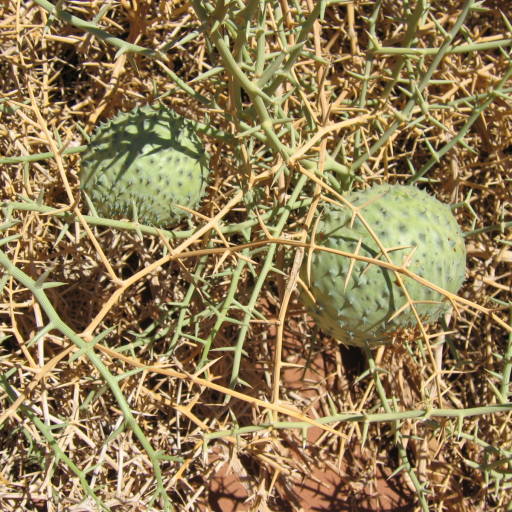
Plant Overview
Known as the !Nara (the "!" representing a distinct click sound), the Acanthosicyos horridus is a true survivor of the Namib Desert. This ancient, leafless shrub looks like a tangled mound of sharp green spears, designed specifically to endure one of the harshest environments on Earth. For the Topnaar people of Namibia, this "thorn melon" has been a vital source of life and nutrition for centuries.
🔍 How to Identify
- 🌵 The Thorns: Unlike most plants, the Nara has no leaves. Instead, it is composed entirely of 2-3 centimeter long, paired thorns that handle all the plant's photosynthesis.
- 🌼 Pale Flowers: It produces waxy, yellowish-to-green flowers that emerge directly from the thorny stems, usually appearing more frequently after rare desert rains.
- 🍈 Spiky Fruit: The fruit is a grapefruit-sized melon covered in small, knobby protuberances. It turns from a dusty green to a pale orange-yellow when ripe.
🏡 In Your Garden
- 💧 The Hidden Anchor: You won't find this in a standard backyard because of its massive taproot, which can reach depths of up to 50 meters (160 feet) to find subterranean water. It doesn't just sit in the sand; it "anchors" dunes, often creating high hummocks as the wind blows sand into its thorny thicket.
- ☀️ Extreme Specialist: This plant thrives in high-heat, zero-humidity environments. In a domestic setting, it is nearly impossible to grow unless you can replicate the shifting sands and deep water tables of the Namibian coast.
⚠️ Safety & Toxicity
- ✅ Safe but Sharp: The Nara is non-toxic and serves as a primary food source for desert wildlife like jackals, crickets, and even elephants.
- ⚔️ Physical Hazard: The primary danger is the plant’s structure. The thorns are incredibly stiff and sharp, capable of piercing thick leather. Handle with extreme caution to avoid painful punctures.
- 🍽️ Edible Harvest: The fruit's pulp is sweet, and the seeds (often called "butternuts") are highly nutritious and rich in oil, frequently eaten raw or roasted.
✨ Fun Fact
The Nara plant can live for over 100 years! Because it has no leaves to lose water through evaporation, it is one of the most drought-efficient plants in existence. Even when it appears "dead" and brown, the deep roots keep the core alive, waiting for the slightest hint of moisture to turn green again.

Detailed Care Instructions
Acanthosicyos horridus, also known as the Nara melon, is a unique desert plant that is native to the Namib Desert in southern Africa. Here are some tips on how to grow this plant successfully:
- Climate: Acanthosicyos horridus thrives in hot, arid climates with plenty of sunlight. It is important to mimic the plant's natural habitat as closely as possible when growing it.
- Soil: The plant prefers well-draining sandy or rocky soil with a slightly alkaline pH. Avoid heavy or waterlogged soil, as this can lead to root rot.
- Watering: Acanthosicyos horridus is drought-tolerant, so it requires very little water. Water sparingly, only when the soil is dry to the touch. Overwatering can cause the plant to rot.
- Propagation: The plant can be propagated from seeds. Sow the seeds in well-draining soil in a sunny location. Germination can take up to several weeks, so be patient.
- Care: Acanthosicyos horridus is a low-maintenance plant and does not require much care once it is established. However, you may need to protect young plants from pests and provide some shade during extreme heat.
- Harvesting: The Nara melon is known for its sweet and nutritious fruits, which can be harvested when they are fully ripe. The fruit is edible and can be eaten fresh or used in cooking.
Overall, Acanthosicyos horridus is a hardy plant that can thrive in harsh desert conditions with minimal care. By providing the right growing conditions and proper care, you can successfully grow this unique and interesting plant in your garden.
To water this plant, it is important to keep in mind that it is native to arid regions and thrives in dry conditions. Therefore, it is best to water it sparingly, only when the soil has completely dried out. When watering, make sure to thoroughly soak the soil, allowing water to reach the deeper roots. Avoid getting water on the leaves, as this can increase the risk of rot and disease. It is also important to use well-draining soil and a container with drainage holes to prevent water from sitting and causing root rot. In the winter months, when the plant is dormant, reduce watering frequency even further.
To fertilize the plant, use a balanced fertilizer with equal parts nitrogen, phosphorus, and potassium. Apply the fertilizer lightly around the base of the plant in the spring, following the manufacturer's instructions for the proper dosage. Avoid over-fertilizing, as this can cause damage to the plant. Water the plant thoroughly after applying the fertilizer to help it absorb the nutrients. Repeat the fertilizing process once or twice more throughout the growing season, but be sure to give the plant time to rest during the winter months.
The Acanthosicyos Horridus plant requires well-draining soil that is sandy and contains a moderate amount of organic matter. The soil pH should be slightly acidic to neutral, with a range of around 6.0 to 7.5. It is important to avoid soil that is heavy, poorly draining, or has a high clay content, as these conditions can lead to root rot and other problems. Adding coarse sand or gravel to the soil mixture can help improve drainage. Additionally, the plant prefers soil that is relatively dry, so avoiding overly moist conditions is crucial. Fertilization is generally not necessary, but adding a small amount of compost or slow-release fertilizer during planting can provide the plant with some additional nutrients.
Acanthosicyos Horridus can be propagated through both seeds and cuttings.
To propagate through seeds, collect ripe fruit from a mature plant and remove the seeds from the flesh. Clean the seeds thoroughly and allow them to dry for a few days. Plant the seeds in well-draining soil and keep them moist but not waterlogged. Germination can take anywhere from 2-6 weeks.
To propagate through cuttings, select a healthy stem from the parent plant and cut a piece that is 4-6 inches long. Remove the lower leaves, dip the end of the cutting in rooting hormone, and plant it in a well-draining soil mixture. Keep the cutting in bright, indirect light and keep the soil consistently moist until roots form, which can take several weeks.
Both seed and cutting propagation methods have their advantages, and experimenting with both can help ensure successful propagation of Acanthosicyos Horridus plants.








