Plant Overview
Often called the Thistle-leaved Bear’s Breech, this striking perennial is a living piece of history. With its dramatic, jagged foliage and towering flower spikes, it brings an "ancient ruin" aesthetic to any landscape. It is widely celebrated for its architectural beauty, having inspired artists and stone carvers from the Mediterranean to the Middle East for millennia.
🔍 How to Identify
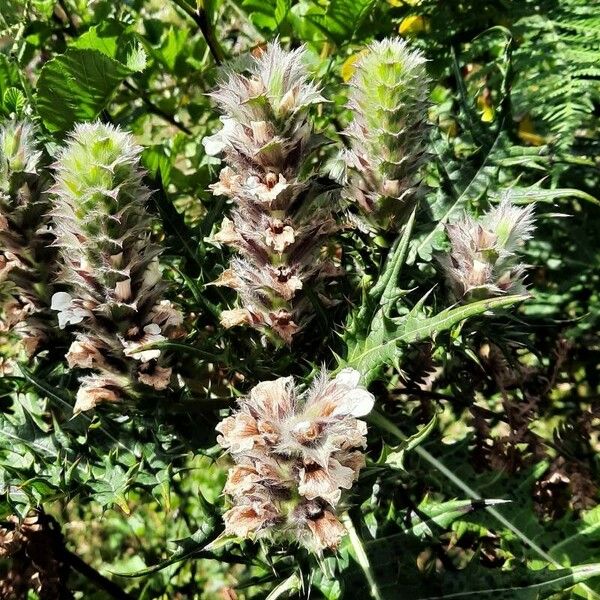
- 🍃 Jagged Foliage: The leaves are deeply lobed and mimic the look of a thistle, featuring sharp, prickly points along the margins.
- 🏰 Hooded Flowers: It produces tall, stiff spikes of tubular white or cream flowers, each "protected" by a purple or brownish bract that looks like a tiny helmet.
- 🏗️ Statuesque Growth: The plant forms a dense, mounding base of greenery from which the flower stalks rise, often reaching several feet in height.
🏡 In Your Garden
- ⚓ The Taproot Trap: Think carefully before you plant! Acanthus carduaceus develops a massive, deep taproot. This makes it incredibly drought-tolerant once established, but nearly impossible to move. If you try to dig it up, any tiny fragment of root left in the soil will likely grow into a new plant.
- ☀️ Sun and Drainage: While it loves the sun, it can handle partial shade in hotter climates. Its biggest enemy is "wet feet" during the winter; it requires gritty, well-draining soil to prevent crown rot.
⚠️ Safety & Toxicity
- ⚔️ Physical Hazard: While not typically ranked as a high-toxicity plant, its main defense is mechanical. The sharp spines on the leaves can cause painful scratches or skin irritation.
- 🐾 Pets and Kids: It is generally considered non-toxic if nibbled, but the prickly nature of the foliage usually acts as a natural deterrent for curious dogs, cats, or children.
✨ Fun Fact
The leaf of the Acanthus plant is the foundation of the "Corinthian Order" in classical Greek architecture. If you look at the top of an ornate ancient column, you are looking at a stone version of this plant’s iconic, curling foliage!

Detailed Care Instructions








