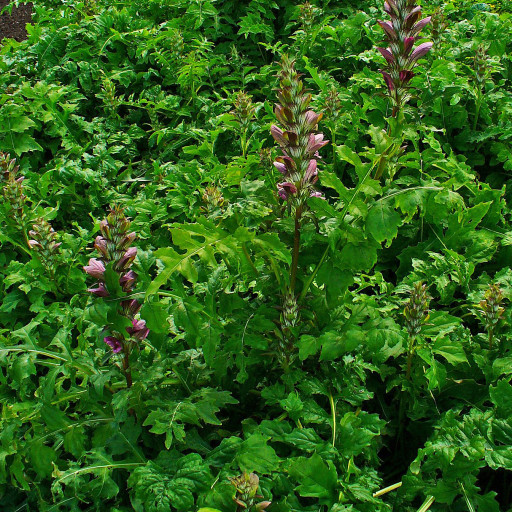
Plant Overview
Often called "Bear's Breeches," this majestic perennial is a living piece of history. If you've ever admired the intricate carvings atop a Corinthian column in Greek architecture, you have seen the stylized stone version of its dramatic, jagged leaves. Native to the Mediterranean, it brings a bold, statuesque elegance to shaded garden corners where other plants might struggle to make an impact.
🔍 How to Identify
- 🍃 Architectural Foliage: The leaves are massive, glossy, and dark green, featuring deep, wavy lobes that can grow up to three feet long.
- 🗼 Towering Spikes: In late spring and summer, it sends up tall, rigid flower spikes that look like architectural pillars reaching for the sky.
- 🧥 Hooded Blooms: The flowers are two-toned, featuring white or creamy petals tucked under a protective, dusky purple or maroon "hood" (bract).
🏡 In Your Garden
- 🧱 The Taproot Challenge: This plant grows a massive, fleshy taproot that anchors it deeply. Because of this, it hates being moved; even a tiny piece of root left behind will likely sprout into a new plant the following year.
- 🌿 Aggressive Elegance: While it isn't technically invasive in all regions, it is a "space-taker." It spreads via underground runners and can quickly dominate a garden bed if not given clear boundaries.
- 🐌 Slug Magnet: Its lush, succulent leaves are a favorite snack for snails and slugs, so keep an eye out for "Swiss cheese" holes during damp spring mornings.
⚠️ Safety & Toxicity
- ✅ Generally Safe: Acanthus mollis is not considered toxic to humans, cats, or dogs. It is a safe choice for family-friendly landscapes.
- 🌵 Physical Prickles: While not chemically toxic, the flower spikes feature sharp, pointed bracts that can be quite prickly to the touch. Wear gloves when pruning or deadheading to avoid scratches.
✨ Fun Fact
According to legend, the Greek architect Callimachus was inspired to create the Corinthian column after seeing a basket of offerings left on a young girl's grave. An Acanthus plant had grown up through the basket, weaving its leaves through the wicker in a pattern so beautiful he had to immortalize it in stone.

Detailed Care Instructions
| Color | White Flowers Grow On Tall (3 Feet) Flower Stalks And Are Hooded By Purple Bracts |
| Soil Ph | 6.5 To 7.5 |
| Humidity | Dry |
| Invasive | Weed |
| Lighting | Part Sun |
| Soil Type | Rich Soil With Proper Drainage |
| Bloom Time | Late Spring To Mid Summer |
| Difficulty | Medium |
| Plant Type | Perennial |
| Hibernation | Cold Period |
| Mature Size | 3 To 6 Feet Tall And 3 To 6 Feet Wide |
| Native Area | Southern Europe And Mediterranean Region |
| Sun Exposure | Full Sun To Partial Shade |
| Hardiness Zones | 6 To 10; They Can Often Survive Winter Down To Zone 5, But Can Be A Gamble In A Harsh Winter |
To grow Acanthus Mollis plants, also known as bear's breeches, follow these steps:
- Choose the right location: Acanthus Mollis plants thrive in full sun to partial shade. Select a well-draining soil that is rich in organic matter.
- Prepare the soil: Loosen the soil by digging it up to a depth of at least 12 inches. Remove any weeds or grass. Mix in compost or well-rotted manure to improve fertility.
- Planting: Dig a hole that is slightly larger than the root ball of the plant. Place the Acanthus Mollis in the hole, ensuring that the top of the root ball is level with the soil surface. Backfill the hole with soil, gently patting it down to remove any air pockets.
- Watering: Water the plant thoroughly after planting. Acanthus Mollis plants prefer moist soil, so water regularly during dry periods, particularly in their first year of growth. However, avoid overwatering, as this can lead to root rot.
- Mulching: Apply a layer of organic mulch, such as wood chips or shredded bark, around the base of the plant. This helps retain moisture, suppress weeds, and regulate soil temperature.
- Pruning: Acanthus Mollis plants don't require much pruning, but you can remove any dead or damaged leaves and flower spikes to maintain their appearance.
- Fertilizing: Feed the plant with a balanced slow-release fertilizer in spring, following the manufacturer's instructions. This will provide the necessary nutrients for healthy growth.
- Winter care: Acanthus Mollis plants are winter hardy but can benefit from a layer of mulch applied in late autumn to protect the roots from extreme cold.
By following these steps, you can successfully grow Acanthus Mollis plants and enjoy their beautiful foliage and flower spikes.

Place in a window with dappled sun or a spot in the middle of a room. Or directly in a window facing west or east.

To water this plant, it is recommended to use a watering can or a hose with a gentle flow setting. It should be watered deeply, ensuring that the water reaches the roots. It is important to avoid getting water on the leaves as this can lead to fungal diseases. The plant should be allowed to dry out slightly between waterings, as overwatering can cause root rot. It is also important to provide good drainage to prevent waterlogged soil. In general, the frequency of watering will depend on the climate, soil type, and other growing conditions.
To fertilize this plant, it is important to use a slow-release fertilizer in the early spring. Apply the fertilizer at the base of the plant and water the soil thoroughly. Avoid over-fertilizing as it can cause the leaves to become too lush and floppy. Additionally, this plant prefers a slightly acidic soil, so consider amending the soil with compost or other organic matter to maintain its optimal pH level.
The ideal soil for the Acanthus Mollis plant is well-draining and rich in organic matter. It should be slightly acidic to neutral in pH, with a range of 6.0 to 7.5. The soil should also be moist but not waterlogged, as this plant does not tolerate wet feet. It prefers a loamy or sandy soil texture with good aeration, as compacted or heavy soils can reduce plant growth and vigor. Acanthus Mollis plants are commonly grown in borders or as feature plants, and they do well in full sun to partial shade, though they may require protection from hot afternoon sun in warmer climates.
To propagate the plant, cut a healthy stem from the parent plant using sterile pruning shears. The stem should be about 6 inches long and have several nodes. Remove the lower leaves and dip the cut end in rooting hormone powder. Plant the stem cutting in a pot filled with well-draining soil and keep it in a warm, bright location with indirect sunlight. Keep the soil moist, but not waterlogged. After a few weeks, the stem cutting should develop roots. Once the roots are established, the new plant can be transplanted into a larger container or directly into the garden.








