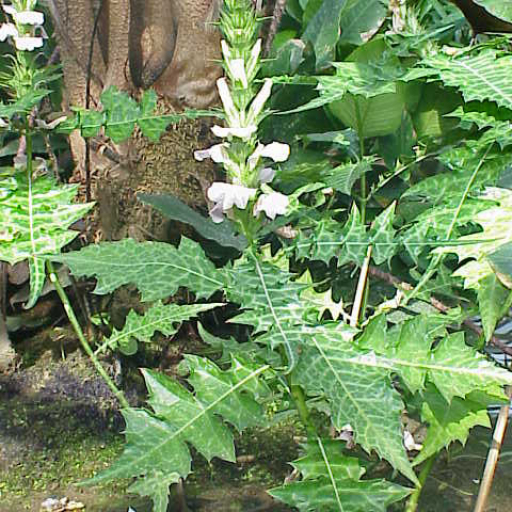
Plant Overview
Known as the Mountain Thistle or African Bear’s Breech, this striking perennial is a favorite for those seeking a touch of prehistoric drama. Hailing from West Africa, its bold, architectural foliage looks like something plucked straight from a dinosaur’s garden. While it carries a "tough" appearance with its jagged edges, it is actually a sophisticated addition to tropical and woodland landscapes.
🔍 How to Identify
- ⚔️ Spiny Foliage: The leaves are large, deeply lobed, and rimmed with sharp, thistle-like spines that demand respect.
- 🎨 Silver Veining: Each dark green leaf is often marbled with subtle silver-grey streaks, giving it a metallic sheen in the sunlight.
- 🕯️ Flower Spikes: In late summer, it sends up tall, sturdy stalks topped with pale pink or white snapdragon-like flowers tucked into purple-tinted bracts.
🏡 In Your Garden
- 🌱 Shade Seeker: Unlike many structural plants, the Mountain Thistle thrives in dappled shade. Direct midday sun can scorch the beautiful silver variegation, so give it a spot under a leafy canopy.
- 🧘 Patience with Roots: This plant develops a deep, fleshy root system. It hates being moved once established, so choose its "forever home" carefully to avoid transplant shock.
- 💧 Drainage is Key: While it enjoys consistent moisture to keep its large leaves turgid, it will quickly rot in soggy, heavy clay. Adding organic compost helps create the airy, rich soil it craves.
⚠️ Safety & Toxicity
- 🌵 Physical Hazard: While the plant is not considered chemically toxic to humans or common pets, its spines are very sharp.
- 🩹 Handle with Care: The leaf margins can cause painful punctures or scratches. It is best to plant it away from high-traffic paths where children or pets might brush against it, and always wear thick gloves when pruning.
✨ Fun Fact
The Acanthus leaf is one of the oldest motifs in architectural history! Since ancient Greece, the scrolling shape of these leaves has been carved into the "Capitals" of Corinthian columns, symbolizing enduring life and rebirth.

Detailed Care Instructions
To grow Acanthus montanus plant, also known as Mountain Thistle, follow these steps:
- Choose the right location: Acanthus montanus prefers partial shade to full shade, so find a spot in your garden that receives indirect sunlight or dappled shade throughout the day.
- Prepare the soil: Acanthus montanus thrives in well-draining, fertile, and slightly acidic soil. Amend the soil if necessary by adding compost or peat moss to improve drainage and fertility.
- Planting: Dig a hole slightly larger than the plant's root ball. Place the plant in the hole, ensuring that the top of the root ball is level with the surrounding soil. Backfill the hole, gently firming the soil around the plant.
- Watering: After planting, water the plant thoroughly to settle the soil and help the roots establish. Throughout the growing season, keep the soil consistently moist, but not waterlogged. Acanthus montanus doesn't tolerate drought well.
- Mulching: Apply a layer of organic mulch, such as bark chips or straw, around the base of the plant to help retain moisture, suppress weeds, and regulate soil temperature.
- Fertilization: Feed the plant with a balanced, slow-release fertilizer in spring and mid-summer. Follow the instructions on the fertilizer package for proper application rates.
- Pruning: Trim off any dead or damaged leaves and spent flower stalks to keep the plant tidy and promote new growth. Prune in early spring before new growth emerges.
- Propagation: Acanthus montanus can be propagated through stem cuttings or division. Take stem cuttings in spring or early summer and place them in a moist, well-draining soil mix. Division should be done in early spring when the plant is dormant.
- Pests and diseases: Acanthus montanus is generally resistant to pests and diseases. However, keep an eye out for common garden pests like aphids, slugs, and snails. If necessary, treat them with appropriate organic or chemical methods.
Remember to research specific care requirements for Acanthus montanus based on your climate and growing conditions, as these instructions are general guidelines.

Place in a bright room that is sun drenched almost all day. Or directly in a south-facing window.

To water this plant, wait until the top inch of soil is dry before watering. Use a watering can or hose to thoroughly water the soil, allowing the excess water to drain out of the bottom of the pot. Avoid getting the leaves wet as this can lead to disease. Water more frequently during hot and dry weather and reduce watering during the cooler months. Make sure the pot has good drainage to avoid waterlogging.
To fertilize this plant, use a balanced fertilizer with equal amounts of nitrogen, phosphorus, and potassium. Apply the fertilizer in early spring when new growth starts to appear, and again in mid-summer. Mix the fertilizer with water according to the package instructions and apply it to the soil around the base of the plant, avoiding contact with the leaves or stem. Water the plant after fertilizing to help distribute the nutrients throughout the soil. Avoid over-fertilizing, as this can cause damage to the plant and may promote weed growth.
A suitable soil for this plant should be rich, well-draining, and slightly acidic. It should contain organic matter to retain moisture, yet have good drainage to prevent waterlogging. A sandy-loam type of soil that is fertile and well-drained is preferred. It is also important to ensure that the soil has good aeration, as this will promote root growth and overall health of the plant. Adding compost or well-rotted manure to the soil prior to planting will help improve the soil structure and provide a steady supply of nutrients. It is important to keep the soil consistently moist but not waterlogged, especially during periods of active growth. Adding a layer of mulch around the base of the plant can help maintain soil moisture and regulate temperature.
To propagate this plant, you will need to take stem cuttings from the parent plant. Select a healthy stem that is about 6 inches long and has a few leaves on it. Make a clean cut at a 45-degree angle just below a node (where a leaf comes out). Remove the leaves from the bottom half of the stem, and dip the cut end into a rooting hormone powder. plant the cutting in a well-draining potting mix. Water the cutting and cover it with a plastic bag to create a humid environment. Place the pot in a bright, indirect light location and keep the soil moist, but not waterlogged. In a few weeks, the cutting will begin to grow roots, and you can remove the plastic bag. Once the plant has grown a few inches, you can transplant it into a larger container or your garden.








