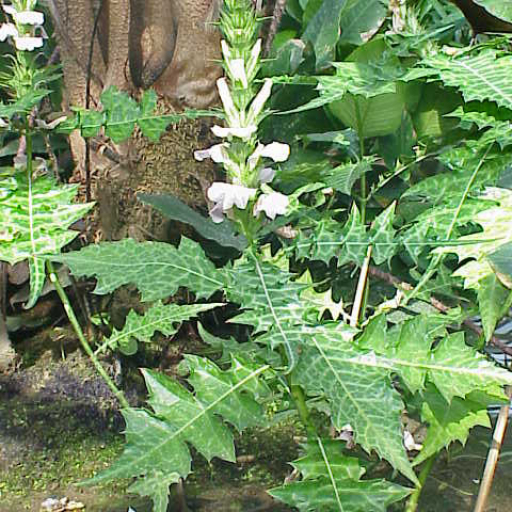
Plant Overview
Known as "Bear's Breeches" for its fuzzy-looking flower bracts, the Acanthus is a living piece of history. This architectural powerhouse has been a staple in Mediterranean landscapes for millennia, famously inspiring ancient Greek stone carvers. Its dramatic foliage and tall, majestic flower spikes make it a bold statement piece for any modern garden looking for a touch of classical elegance.
🔍 How to Identify
- 🍃 Foliage: It features large, deeply lobed, or "toothed" leaves that are dark green and glossy. The leaves often look like massive, stylized feathers and can grow up to three feet long.
- 🏰 Growth Habit: It forms a dense, mounding basal rosette that spreads wide, creating a lush, sculptural ground cover before the flower stalks emerge.
- 🕯️ Flower Spikes: Tall, vertical stalks (reaching up to 4–6 feet) are topped with hooded, tubular flowers. These are typically white or pale pink, nestled under sharp, purple-tinted bracts.
🏡 In Your Garden
- ⚓ The "Forever" Plant: Once planted, the Acanthus likes to stay put. It develops a deep, thick taproot that makes it incredibly drought-resistant, but this also means it is nearly impossible to relocate. Any root fragment left in the soil will likely sprout a new plant!
- ☀️ Heat Management: While it loves the sun, its massive leaves can "faint" or wilt during the hottest part of a summer afternoon to conserve moisture. It usually perks back up once the sun sets.
- 🛡️ Assertive Spreading: It spreads via underground rhizomes. Give it plenty of elbow room, as it can be quite assertive and may crowd out smaller, more delicate neighbors over time.
⚠️ Safety & Toxicity
- 🌵 Mechanical Injury: Acanthus is generally non-toxic, but it is physically "aggressive." The flower spikes are guarded by very sharp, needle-like spines that can easily puncture skin.
- 🧤 Handling: Always wear thick gardening gloves when deadheading or pruning to avoid painful pricks and skin irritation from the spines.
- 🐾 Pet Safety: It is considered safe for cats and dogs, though the prickly texture of the flower spikes usually acts as a natural deterrent for curious nibblers.
✨ Fun Fact
- 🏛️ The Acanthus is the "Architect’s Plant." If you look at the top of a Corinthian column from Ancient Greece or Rome, you are looking at a stone representation of Acanthus leaves. Legend says the architect Callimachus was inspired by a funeral basket overgrown with these leaves.

Detailed Care Instructions
To successfully grow an Acanthus plant, you can follow these steps:
- Choose the right location: Acanthus plants do well in full sun to partial shade. Select a spot that receives at least 4-6 hours of direct sunlight each day.
- Prepare the soil: Acanthus prefers well-draining, fertile soil. Before planting, amend the soil with organic matter such as compost or well-rotted manure to improve its texture and nutrient content.
- Planting: Dig a hole slightly larger than the plant's rootball. Place the plant in the hole, allowing the top of the rootball to sit at the same level as the surrounding soil. Fill in the hole with soil, gently firming it around the plant. Water thoroughly.
- Watering: Acanthus plants enjoy regular watering, especially during dry periods. However, make sure not to overwater, as excessive moisture can lead to root rot. Water deeply but infrequently, allowing the soil to dry out between waterings.
- Mulching: Apply a layer of organic mulch around the base of the plant to conserve moisture, suppress weed growth, and regulate soil temperature.
- Pruning: Acanthus plants benefit from occasional pruning to remove dead or damaged leaves, as well as to shape and control their growth. Prune in early spring before new growth begins.
- Fertilizing: Feed the plant with a balanced slow-release fertilizer in early spring and mid-summer. Follow the package instructions for proper application rates.
- Propagation: Acanthus can be propagated through division or by collecting and sowing seeds. Divide the plant in early spring or fall, making sure each division has a sufficient number of roots and shoots. For seed propagation, collect seeds from mature plants and sow them in a well-prepared seed tray or directly in the garden in the spring.
- Pests and diseases: Acanthus is generally resistant to pests and diseases. However, keep an eye out for snails, slugs, or aphids. If necessary, treat infestations with appropriate organic pest control methods.
With proper care and conditions, your Acanthus plant should thrive and grow into a beautiful addition to your garden.

To water this plant, make sure that you give it a good soaking each time you water it. This means that you should water it deeply, allowing the water to penetrate through the soil and reach the roots. You should also make sure that you allow the top inch or so of soil to dry out before you water it again. This will ensure that the plant receives enough moisture without being overwatered. Finally, be careful not to get the foliage of the plant wet when you water it, as this can lead to fungal diseases and other problems. Instead, direct the water towards the base of the plant and soak the soil thoroughly.
To fertilize this plant, begin by selecting a balanced fertilizer that has equal parts of nitrogen, phosphorus, and potassium. Apply the fertilizer in early spring when new growth emerges. Use a small amount of the fertilizer on the soil surrounding the plant, taking care not to get any on the leaves or stems. Water the plant immediately after applying the fertilizer to help it absorb the nutrients. Repeat this process every four to six weeks during the growing season, and decrease the frequency in autumn. Avoid fertilizing during winter as the plant is dormant during this period.
A type of soil suitable for Acanthus plant is loamy and well-draining with a pH level ranging from neutral to slightly alkaline. The soil should be rich in organic matter and have good moisture-retention capabilities, but not be waterlogged. Adequate drainage is necessary for the plant to establish healthy roots and prevent root rot. Additionally, the soil must be aerated and loose to allow air circulation and water penetration. The plant can also benefit from occasional fertilization with a balanced fertilizer to promote growth and flowering.
To propagate this particular plant, you will need to take cuttings from a healthy mature plant. Cut a stem section that is about six inches long and has several leaves attached to it. Remove any leaves from the bottom two inches of the stem.
Dip the cut end of the stem into a rooting hormone powder, shake off any excess, and then insert it into a pot of moist soilless mix. Place the pot outdoors in a shaded, humid area and water it regularly to keep the soil moist.
After several weeks, the cutting should begin to develop roots, and new growth should appear. Once the new plant has several leaves and is well-established, you can transplant it to its permanent location in the garden.







