Plant Overview
Known as the Rocky Mountain Maple or Douglas Maple, this rugged beauty is a staple of the high-altitude landscapes of Western North America. Unlike its giant cousins on the East Coast, Acer glabrum is a versatile survivor that thrives in rocky canyons and along misty mountain streams. It is beloved by hikers and gardeners alike for its brilliant crimson autumn display, which provides a dramatic contrast against evergreen forests.
🔍 How to Identify
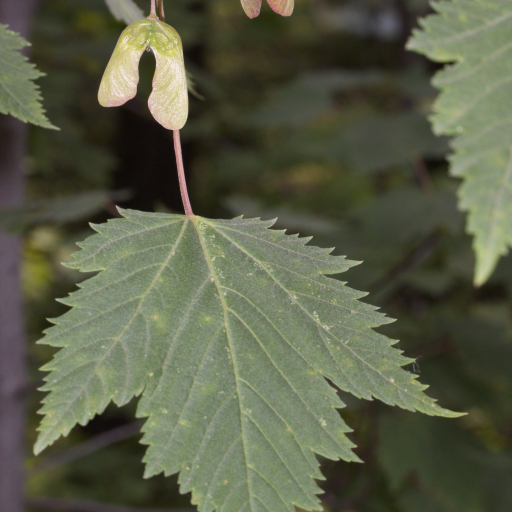
- 🍁 Leaf Shape: The leaves are small (usually 2 to 5 inches) and deeply lobed with 3 to 5 distinct points. They have sharply "toothed" edges, giving them a jagged, crisp appearance.
- 🍒 Crimson Twigs: One of its most striking features is its young twigs and leaf stalks, which often glow with a bright, cherry-red hue, even during the winter months.
- 🚁 The "Helicopters": It produces paired, winged seeds called samaras. These grow in a V-shape and turn a reddish-pink before drying to a tan color, spinning like tiny propellers as they fall.
🏡 In Your Garden
- 🏔️ Mountain Hardiness: This maple is incredibly cold-hardy and wind-resistant. It prefers "cool feet," meaning it thrives in spots where the soil remains moist and mulched, even if the sun is hitting its leaves.
- 🌱 Growth Habit: Because it often grows as a multi-stemmed shrub rather than a single-trunk tree, it is perfect for natural privacy screens or "wildlife corners." It is relatively slow-growing, so it won't overwhelm a small yard quickly.
- 💧 Soil Preference: It demands excellent drainage. If planted in heavy, stagnant clay, it may struggle with root rot. It is much more drought-tolerant than the Japanese Maple once it has established its root system.
⚠️ Safety & Toxicity
- ✅ General Safety: Acer glabrum is considered non-toxic to humans, dogs, and cats. It is a safe choice for family gardens where curious toddlers or pets might play.
- 🐴 Equine Warning: Like many members of the Acer family, wilted or dried leaves can be harmful to horses if consumed in large quantities. While the Rocky Mountain Maple is less documented for "Maple Poisoning" than the Red Maple, it is best kept away from horse pastures as a precaution.
✨ Fun Fact
Indigenous peoples of the Pacific Northwest and Rockies traditionally used the tough, flexible wood of the Rocky Mountain Maple to craft essential tools, including snowshoe frames, bows, and even salmon-drying racks!

Detailed Care Instructions
To grow Acer glabrum, also known as Rocky Mountain maple or Douglas maple, you can follow these steps:
- Choose the right location: Acer glabrum prefers a spot with full to partial sun, although it can tolerate some shade. The soil should be well-draining and slightly acidic.
- Prepare the soil: Before planting, amend the soil with organic matter like compost or aged manure to improve its texture and fertility.
- Planting: Dig a hole that is slightly wider and deeper than the plant's root ball. Place the Acer glabrum in the hole, ensuring that the top of the root ball is level with or slightly above the soil surface. Fill in the hole with soil and gently firm it around the plant.
- Watering: Water the newly planted Acer glabrum thoroughly to settle the soil and provide moisture. After the initial watering, keep the soil consistently moist but not waterlogged. Regularly check the plant's moisture level and adjust watering accordingly.
- Mulching: Apply a layer of organic mulch around the base of the plant to conserve soil moisture, suppress weed growth, and regulate soil temperature. Leave a small gap around the trunk to prevent moisture buildup and potential issues like rot.
- Pruning: Acer glabrum requires minimal pruning. Remove any dead, damaged, or diseased branches as soon as you notice them. Prune selectively to shape the plant or remove any unwanted growth. Ideally, carry out pruning during the dormant season, in late winter or early spring.
- Fertilizing: Generally, Acer glabrum does not require regular fertilization if planted in nutrient-rich soil. However, if the plant appears stunted or lacks vigor, you can apply a balanced, slow-release fertilizer in early spring following the recommended dosage.
- Protection: In areas with harsh winters, consider protecting young Acer glabrum plants from cold temperatures and strong winds. You can use burlap wraps or temporary barriers around the plant.
- Pest and disease control: Acer glabrum is relatively resistant to pests and diseases. However, occasional issues may include aphids, scale insects, or fungal diseases. Monitor the plant regularly and treat any problems as necessary, using appropriate insecticides or fungicides.
Remember to check specific growing guidelines based on your geographical region, as climate conditions and care requirements may vary.

Place in a bright room that is sun drenched almost all day. Or directly in a south-facing window.

To effectively water this plant, it is important to consider its natural habitat and growing conditions. Acer Glabrum plants typically thrive in areas with moist, well-draining soil and moderate to high levels of rainfall.
When watering, it is recommended to use a watering can or hose with a gentle flow to avoid damaging the roots. Allow the soil to dry slightly between waterings, but be sure not to let it completely dry out. Overwatering can be just as damaging as underwatering, so it is important to find a balance.
One way to test the soil moisture level is by inserting a finger or a moisture meter into the top inch of soil. If it feels dry, slowly and evenly water around the base of the plant until the soil is moist but not waterlogged.
During periods of extreme heat or drought, it may be necessary to water more frequently. However, it is important to avoid getting the foliage wet as this can lead to fungal diseases.
Overall, consistent and appropriate watering is key to promoting healthy growth and vitality in Acer Glabrum plants.
To fertilize the Acer Glabrum plant, use a balanced 10-10-10 fertilizer with trace minerals. Apply the fertilizer in early spring before new growth appears and again in early summer. For every 10 square feet of soil, use 1 pound of fertilizer. Water the plant well after applying the fertilizer to help it absorb the nutrients. Avoid fertilizing in late summer or fall as this can encourage new growth that could be damaged by frost.
It is recommended to use well-draining soil when planting this plant. The soil should be slightly acidic with a pH between 5.5 and 6.5. Organic matter such as compost or peat moss can be added to improve soil structure and fertility. The soil should also be kept moist but not waterlogged, as this can lead to root rot. Mulching around the base of the plant can help to retain moisture and regulate soil temperature. Fertilizer can be applied in the early spring and late fall, but it should be a slow-release type to prevent over-fertilization. Additionally, it is important to plant this species in an area with good air circulation and partial shade, as it can be sensitive to extreme temperatures and direct sunlight.
To propagate this plant, first, select healthy and well-developed stem cuttings with some leaves and nodes. Use a clean and sharp pruning shear to cut the stem at an angle of 45 degrees. Remove the leaves from the bottom 2/3 of the stem. Avoid any damaged or diseased stem.
Dip the cut end of the stem in a rooting hormone powder or gel to promote root formation. Then, plant the cutting in a well-draining rooting medium such as sand, perlite, or vermiculite. Water the medium to make it moist but avoid overwatering.
Cover the cutting with a plastic bag or glass jar to create a high humidity environment that will encourage root growth. Place the cutting in a bright and warm spot, but avoid direct sunlight.
Check the medium regularly to ensure it stays moist but not waterlogged. After a few weeks, gently tug the stem to check for any resistance, which indicates that the plant has rooted. Once roots are visible, gradually remove the cover and expose the plant to normal air humidity and lighting conditions.
Transplant the rooted cutting into a container with well-draining soil mix when it has developed sufficient roots and top growth. Provide regular water, fertilization, and care to encourage healthy growth and development.








