Plant Overview
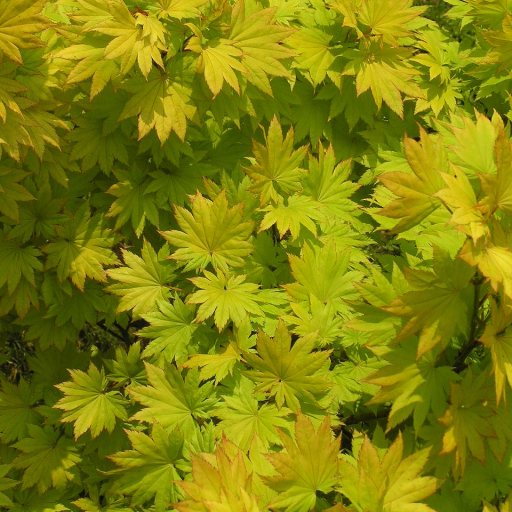
Often hailed as the "Fullmoon Maple," Acer shirasawanum is a slow-growing masterpiece of the botanical world. Originating from the mountain forests of Japan, it is prized for its nearly circular, fan-like leaves that look as though they were meticulously folded by an origami artist. In autumn, this tree transforms into a living bonfire, displaying some of the most brilliant oranges and purples found in nature.
🔍 How to Identify
- 🍃 The Leaf Shape: Unlike the common Japanese Maple, this species features "palmate" leaves with 9 to 13 shallow lobes, giving the leaf a much rounder, moon-like silhouette.
- 🌸 Upright Flowers: It produces small, attractive clusters of purple-red flowers that stand upright on the branches, eventually turning into winged seeds (samaras).
- 🌳 Layered Canopy: The tree naturally grows in a graceful, multi-stemmed shape with horizontal branching that creates a sophisticated, tiered appearance.
🏡 In Your Garden
- 🌞 Sun Protection: While it loves light, its delicate foliage is prone to "leaf scorch." In hotter climates, it needs a spot with dappled shade, especially during the punishing afternoon sun.
- 💧 The Drainage Rule: This maple is sensitive to "wet feet." It requires well-draining, slightly acidic soil. If planted in heavy clay that stays soggy, the roots may struggle to breathe, leading to a slow decline.
- ✂️ Minimal Pruning: Because it grows so slowly, it rarely needs heavy pruning. Focus only on removing dead wood in late winter to maintain its natural, elegant form.
⚠️ Safety & Toxicity
- ✅ Safe Status: Acer shirasawanum is generally considered non-toxic to humans, cats, and dogs. It is a "friendly" addition to family landscapes.
- 🐎 Equine Note: While safe for household pets, many maple species' wilted leaves can be toxic to horses if ingested in large quantities. It is best kept away from grazing pastures.
✨ Fun Fact
This tree was named in honor of Yasuyoshi Shirasawa, a pioneering Japanese botanist who lived in the late 19th and early 20th centuries. He was the first to formally document many of Japan's most iconic forest trees for the scientific world!

Detailed Care Instructions
To grow Acer Shirasawanum, also known as the Full Moon Maple, you can follow these steps:
- Climate and Location: Choose a suitable spot with partial shade and protection from strong winds. Acer Shirasawanum prefers a cool climate with moist, well-drained soil.
- Soil Preparation: Prepare the soil by enriching it with organic matter, such as compost or well-rotted manure, to improve drainage and provide nutrients.
- Planting: Dig a hole slightly larger than the root ball of the plant. Place the Acer Shirasawanum in the hole, making sure the top of the root ball is level with the soil surface. Backfill the hole and firm the soil gently.
- Watering: Provide regular and consistent watering, especially during the plant's first year. The soil should remain moist but not waterlogged. Deep watering once a week is generally sufficient.
- Mulching: Apply a layer of organic mulch, such as bark chips or straw, around the base of the plant. Mulching helps to retain soil moisture, suppress weeds, and protect the plant's roots during extreme temperatures.
- Fertilizing: Feed the Acer Shirasawanum with a balanced, slow-release fertilizer in spring. Follow the package instructions for proper application rates. Avoid over-fertilizing, as it could damage the plant.
- Pruning: Prune Acer Shirasawanum during its dormant period in late winter or early spring. Remove any dead or damaged branches, as well as any crossing or overcrowded branches to maintain an open and healthy shape. Avoid heavy pruning, as excessive cutting can stress the plant.
- Pest and Disease Control: Monitor the plant for common pests such as aphids and scale insects. Treat any infestations promptly with an appropriate insecticide. Ensure good air circulation and avoid overhead watering to prevent fungal diseases.
- Winter Protection: Since Acer Shirasawanum prefers a cool climate, it may require protection during harsh winter conditions. Mulch around the base of the plant and consider wrapping it with burlap to shield it from cold winds.
By following these steps, you can help promote the growth and health of Acer Shirasawanum plant. Remember to observe and adjust the care practices based on the specific needs of your plant and the local climate.

Place in a window with dappled sun or a spot in the middle of a room. Or directly in a window facing west or east.

1. Check the soil moisture: Before watering, check the soil with your finger to see if it's dry. If the soil feels moist, hold off on watering.
2. Water slowly: When watering, pour water slowly around the base of the plant, keeping the foliage dry. Avoid getting water on the leaves as it can cause a fungal infection.
3. Preferably use rainwater: Acer Shirasawanum prefers slightly acidic soil, so using rainwater is an excellent choice. If you don't have access to rainwater, tap water is fine, but make sure it's not too hard.
4. Monitor the weather: In hot, dry weather, the plant will need more water than in cooler temperatures.
5. Give enough water: Ensure that you're giving enough water to penetrate the roots. You want the soil to be evenly moist but not waterlogged, which can lead to root rot.
6. Don't fertilize while watering: Avoid fertilizing until the plant is well-established, and when you do, avoid applying it with the watering routine.
7. Water moderately in Winter: During winter, the plant goes into dormancy, and its water needs decrease; watering moderately will do.
8. Mulching: Adding a layer of organic mulch around the plant helps retain soil moisture, especially during the hotter months of the year.
To fertilize this plant, use a slow-release organic fertilizer with a balanced NPK ratio. Apply the fertilizer in early spring before new growth appears and again in mid-summer. Water thoroughly after fertilizing to help distribute the nutrients evenly. Avoid fertilizing too late in the growing season, as this can encourage new growth that may not harden off before winter. Always follow the manufacturer's instructions for application rates and frequency.
The ideal soil for this plant is well-drained and rich in organic matter. It should have a slightly acidic to neutral pH, between 5.5 and 7.5. The soil should also be moist but not waterlogged, as the plant does not tolerate soggy soil. It is recommended to incorporate compost or other organic matter into the soil before planting to ensure good drainage and fertility. Perlite or coarse sand can also be added to improve drainage if the soil is heavy. Maintaining a consistent soil moisture level is key to the health of this plant, so regular watering may be necessary during dry spells.
To propagate this plant, you will need to take stem cuttings at least four inches long with at least two leaves attached. Remove the bottom leaves and dip the cut end in rooting hormone. Plant the stem cutting in moist soil and cover it with a plastic bag to create a greenhouse effect. Keep the soil moist and in a warm, shaded location until roots have formed, typically taking about four to six weeks. Once the roots have formed, remove the plastic bag and transplant the new plant into a larger pot or to a new garden location.








