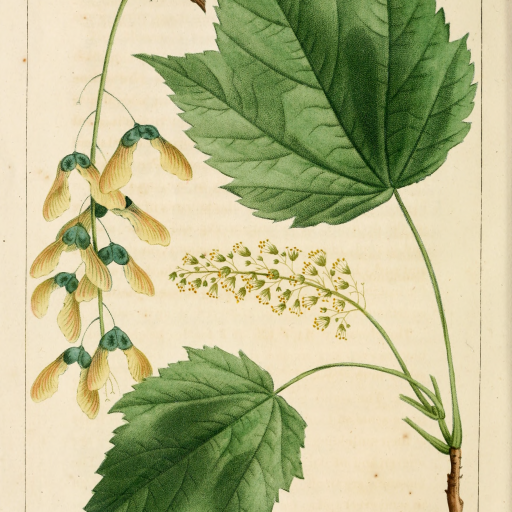
Plant Overview
Known as the Mountain Maple or "Moose Maple," this rugged shrub-like tree is a staple of the cool, rocky woods of North America. Unlike its towering cousins, the Sugar Maple, this species thrives in the shadows of the forest floor, painting the understory with vibrant oranges and reds when autumn arrives. It is a vital survivor of the highlands, often being the first greenery to emerge on steep, rocky slopes.
🔍 How to Identify
- 🍃 Jagged Leaves: The leaves usually feature three lobes with very coarse, irregular teeth, giving them a "rougher" and more textured appearance than the refined Sugar Maple.
- 🕯️ Flower Spikes: Its scientific name, spicatum, refers to its unique upright, candle-like clusters (spikes) of yellow-green blossoms that point toward the sky.
- 🍒 Colorful Samaras: The winged seeds (propellers) often turn a bright, decorative red or pink in late summer before maturing to brown.
🏡 In Your Garden
- 🏔️ The Shade Specialist: This is one of the few maples that genuinely prefers the "understory" life. It is perfect for north-facing gardens or areas shaded by larger canopy trees where other plants might struggle to grow.
- 🥤 Thirsty Roots: In the wild, it grows near streams or on damp rocky ledges. It dislikes "hot feet" and dry soil, so using a thick layer of organic mulch will help keep its root system cool and hydrated.
⚠️ Safety & Toxicity
- ✅ Generally Safe: The Mountain Maple is considered non-toxic to humans, dogs, and cats. It does not carry the same high-risk reputation as some other ornamental species.
- 🦌 Wildlife Browsing: While safe for pets, be aware that it is a favorite snack for deer and moose. If you are trying to establish a young tree, you may need a physical barrier to prevent local wildlife from pruning it to the ground!
✨ Fun Fact
The Mountain Maple is a favorite of the Ruffed Grouse, which seeks out the tree specifically to eat its buds during the lean winter months.

Detailed Care Instructions
Here are steps to grow Acer spicatum (Mountain Maple) plant:
- Obtain seeds or young seedlings of Acer spicatum. You may find them at a local nursery or purchase them online.
- Choose an appropriate location for planting. Acer spicatum prefers partial shade to full sun, and well-draining soil.
- Prepare the planting site by clearing away any weeds or debris. Loosen the soil and amend it with organic matter, such as compost, to improve its fertility and drainage.
- Sow the seeds or plant the young seedlings in spring or early fall. If planting seeds, lightly scarify the seed coat with sandpaper or use stratification to improve germination rates.
- Dig a hole slightly larger than the root ball of the seedling or spread the seeds evenly across the planting area. Cover the seeds or plant with soil and gently pat it down to remove air pockets.
- Water the newly planted Acer spicatum thoroughly. Keep the soil consistently moist but not soaking wet.
- Mulch around the base of the plant with organic mulch, such as wood chips or shredded bark, to help retain soil moisture and suppress weed growth.
- Monitor the plant regularly for signs of pests or diseases. Treat any issues promptly to prevent further damage.
- Water the Acer spicatum plant regularly, especially during dry periods. Adequate moisture is important for healthy growth.
- Prune the plant as needed to maintain its shape and remove any dead, damaged, or overcrowded branches. Pruning can be done in late winter or early spring before new growth begins.
- Fertilize the Acer spicatum plant with a balanced, slow-release fertilizer in early spring. Follow the manufacturer's instructions for application rates.
- Continue to care for the plant, including regular watering, mulching, and monitoring for pests or diseases. With proper care, the Acer spicatum should grow and thrive.

Place in a bright room that is sun drenched almost all day. Or directly in a south-facing window.

To water this plant, it is important to take into consideration the moisture content of the soil and the weather conditions. The soil should be kept consistently moist but not waterlogged. It is recommended to water deeply, allowing the water to penetrate the soil to ensure the roots receive proper hydration. It may be necessary to water more frequently during hot and dry periods, and less frequently during cooler and wetter conditions. It is important to avoid watering leaves and instead direct the water towards the soil to prevent the spread of disease. Additionally, it is important to avoid allowing water to accumulate around the base of the plant as this can lead to root rot.
To fertilize this plant, apply a balanced fertilizer with equal amounts of nitrogen, phosphorus, and potassium in mid to late spring before new growth emerges. Use a slow-release fertilizer or apply a liquid fertilizer every two to three weeks during the growing season. Avoid fertilizing in late summer or fall to prevent new growth from being damaged by cold temperatures. Apply the fertilizer around the base of the plant and water it in thoroughly.
The Acer Spicatum plant prefers well-draining, slightly acidic soil that is rich in organic matter. The ideal soil texture is loamy. It is important to avoid heavy clay soils that may promote waterlogging as well as overly sandy soils that may not retain enough moisture for the plant to thrive. Additionally, the soil should be kept consistently moist but not soggy, as the plant does not tolerate drought well. Adding organic mulch or compost to the soil can help retain moisture and provide nutrients.
There are a few methods to propagate this plant. One way is through seed propagation. Collect seeds from the tree in the fall and stratify them in the fridge for three months. After stratification, sow the seeds in a seed-starting mix and keep them moist and warm until they germinate.
Another way is through hardwood cuttings. Take cuttings from the tree in the late fall or winter, when the tree is dormant. Cut a 6- to 8-inch-long stem from the previous season's growth and remove all the leaves except for the top couple. Dip the cut end in rooting hormone and plant it in a pot filled with a well-draining soil mix. Keep the pot moist and in a shaded area until roots develop.
Finally, Acer Spicatum can also be propagated through layering. Bend a lower branch to the ground and cover it with soil, leaving the tip exposed. Keep the soil moist and the branch will eventually root. Once the branch has rooted, cut it from the parent tree and transplant it to a new location.








