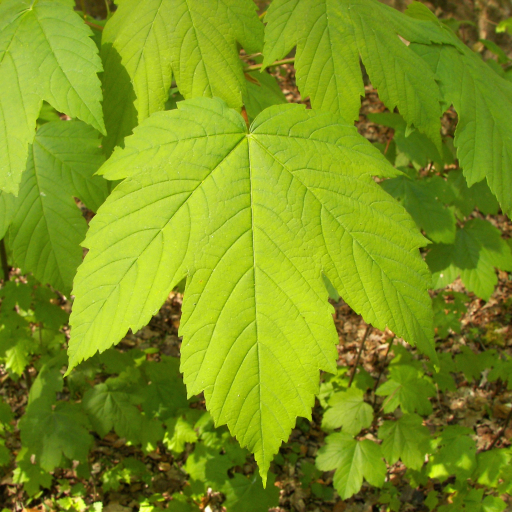
Plant Overview
Often called the "King of Autumn," the Acer genus encompasses over 150 species, ranging from the delicate, lace-leaf Japanese Maples to the towering Sugar Maples of North America. Famous for their dramatic seasonal color shifts and iconic "helicopter" seeds, these trees have been symbols of strength and endurance in various cultures for centuries.
🔍 How to Identify
- 🍁 Palmate Leaves: Most maples feature leaves that look like an open palm, with 3 to 9 pointed lobes radiating from a central point.
- 🚁 Winged Samaras: The fruit of the maple is a distinct "double-winged" seed. These are aerodynamically designed to spin like helicopter blades, allowing the wind to carry them far from the parent tree.
- 🎨 Bark Texture: While young maples typically have smooth, silvery-gray bark, older trees develop deep furrows, ridges, or even "shaggy" plates depending on the specific species.
🏡 In Your Garden
- 🌱 Shallow Roots: Maples are notorious for having shallow, thirsty root systems. They can be "bullies" in the garden, often outcompeting smaller perennials for water and occasionally lifting up nearby sidewalks or pavers.
- 🌞 Scorch Protection: While they love the sun, the delicate leaves of variegated or Japanese varieties can "scorch" (turn brown and crispy) if exposed to harsh afternoon heat without adequate soil moisture.
⚠️ Safety & Toxicity
- 🟢 General Safety: Maples are generally non-toxic to humans, dogs, and cats. In fact, many parts of certain species are edible (like the sap used for syrup).
- 🐴 Equine Warning: If you keep horses, be extremely careful with the Red Maple (Acer rubrum). While fresh leaves are fine, wilted or dried Red Maple leaves are highly toxic to horses and can be fatal if ingested.
✨ Fun Fact
The spinning flight of a maple seed isn't just a lucky accident of nature; it creates a "leading-edge vortex" similar to the lift generated by a helicopter's rotors. This allows the seed to stay airborne longer and travel miles away in a stiff breeze!

Detailed Care Instructions
| Humidity | Normal |
| Difficulty | Medium |
| Hibernation | Cold Period |
| Temperature | 18°C - 24°C |
| Hardiness Zones | 5 - 9 |
To grow an Acer plant, also known as a maple tree, you can follow these steps:
- Choose a suitable location: Acer plants thrive in areas with well-drained soil and partial shade. The soil should be rich in organic matter and have a slightly acidic pH level.
- Prepare the soil: Before planting, ensure the soil is loose and well-drained by loosening it with a garden fork or tiller. Remove any weeds or rocks from the area.
- Dig a hole: Dig a hole that is slightly wider and deeper than the plant's root ball. Make sure the hole is big enough to accommodate the roots without bending or crowding them.
- Prepare the Acer plant: Gently remove the Acer plant from its container and loosen the roots if they are tightly bound. Prune any damaged or overly long roots.
- Plant the Acer plant: Place the Acer plant in the hole, making sure it is at the same level as it was in its original container. Backfill the hole with the soil, gently firming it around the roots.
- Water thoroughly: After planting, give the Acer plant a deep watering to settle the soil and ensure good root establishment.
- Mulch: Apply a layer of organic mulch, such as wood chips or bark, around the base of the plant. This will help retain moisture and suppress weed growth.
- Maintain proper care: Regularly water the Acer plant, especially during dry spells. However, avoid overwatering, as it can lead to root rot. Fertilize the plant in early spring with a slow-release granular fertilizer specifically formulated for trees. Prune any dead or diseased branches as needed.
- Protection from harsh conditions: If you live in an area with extreme winters or scorching summers, provide protection for the Acer plant. Mulch around the base during winter to insulate the roots, and consider covering the tree with burlap or providing shade during hot summer months.
- Monitor for pests and diseases: Keep an eye out for common pests like aphids, scale insects, and powdery mildew. Apply suitable insecticides or fungicides as necessary, following the instructions carefully.
Remember that different Acer species have slightly different preferences and requirements, so it's always beneficial to research the specific type of Acer plant you are growing for more tailored care instructions.

Place in a window with dappled sun or a spot in the middle of a room. Or directly in a window facing west or east.

To water this plant, you first need to determine the species' specific watering requirements. This information can be found by researching the plant's preferred growing conditions and environmental needs. Once you have this information, you can adjust your watering schedule according to the plant's needs, ensuring that it is neither overwatered nor underwatered.
One important tip is to avoid watering the plant too frequently, as this can lead to root rot and other water-related issues. Instead, you should allow the soil to dry out slightly between watering sessions, ensuring that the plant's roots have a chance to breathe.
When watering, be sure to add enough water to penetrate the soil completely and reach the plant's roots. This may mean watering slowly or applying a slow-release fertilizer to help the soil retain moisture.
Additionally, it's important to consider the plant's potting container and drainage system. Plants that are stored in pots that do not drain well may require less water or be more susceptible to overwatering.
Overall, careful observation and research are essential for successful watering of this plant. By providing the right amount of water at the right time, you can help your plant thrive and achieve its full potential.
When fertilizing this plant, use a balanced, slow-release fertilizer in early spring before new growth emerges. For established plants, apply fertilizer in late winter or early spring and again in late summer. Be sure to water the plant well after application to help the nutrients reach the roots. Avoid fertilizing during times of drought or extreme heat as this can damage the plant.
The soil suitable for Acer plants should have good drainage and a slightly acidic pH level. It should also have a good balance of nutrients and should be loose and friable in texture. A mixture of peat moss, perlite, and sand or loam soil can provide the ideal growing medium for Acer plants. It is also important to ensure that the soil is free of any potential disease-causing organisms and weed seeds. Regular fertilization and proper watering are also essential to maintain the health and vitality of Acer plants.
There are a few methods to propagate this plant. One method is by taking softwood cuttings in late spring to early summer, when the plant is actively growing. Cut a 6-inch section of new growth, remove the bottom leaves, and dip the cut end in rooting hormone. Plant the cutting in a pot filled with a well-draining soil mix and keep it moist in a bright, indirect light. Another method involves collecting seed pods in late summer or early fall when the pods have turned brown and are starting to split open. Collect the pods and remove the seeds, placing them in a plastic bag with damp peat moss for several weeks to stratify. After stratification, plant the seeds in a pot filled with a well-draining soil mix and keep it moist in a bright, indirect light. Another method for propagating this plant involves layering. Layering involves bending a low-hanging branch to the ground, nicking the underside of the stem, and pinning it to the soil with a U-shaped wire or bent paperclip. Cover the stem with soil and keep it moist until roots form, then cut the new individual from the parent plant and transplant it to a new location.







