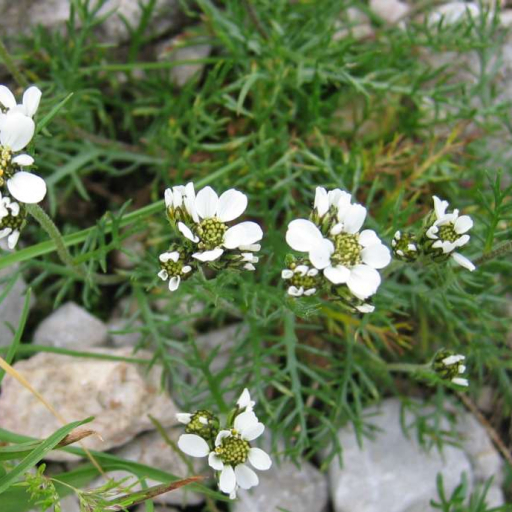
Plant Overview
Known as the Black Yarrow, Achillea atrata is a resilient mountaineer found clinging to the limestone crags of the European Alps. Unlike its common garden cousins, this species wears a distinctive dark "suit" of bracts beneath its snowy white petals, giving it a gothic, sophisticated look. It is a symbol of alpine endurance, thriving in thin air and rocky crevices where few other flowers dare to root.
🔍 How to Identify
- 🌼 The Flowers: Clusters of small, creamy-white ray florets. The "black" in its name comes from the dark, brownish-black edges of the scales (bracts) that surround the base of each flower head.
- 🌿 The Foliage: Deeply divided, fern-like leaves that are dark green and slightly glossy. They often form a low, feathery mat close to the ground to protect themselves from harsh mountain winds.
- 📏 Growth Habit: This is a dwarf variety compared to common Yarrow, typically staying under 10 inches tall with a woody base that helps it survive freezing winters.
🏡 In Your Garden
- ⛰️ The Limestone Lover: This plant is a "calciphile," meaning it craves lime-rich, alkaline soil. If your garden soil is too acidic, it will struggle; adding a bit of crushed limestone or grit can make it feel right at home.
- ☀️ Cool Roots, Sun-Kissed Tops: While it loves the sun, it despises "wet feet" and humid nights. It is best suited for rock gardens or alpine troughs where the drainage is sharp and the air circulation is high.
- ✂️ Low Maintenance: Because it is evolved for the tundra, it requires almost no fertilizer. In fact, too much "good" soil will make it floppy and lose its compact, rugged charm.
⚠️ Safety & Toxicity
- 🐾 Pet Warning: Like most members of the Achillea family, this plant contains volatile oils and glycosides that are toxic to dogs, cats, and horses if ingested.
- 🧤 Skin Sensitivity: Some gardeners may experience "phytophototoxicity"—a skin rash or irritation when touching the leaves in bright sunlight. It is always wise to wear gloves when pruning or dividing the clumps.
✨ Fun Fact
The species name atrata literally translates from Latin to "clothed in black" or "in mourning," referring to the somber, dark-edged bracts that frame the bright white flowers. It’s the "Goth" of the alpine meadow!

Detailed Care Instructions
To grow Achillea atrata plant, also known as Black Yarrow, follow these steps:
- Choose the right location: Achillea atrata prefers full sun to part shade, so select a site that receives at least 6 hours of direct sunlight per day. It can tolerate a variety of soil types but prefers well-draining soil.
- Prepare the soil: Remove any weeds or grass from the planting area. Loosen the soil to a depth of 6-8 inches using a garden fork or tiller. Add compost or well-rotted manure to improve the soil's fertility and drainage if needed.
- Plant the seeds or seedlings: You can start Achillea atrata from seeds or purchase young plants from a nursery. If using seeds, sow them directly into the prepared soil in early spring or late summer. Cover the seeds lightly with soil and water gently. If using seedlings, dig a hole slightly larger than the root ball, place the plant in the hole, and backfill with soil. Water thoroughly after planting.
- Watering and maintenance: Keep the soil evenly moist but not waterlogged during the first few weeks until the plants establish their root system. Once established, Achillea atrata is fairly drought-tolerant and only requires occasional watering during dry spells. Avoid overwatering as it can cause root rot. Mulching around the plants can help retain moisture and suppress weeds.
- Fertilizing: Achillea atrata does not typically require heavy fertilization. If you want to promote healthier growth, you can apply a balanced slow-release fertilizer in early spring and again in mid-summer. Follow the package instructions for the recommended dosage.
- Pruning: Cut back the spent flowers to encourage continuous blooming and prevent seed production, especially if you want to control its spread. Pruning can also help maintain a bushier and compact appearance. In late autumn or early spring, you can cut back the entire plant to stimulate fresh growth.
- Pest and disease control: Achillea atrata is generally resistant to pests and diseases. However, occasional issues such as aphids or powdery mildew may occur. Inspect the plant regularly and treat any problems by using insecticidal soap for aphids or a fungicide for powdery mildew, following the product instructions.
With proper care and suitable growing conditions, your Achillea atrata plant should flourish and provide beautiful dark purple flowers in summer.

Place in a bright room that is sun drenched almost all day. Or directly in a south-facing window.

To water this plant, ensure that the soil is completely dry to the touch. Water it deeply, saturating the soil until water runs out of the bottom of the pot. Allow the plant to drain before returning it to its growing area. Avoid watering the leaves or foliage to prevent the development of diseases. Finally, reduce watering during the winter months as the plant goes through a period of dormancy.
To fertilize this plant, use a balanced, slow-release fertilizer in early spring before flowering begins. Apply at a rate of one tablespoon per square foot of plant area, and mix into the soil around the base of the plant. Water deeply after fertilizing to ensure the nutrients are absorbed by the roots. Repeat the application once or twice during the growing season, depending on the plant's growth and soil conditions. Avoid over-fertilizing, as this can lead to excessive foliage growth at the expense of flower production.
Achillea Atrata requires a well-draining soil that is rich in organic matter. The soil pH should be neutral to slightly alkaline, with a range of 7.0-8.0 being optimal. Sandy loam or loamy soil types that are slightly acidic to neutral (pH of 6.0-7.0) are ideal for growing Achillea Atrata. This plant needs a soil that will hold moisture and nutrients without becoming waterlogged or compacted, as these conditions can cause root rot and other issues. Organic matter such as compost or well-rotted manure can be added to the soil to improve its structure and fertility. Additionally, a layer of mulch around the plant can help to retain moisture in the soil and regulate temperature.
To propagate this plant, you can take stem cuttings from a healthy and mature plant during the growing season. Cut a 5-7 inch long stem that doesn't have any flowers or buds on it. Remove the leaves from the bottom 2 inches of the stem, and dip the cut end in rooting hormone powder. Plant the stem cutting in a pot filled with well-draining soil and keep it moist, but not too wet. Cover the pot with a plastic bag or clear plastic wrap to create a humid environment for the cutting. Place the pot in a bright, but indirect light and keep it warm. After a few weeks, the cutting should start to develop roots. You can then transplant it into a larger pot or into the garden.








