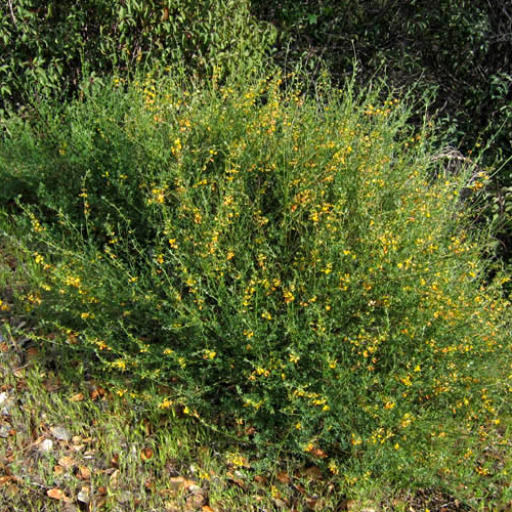
Plant Overview
Often called Deerweed or California Broom, Acmispon glaber is a resilient "pioneer" of the Western North American landscape. This tough subshrub is one of the first plants to colonize scorched earth after a wildfire, acting as nature’s first responder by stabilizing the soil. Its bright bursts of yellow and orange serve as a vibrant signal to pollinators that a recovering ecosystem is open for business.
🔍 How to Identify
- 🌿 The "Broom" Look: It features many slender, green, wiry stems that grow in a rounded, bushy clump. Even when it loses its leaves, the stems stay green to continue making energy from the sun.
- 🌼 Color-Shifting Flowers: Tiny, pea-like blossoms grow in clusters. They start a bright, cheerful yellow and gradually blush into a deep orange or reddish-brown as they age.
- 🍃 Sparse Foliage: The leaves are small and divided into three leaflets. Because the plant is adapted to heat, it often drops its leaves entirely during the height of summer to conserve moisture.
🏡 In Your Garden
- ⚡ Soil Healer: As a member of the pea family, Deerweed has a "superpower"—it fixes nitrogen. It takes nitrogen from the air and pumps it into the soil, essentially fertilizing the ground for future plants.
- 🦋 Butterfly Nursery: This is a vital host plant for several butterflies, including the Bramble Hairstreak and the Acmon Blue. If you plant it, expect to see your garden fluttering with life.
- 💧 Drought Strategy: This plant is the definition of low-maintenance. It thrives in poor, rocky soil and requires almost no supplemental water once established. If it looks "dead" and leafless in August, don't pull it out—it’s just resting until the winter rains return.
⚠️ Safety & Toxicity
- ✅ Status: Non-toxic and generally safe.
- 🐾 Details: Deerweed is considered safe for humans, dogs, and cats. In the wild, as the name suggests, it is a primary food source for deer and goats, who munch on the protein-rich stems without ill effects.
✨ Fun Fact
The color change in the flowers is a secret communication with bees! Bees are more attracted to the yellow flowers, which are full of nectar. Once a flower is pollinated, it turns red to tell the bees, "The shop is closed," directing them to the yellow flowers that still need pollinating.

Detailed Care Instructions
To grow Acmispon glaber (Lotus scoparius or Deerweed) successfully, you can follow these steps:
- Location: Choose a sunny spot in your garden that receives at least 6 hours of direct sunlight each day. Acmispon glaber thrives in full sun conditions.
- Soil preparation: Prepare the soil by removing any weeds or debris. Acmispon glaber prefers well-draining soil. If your soil is heavy or clayey, you can improve drainage by adding sand or organic matter.
- Planting: You can start growing Acmispon glaber from seeds or plant seedlings purchased from a nursery. If using seeds, scarify them by gently rubbing them between sandpaper to help improve germination. Sow the seeds directly in the prepared soil, or plant the seedlings at a distance of 12-18 inches apart.
- Watering: Keep the soil moist until the seeds germinate or the seedlings establish themselves. Acmispon glaber is drought-tolerant but will appreciate regular watering during the first growing season. Once established, it requires little to no supplemental watering.
- Mulching: Apply a layer of mulch around the base of the plants to help retain moisture, suppress weed growth, and maintain a stable soil temperature.
- Pruning: Acmispon glaber does not require extensive pruning. However, you can remove any dead or damaged branches to maintain a neat appearance and promote healthy growth.
- Fertilizing: Acmispon glaber generally grows well without frequent fertilization. However, if you notice poor growth or yellowing leaves, you can apply a balanced fertilizer once or twice during the growing season, following the manufacturer's instructions.
- Protection: If you live in an area with deer or rabbits, you may need to protect young Acmispon glaber plants by installing a fence or using deterrents to prevent them from being eaten.
By following these guidelines, you should be able to successfully grow and enjoy Acmispon glaber in your garden.
Acmispon glaber is a plant that belongs to the pea family, Fabaceae. It is a native California wildflower and is classified as a drought-tolerant perennial plant. Here are some details on how to water this plant effectively:
- Understanding Its Water Needs: Acmispon glaber has adapted to survive in dry conditions, so it does not require frequent watering like many other plants. It is important to avoid overwatering, as this can lead to root rot and other issues. The frequency of watering will depend on various factors like climate, soil type, and plant maturity.
- Observe Soil Moisture: Before watering, check the moisture level of the soil to determine if watering is required. Stick your finger about an inch into the soil near the base of the plant. If the soil feels dry at this depth, it is an indication that the plant needs watering. However, if the soil feels slightly moist or retains some moisture, wait a few more days before watering.
- Watering Technique: When watering Acmispon glaber, it is essential to ensure that water reaches the roots effectively. A deep watering technique is preferred over shallow watering. Use a hose or watering can with a gentle flow to allow water to penetrate deeply into the soil. Avoid splashing water on the foliage to minimize the risk of diseases.
- Watering Schedule: Acmispon glaber plants generally require watering once every 1-2 weeks during the growing season. However, in extremely hot or dry conditions, more frequent watering may be necessary. During the winter months or dormant period, reduce watering frequency as the plant requires less water.
- Mulching: Applying a layer of organic mulch around the base of the Acmispon glaber plant helps retain soil moisture, reduces evaporation, and regulates soil temperature. Mulch also prevents weed growth, which can compete for water and nutrients with the plant. Apply a 2-3 inch layer of mulch around the base, taking care to keep it a few inches away from the stem to prevent rotting.
- Monitor Plant Health: Regularly inspect the Acmispon glaber plant for signs of over or under watering. Wilting, yellowing or drooping leaves, and stunted growth may indicate insufficient water. On the other hand, if the leaves appear waterlogged, turn yellow or brown, or the plant shows signs of root rot, it may be overwatered. Adjust the watering schedule accordingly based on these observations.
Remember that these guidelines can help you maintain a healthy watering routine for Acmispon glaber, but it's always important to consider the specific needs of your plant. Monitor the plant's response and adjust your watering approach accordingly.
To fertilize Acmispon glaber plants, it is recommended to follow these instructions:
- Choose a balanced, slow-release fertilizer specifically formulated for flowering or native plants.
- Start fertilizing in early spring, once new growth appears, and continue every 4-6 weeks throughout the growing season.
- Apply the fertilizer according to the package instructions, adjusting the amount based on the size and age of the plant.
- Spread the fertilizer evenly around the base of the plant, being cautious not to let it touch the stems or leaves.
- Gently work the fertilizer into the top few inches of soil, taking care not to damage the plant's roots.
- Water the plant thoroughly after fertilizing to help the nutrients penetrate the soil and reach the roots.
- Monitor the plant for any signs of over-fertilization, such as burning or yellowing of the leaves. If this occurs, dilute the fertilizer or reduce the frequency of application.
- Avoid fertilizing during periods of drought or extreme heat, as this can stress the plant. Instead, wait for more favorable conditions before applying fertilizer.
Remember, observing the plant's specific needs and requirements is crucial to ensure its healthy growth.
Acmispon glaber, a member of the Fabaceae family, is a perennial plant that requires well-draining soil to thrive. It prefers a specific type of soil composition that promotes its growth and overall health.
The ideal soil for Acmispon glaber should be loose and have an excellent drainage capacity. It is recommended to use sandy or loamy soil mixed with organic matter, such as compost or leaf mold, to improve its fertility and moisture-retaining capabilities.
The pH level of the soil should be slightly acidic to neutral, ranging between 6.0 and 7.0. This will ensure optimal nutrient availability for the plant. Conducting a soil test can help determine the pH level and adjust it accordingly using amendments like lime or sulfur, if required.
Additionally, Acmispon glaber thrives in soil that is rich in nutrients. Adding a balanced slow-release fertilizer during planting or applying a layer of organic mulch annually can enhance the soil's nutrient content. This will support the plant's growth, flower production, and overall vigor.
It is important to provide adequate drainage to prevent the root system from becoming waterlogged. This can be achieved by planting Acmispon glaber in raised beds or mounds. If the soil in the planting area has poor drainage, consider improving it by incorporating coarse sand or perlite.
Lastly, regular monitoring of the soil moisture is essential for the health of Acmispon glaber. While it prefers slightly moist soil, avoid overwatering as it can lead to root rot. Water the plant deeply but infrequently, allowing the soil to partially dry out between watering sessions.
Overall, providing well-draining, organically enriched soil with moderate moisture levels is key to supporting the growth and development of Acmispon glaber.
To propagate Acmispon Glaber plants, you can follow these steps:
- Select a healthy parent plant: Choose a mature Acmispon Glaber plant that is free from any diseases or pests. Ensure that the parent plant is vigorous and has strong stems and abundant foliage.
- Take cuttings: Using sterile pruning shears or a sharp knife, cut a section of the stem from the parent plant. The cutting should be around 4-6 inches long and have a few sets of leaves attached.
- Prepare the cuttings: Remove any lower leaves from the cuttings, leaving only a few sets of leaves at the top. This will prevent excessive moisture loss while the cutting roots. If desired, you can dip the base of the cuttings in a rooting hormone to enhance root development.
- Prepare the growing medium: Fill a small-sized pot or tray with a well-draining, sterile potting mix. A mix consisting of peat moss, perlite, and vermiculite would be suitable for rooting purposes.
- Plant the cuttings: With a pencil or your finger, create small holes in the potting mix and gently place the cuttings into them. Ensure that at least one set of leaves is above the soil surface.
- Water and provide humidity: Water the cuttings thoroughly, ensuring that the potting mix is evenly moist but not waterlogged. Enclose the pot or tray with a clear plastic bag or place a plastic dome over it to create a humid environment. This will help prevent excessive moisture loss from the cuttings.
- Place in an appropriate location: Put the cuttings in a warm and bright location, preferably near a window where they can receive indirect sunlight. Avoid exposing them to direct sunlight, as it may cause wilting or damage.
- Maintain ideal conditions: Check the cuttings regularly and ensure that the potting mix remains slightly moist. Be cautious not to overwater, as this can lead to rotting. Mist the cuttings occasionally to maintain humidity within the enclosure.
- Monitor root development: After a few weeks, gently tug on the cuttings to check for resistance, indicating the development of roots. Once roots have formed, it indicates that the cuttings have successfully propagated.
- Transplanting: Once the roots have developed, carefully transplant the rooted cuttings into individual pots filled with well-draining potting soil. Provide adequate care, including regular watering and gradual acclimation to direct sunlight.
By following these steps, you can propagate Acmispon Glaber plants and expand your collection or share them with fellow gardeners.








