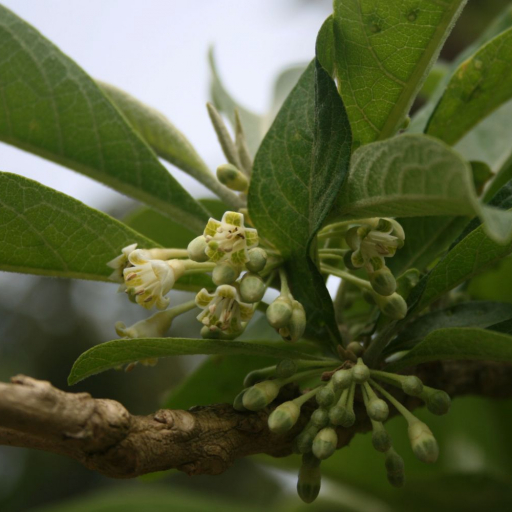
Plant Overview
Meet the "Fried Egg Plant," a tropical wonder native to Central and South America that brings a whimsical touch to any landscape. Named for its charming white flowers with sunny-yellow centers, this large shrub or small tree is a fast-growing favorite for those looking to add lush, vertical greenery. In its native habitat, it’s often celebrated as a "living bird feeder" due to the incredible amount of wildlife it attracts.
🔍 How to Identify
- 🍳 The "Fried Egg" Blooms: The most striking feature is the clusters of small, bell-shaped white flowers. Each bloom features a bright golden-yellow throat, making the branches look like they’ve been sprinkled with miniature breakfast eggs.
- 🍃 Large, Velvety Foliage: The leaves are broad, oval, and slightly fuzzy to the touch. They grow in a bright, soft green hue, providing a dense canopy that offers excellent privacy.
- 🟠 Marble-Sized Berries: Following the floral display, the plant produces small, round fruits that transition from green to a vibrant orange or yellow when ripe. These berries grow in tight bunches directly along the stems.
🏡 In Your Garden
- 🦋 Wildlife Magnet: This plant is a powerhouse for biodiversity. The nectar-rich flowers are a favorite for butterflies, while the juicy berries are an irresistible magnet for honeycreepers, tanagers, and other fruit-eating birds.
- 🌱 Fast-Paced Growth: The Fried Egg Plant doesn't like to wait around. It establishes itself very quickly, making it ideal for filling gaps in a garden. However, it can become "leggy," so regular pruning is recommended to keep it bushy and full.
- ☀️ Sun & Drainage: While it loves basking in the sun, it is quite sensitive to "wet feet." Ensure your soil is well-draining, as sitting in stagnant water can lead to root rot faster than in many other tropical species.
⚠️ Safety & Toxicity
- 🚫 Nightshade Family: As a member of the Solanaceae (Nightshade) family, this plant contains alkaloids that can be toxic if ingested in significant quantities.
- 🐾 Keep Away from Pets: The bright orange berries may look appetizing to curious dogs or children. Ingestion can cause gastrointestinal distress, vomiting, or lethargy. It is best placed in a part of the garden where it won't be easily sampled by pets.
✨ Fun Fact
In many parts of the Caribbean and Central America, this tree is known as "Gallinero" (Chicken Coop) because birds flock to it so intensely for the berries that the tree seems to be "clucking" with the sound of dozens of feasting visitors!

Detailed Care Instructions
To grow Acnistus arborescens plant, also known as Wild Tobacco or Floripondio, you can follow these steps:
- Choose a suitable location: Acnistus arborescens prefers full sun to partial shade. Select a location in your garden that receives at least 6-8 hours of direct sunlight each day.
- Prepare the soil: Acnistus arborescens prefers well-draining soil. Amend the soil with compost or organic matter to improve its fertility and drainage capacity.
- Planting: Dig a hole that is slightly larger than the root ball of the plant. Place the plant in the hole and fill it back with soil, gently firming it around the base. Water thoroughly after planting.
- Watering: Keep the soil consistently moist, but not waterlogged. Avoid overwatering, as it can lead to root rot. Water the plant deeply once or twice a week, depending on the weather conditions.
- Fertilizing: Apply a balanced, slow-release fertilizer in the spring to promote healthy growth. Follow the instructions mentioned on the fertilizer packaging for the correct dosage.
- Pruning: Acnistus arborescens benefits from regular pruning to maintain its shape and stimulate new growth. Prune back any dead, damaged, or overgrown branches in early spring before new growth begins.
- Mulching: Apply a layer of organic mulch, such as wood chips or bark, around the base of the plant to help retain moisture, suppress weeds, and regulate soil temperature.
- Pests and diseases: Acnistus arborescens is generally pest and disease-resistant. However, occasional insect pests like aphids or mealybugs may attack the plant. Monitor the plant regularly and take appropriate measures, such as using insecticidal soap or neem oil, if necessary.
- Propagation: Acnistus arborescens can be propagated through stem cuttings or seeds. Take stem cuttings in late spring or early summer and root them in moist potting soil. Sow seeds indoors in early spring, or directly sow them in the garden after the last frost.
- Winter care: Acnistus arborescens is typically hardy in USDA zones 9-11. If you live in a colder region, consider growing it as a potted plant that can be brought indoors during the winter months.
By following these steps, you can successfully grow and enjoy the beautiful Acnistus arborescens plant in your garden.

Place in a bright room that is sun drenched almost all day. Or directly in a south-facing window.

To water this plant, you should first check the soil moisture level by inserting your finger about an inch into the soil. If the soil feels dry, it's time to water. When watering, provide enough water to thoroughly wet the soil to the root level but never allow the plant to sit in standing water, which can lead to root rot. Depending on the environment, this plant may require watering once or twice a week. During hot and dry periods, it may need more frequent watering. Use room temperature water and ensure it drains well to avoid waterlogged soil. Additionally, be mindful not to water the leaves as it can lead to fungal diseases.
To fertilize this plant, mix a balanced organic fertilizer with the soil around the base of the plant in early spring. Repeat the application every four to six weeks during the growing season. Avoid over-fertilization, as it may lead to excessive foliage growth at the expense of flowering. Always follow the recommended dilution rates mentioned on the fertilizer packaging.
The ideal soil composition for the plant in question should be well-draining and rich in organic matter. The pH level of the soil should be slightly acidic, ranging from 5.5 to 6.5. The plant prefers soil that is moist but not waterlogged, and it is recommended to water it regularly to keep the soil consistently moist but not soaked. Additionally, it is advisable to add mulch or compost to the soil to maintain moisture and provide nutrients to the plant. The plant can also benefit from a slow-release fertilizer applied during the growing season.
To propagate this plant, you can start by collecting the seeds from ripe fruits. After removing the flesh from the seeds, soak them in water for about 24 hours to soften their hard seed coat. Then, plant the seeds in a well-draining soil mix and cover them lightly with soil. Keep the soil moist and warm, ideally around 22-24°C, and germination should occur within 2-3 weeks.
Another method of propagation is through stem cuttings. Take cuttings from the plant during the growing season, making sure to include several nodes on the stem. Remove the leaves from the lower half of the cutting, dip the end in a rooting hormone, and plant it in a well-draining potting mix. Keep the soil moist and provide bright, indirect light. Within a few weeks, roots should start to form, and the cutting can be transplanted into a larger container or outside in a suitable location.








