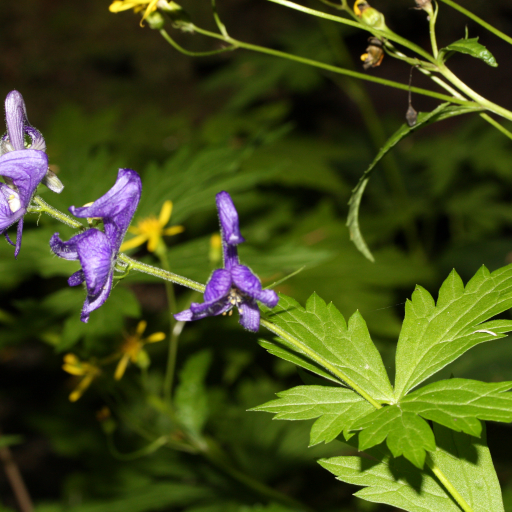
Plant Overview
Known as "Western Monkshood" or "Columbian Monkshood," this striking wildflower is a mountain beauty with a dark and legendary history. Often found lining the banks of cold alpine streams, its deep violet blossoms are shaped like the cowls of medieval monks. While it adds a regal touch to any moist landscape, it is famously known as "Wolfsbane," a name whispered in folklore for its potent and dangerous properties.
🔍 How to Identify
- 🧢 The Hooded Bloom: The most distinct feature is the flower—a large, helmet-like upper sepal that curves over the rest of the petals, usually in shades of deep blue, purple, or rarely white.
- ✋ Palm-Like Leaves: The foliage is deeply lobed and "palmate," meaning the leaves spread out like the fingers on a hand, with sharp, tooth-like edges.
- 📏 Towering Stature: This plant is a vertical standout, growing on sturdy, unbranched stems that can reach anywhere from 2 to 6 feet in height depending on moisture levels.
🏡 In Your Garden
- 💧 Water Lovers: In the wild, these plants are "stream-huggers." If you grow them at home, they require consistently moist, rich soil; they will wilt quickly if allowed to dry out completely.
- ⛅ Cool Shadows: Western Monkshood thrives in partial shade or dappled sunlight. It dislikes the sweltering heat of direct afternoon sun, which can scorch its delicate leaves.
- 🌱 Disturbance Sensitive: Like many plants with tuberous roots, it dislikes being moved. Once you find the perfect damp, shady spot, it is best to leave it to colonize peacefully.
⚠️ Safety & Toxicity
- 💀 Status: EXTREMELY TOXIC. This is one of the most poisonous plants in North America. Every part of the plant—especially the roots and seeds—contains aconitine and other deadly alkaloids.
- 🚫 Handling Risks: Never ingest any part of this plant. Even skin contact can cause tingling, numbness, or irritation, as the toxins can be absorbed through the pores. Always wear gloves when pruning and keep it well away from children and pets.
✨ Fun Fact
The name "Wolfsbane" isn't just a cool nickname; it stems from the ancient practice of using the plant's potent juices to poison bait for wolves or to tip "wolf-arrows" used by hunters centuries ago. In Greek mythology, the plant was said to have sprouted from the venomous drool of Cerberus, the three-headed dog guarding the underworld.

Detailed Care Instructions
To grow Aconitum Columbianum, also known as Columbian Monkshood, you can follow these steps:
- Choose a suitable location: Columbian Monkshood prefers moist, well-draining soil and partial shade. Find a spot in your garden that receives morning sun but is shaded in the afternoon, or consider growing it in a container that can be placed in a shaded area.
- Prepare the soil: The soil should be rich in organic matter, such as compost or well-rotted manure. Ensure that the soil is loose and aerated, as this plant prefers a loose growing medium.
- Sow or transplant: You can sow Columbian Monkshood seeds directly in the garden in early spring or late fall. Alternatively, you can purchase young plants from a nursery and transplant them in your garden.
- Watering: Keep the soil consistently moist, but avoid waterlogging. Water the plant deeply, particularly during dry spells. Using mulch around the plant can help retain moisture and regulate soil temperature.
- Fertilization: Apply a balanced, slow-release fertilizer in early spring and again in mid-summer to provide necessary nutrients for healthy growth.
- Support: Columbian Monkshood can grow tall and may require staking or support to prevent it from falling over. You can use stakes or a trellis to keep the plant upright.
- Pruning: Remove any dead or damaged foliage regularly to enhance the plant's appearance and prevent diseases.
- Pest and disease control: Columbian Monkshood is generally resistant to most pests and diseases. However, it can occasionally be affected by aphids, slugs, or snails. Use appropriate organic pest control methods to address any infestations.
- Winter care: Columbian Monkshood is a perennial plant and should survive the winter without much effort. However, you can provide a layer of mulch around the plant to protect it from extreme cold temperatures.
Remember that all parts of the Aconitum genus, including Columbian Monkshood, are highly toxic. Take necessary precautions while handling the plant, and keep it away from children and pets.

Place in a window with dappled sun or a spot in the middle of a room. Or directly in a window facing west or east.

Aconitum Columbianum is a plant that requires consistent watering to thrive. To water the plant, first, it's crucial to check the soil moisture level before watering it. One can do this by inserting a finger or a moisture meter into the soil to determine if it's dry or moist.
If the soil is dry, one should water the plant thoroughly enough to reach the roots, to ensure the water penetrates the soil without puddling. If the soil is moist, water the plant lightly to avoid overwatering.
One should never let the plant sit in water, as this can lead to root rot, which can harm or kill the plant. It's also essential to water the plant consistently and evenly to prevent it from drying out or drowning.
During hot, dry weather, one may need to water the plant more frequently to maintain healthy growth, and during the winter, the frequency of watering can reduce.
In general, Aconitum Columbianum prefers moist soil, so it's important to maintain consistent water levels to ensure its health and vibrancy.
- Choose a balanced fertilizer with equal amounts of nitrogen (N), phosphorus (P), and potassium (K).
- Apply the fertilizer in early spring before new growth appears.
- Measure out the recommended amount of fertilizer according to the package instructions.
- Sprinkle the fertilizer around the base of the plant, taking care not to get any on the foliage.
- Water the plant thoroughly after fertilizing to help the nutrients soak into the soil.
- Repeat the fertilizing process every 6-8 weeks throughout the growing season.
- Avoid fertilizing in late summer or fall as this can encourage new growth that may not have time to harden off before winter.
It is recommended to use a well-draining soil mixture for this plant. It prefers a soil with a pH range of 5.5 to 7.5 and a slightly acidic soil is ideal. The soil should consist of organic matter like compost or peat moss along with perlite or sand for better drainage. Ensure that the soil is moist but not waterlogged as this plant can be sensitive to excessive moisture. It can be planted in full sun or partial shade and should be watered regularly to keep the soil consistently moist. Avoid using heavy clay soils as they can cause waterlogging and root rot.
Aconitum Columbianum is a flowering plant that belongs to the Ranunculaceae family. To propagate this plant, you will need to collect seeds or take stem cuttings.
Seed Propagation:
- Collect ripe seeds from the plant in late summer or early autumn.
- Place the seeds in a paper bag and store them in a cool, dry place until the following spring.
- In the spring, sow the seeds in a seed tray filled with a well-draining seed-starting mix.
- Cover the seeds lightly with soil and water well.
- Keep the seed tray in a warm, well-lit area and water regularly.
- Once the seedlings have grown large enough, transplant them into individual pots or directly into the garden.
Stem Cutting Propagation: - In early summer, take stem cuttings from the plant that are approximately 10cm long.
- Remove the lower leaves from the stem cuttings and dip the cut end into rooting hormone.
- Plant the cuttings in a well-draining potting mix.
- Cover the pot with a plastic bag to create a humid environment.
- Place the pot in a warm, well-lit area but out of direct sunlight.
- Water the cuttings regularly, keeping the soil moist but not waterlogged.
- Once the cuttings have developed roots, transplant them into individual pots or directly into the garden.
It is important to use gloves when handling Aconitum Columbianum as it contains toxic alkaloids that can cause skin irritation and be harmful if consumed.








