Plant Overview
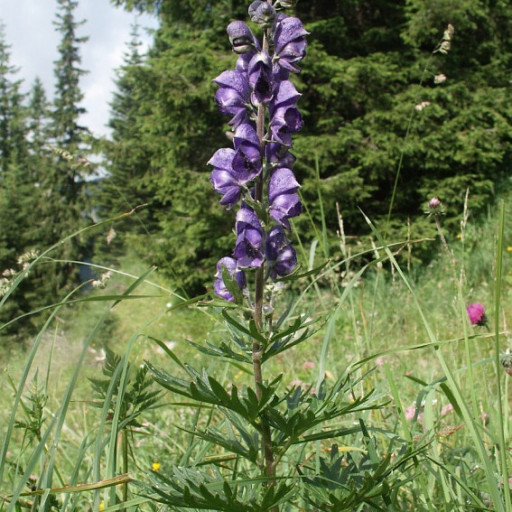
Commonly known as Monkshood or the ominous Wolfsbane, Aconitum napellus is a striking but dangerous beauty. Shrouded in dark folklore and ancient history, it was once used by hunters to poison wolves and by sorcerers in "flying ointments." With its tall, majestic spires of deep violet-blue, it commands a regal yet cautionary presence in any woodland garden.
🔍 How to Identify
- 🎓 The Hooded Flower: Its most distinctive feature is the "helmet" or "hood" shape of the flowers, which resembles the headgear worn by medieval monks.
- 🌿 Deeply Cleft Leaves: The foliage is dark green and glossy, featuring deeply divided, finger-like lobes that can unfortunately be mistaken for parsley or cilantro by the untrained eye.
- 📏 Stately Stature: It grows on stiff, unbranched stems that can reach up to 4 feet tall, creating a dramatic vertical accent in shaded borders.
🏡 In Your Garden
- 🏔️ Cool & Damp Lovers: Native to the mountainous regions of Europe, these plants crave moisture and do not handle intense summer heat well. They thrive in "Goldilocks" spots—cool, moist soil with partial shade.
- 🪵 The Taproot Rule: Monkshood grows from a tuberous root system and develops a deep taproot. Because of this, it is notoriously grumpy if moved; choose its "forever home" carefully to avoid fatal transplant shock.
⚠️ Safety & Toxicity
- 💀 EXTREME TOXICITY: This is one of the most poisonous plants in the world, often called the "Queen of Poisons." It contains aconitine, a potent neurotoxin that can be absorbed even through skin contact.
- 🧤 Handle with Care: Always wear thick gloves when pruning or handling this plant. Never plant it near edible gardens where it could be confused with herbs, and keep it strictly out of reach of children and pets. Ingestion can be fatal within hours.
✨ Fun Fact
🐺 In ancient times, the juice of the plant was used to coat arrows for hunting wolves, giving rise to the name Wolfsbane. It also holds a famous spot in pop culture as the key ingredient in the "Wolfsbane Potion" used to help werewolves maintain their human minds in the Harry Potter series!

Detailed Care Instructions
| Color | Blue, Purple |
| Soil Ph | Neutral To Acidic |
| Humidity | Normal |
| Lighting | Part Sun |
| Toxicity | Toxic |
| Soil Type | Moist But Well-Drained |
| Bloom Time | Summer |
| Difficulty | Medium |
| Plant Type | Herbaceous Perennial |
| Mature Size | 2–4 Ft. Tall, 1–2 Ft. Wide |
| Native Area | Europe, Asia |
| Sun Exposure | Full Sun, Partial Shade |
| Hardiness Zones | 3-7 |
To grow Aconitum Napellus, also known as Monkshood, follow these steps:
- Select a suitable location: Aconitum Napellus plants prefer partial shade to full sun. Choose a location with well-draining soil that is rich in organic matter.
- Prepare the soil: Before planting, loosen the soil and remove any weeds or rocks. Consider enriching the soil by adding compost or well-rotted manure to improve nutrient content.
- Planting: Plant Aconitum Napellus in early spring or fall. Dig a hole large enough to accommodate the root ball, keeping the crown of the plant level with the soil surface. Space the plants about 2 to 3 feet apart to allow for air circulation.
- Watering: Water the plants thoroughly after planting to help them establish their root systems. Afterward, provide regular watering, especially during dry periods. Aim to keep the soil consistently moist but not waterlogged.
- Mulching: Apply a layer of organic mulch, such as wood chips or straw, around each plant. Mulching helps to retain moisture, suppress weed growth, and maintain a more stable soil temperature.
- Fertilizing: Aconitum Napellus plants do not require heavy feeding. However, a balanced fertilizer can be applied in early spring to provide essential nutrients. Follow the instructions on the fertilizer package for the appropriate application rate.
- Support: As the plants grow, they may need support to prevent flopping. Install individual stakes or use netting or trellises to provide support while maintaining the natural appearance of the plant.
- Pruning: After flowering, cut back the stems of Aconitum Napellus to encourage new growth and maintain a neat appearance. However, be cautious when handling the plant, as all parts are poisonous and can cause severe harm if ingested or come into contact with open wounds.
- Pest and disease control: Aconitum Napellus is generally resistant to pests and diseases. However, keep an eye out for slugs, snails, and aphids. Regularly inspect the plants and address any issues promptly.
- Safety precautions: Remember that Aconitum Napellus is highly toxic, so take appropriate safety measures when handling the plant. Wear gloves and keep it out of reach of children and pets.
By following these guidelines, you can successfully grow Aconitum Napellus in your garden.

Place in a window with dappled sun or a spot in the middle of a room. Or directly in a window facing west or east.

To water this plant, you should first assess the moisture level of the soil by sticking your finger about one inch deep into the soil. If the soil feels dry, it is time to water the plant. When watering, make sure to water the soil directly and avoid watering the leaves or flowers. Use a watering can or hose with a gentle spray to avoid damaging the plant. Water thoroughly, making sure that the soil is evenly moistened. It is important not to overwater this plant, as it prefers well-draining soil. A good rule of thumb is to water when the top inch of soil feels dry to the touch.
To properly fertilize this plant, you should start by testing the soil to determine its nutrient levels and pH. Then, choose a balanced fertilizer that is specifically formulated for flowering perennials. Apply the fertilizer in the spring, just as the plant begins to emerge from dormancy, and again in mid-summer after the first flush of blooming has passed. Water deeply after each application to ensure that the nutrients penetrate the soil and reach the plant roots. Avoid over-fertilizing, as this can lead to excessive growth and decreased flowering.
Aconitum Napellus prefers moist, fertile soil that is well-draining and rich in organic matter. The soil pH should be slightly acidic to neutral, with a range of 6.0 to 7.5. It is important to avoid using heavy or compacted soil, as this can impede the plant's growth and lead to root rot. Sand or peat moss can be added to improve drainage if necessary. Additionally, the plant benefits from regular fertilization with a balanced blend of nitrogen, phosphorus, and potassium to support healthy growth and flower production. Overall, it is important to maintain consistently moist, nutrient-rich soil for optimal growth and health of the Aconitum Napellus plant.
To propagate this plant, you will need to:
- Choose a healthy and mature plant from which to take cuttings.
- Using clean and sharp gardening shears, cut a stem from the plant, making sure it is at least 4 inches long and has at least 2-3 sets of leaves.
- Remove the lower leaves from the stem, leaving only the top 2-3 sets of leaves.
- Dip the end of the stem in rooting hormone powder or liquid, which is available at most gardening stores.
- Plant the cutting in a well-draining potting mix or soil, making sure the planting hole is deep enough to cover the bottom set of leaves.
- Water the newly-planted cutting until the soil is moist but not waterlogged.
- Place the cutting in a warm, bright area that receives indirect sunlight.
- Mist the cutting with water regularly to keep it moist.
- When the cutting begins to put out new growth, and the roots are established, after a few weeks, you can transplant it into a larger container or into the ground.
- Continue to care for the new plant with regular watering and fertilizing as needed.
Common pests of the monk's-hood include Spider mites. Make a habit of checking your monk's-hood frequently for pests so that any infestations can be caught and managed early.








