Plant Overview
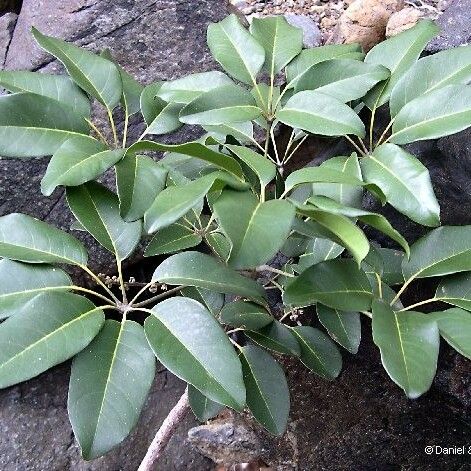
Known as the "Schefflera-leafed Acropogon," this rare botanical treasure hails from the ancient, mineral-rich soils of New Caledonia. It is a striking member of the Malvaceae family that looks like a prehistoric survivor, often sought after by serious plant collectors for its dramatic, architectural silhouette. Its name is a nod to its peculiar leaves, which closely mimic the hand-shaped foliage of the common Umbrella Tree (Schefflera).
🔍 How to Identify
- 🖐️ Hand-Shaped Foliage: The most striking feature is the large, deeply lobed leaves that fan out like fingers, giving the plant a lush, tropical canopy look.
- 🧶 Velvety Texture: New growth and the undersides of the leaves are often covered in fine, rusty-colored or silvery hairs (indumentum), providing a soft, matte appearance.
- 🌳 Sculptural Growth: It typically grows as an upright, single-stemmed shrub or a small tree, maintaining a very clean, vertical structure that highlights its leaf arrangement.
🏡 In Your Garden
- 🏝️ Island Specifics: Because it originates from New Caledonia, this plant is adapted to "ultramafic" soils—ground that is rich in minerals but low in traditional nutrients. It prefers a very well-draining mix and can be sensitive to common potting soils that are too heavy or acidic.
- 🌡️ Microclimate Needs: It thrives in high humidity and stable, warm temperatures. It is not a fan of "wet feet" or cold drafts, making it a challenging but rewarding specimen for a dedicated greenhouse or a controlled indoor conservatory.
⚠️ Safety & Toxicity
- ✅ Safe Profile: There are no recorded reports of high toxicity for the Acropogon genus regarding humans or common household pets.
- 🌱 Mechanical Irritation: While not poisonous, the fine hairs on the leaves can sometimes cause mild skin irritation for sensitive individuals or curious pets who might try to nibble on the foliage.
✨ Fun Fact
New Caledonia, the only place on Earth where this plant grows naturally, is a "biodiversity hotspot" where nearly 75% of the plant species are endemic—meaning you won't find the Acropogon schefflerifolius growing wild anywhere else on the planet!

Detailed Care Instructions








