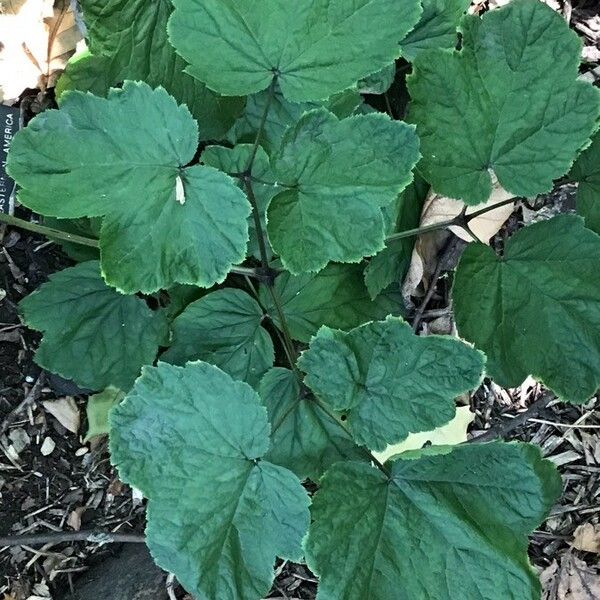
Plant Overview
Commonly known as the Heart-leaf Bugbane or Mountain Bugbane, this elegant woodland perennial is the ghost of the shady garden. Native to the Appalachian Mountains, it creates a dramatic architectural statement with its tall, luminous white spires that seem to glow in the dim light of the understory. Often prized by those looking to add height to "difficult" shady spots, it is a plant that demands patience but rewards the gardener with ethereal beauty.
🔍 How to Identify
- 🍃 The Foliage: True to its name (cordifolia), the leaves are deeply lobed and heart-shaped at the base. They resemble oversized maple leaves or anemone foliage, often forming a dense, lush green mound near the ground.
- ☁️ The "Bottlebrush" Blooms: In late summer or early autumn, the plant sends up tall, wiry stems topped with long, fuzzy racemes of creamy white flowers. These flowers lack petals and are composed mostly of delicate, feathery stamens.
- 📏 Stature: It is a giant of the shade, often reaching 3 to 5 feet in height. Despite their height, the flower stalks are surprisingly sturdy and rarely need staking.
🏡 In Your Garden
- 💧 Moisture is Key: This plant is a "thirsty" woodland inhabitant. It thrives in rich, organic soil that mimics a forest floor. If the soil dries out completely, the leaf edges will quickly turn brown and crispy.
- ⏳ The Slow Settler: Heart-leaf Bugbane is notorious for being "homestead proud." It has a deep, persistent root system and absolutely hates being moved once established. It may take a year or two to settle in before it begins to bloom reliably.
- 🌑 Light Preferences: While it loves shade, the deepest, darkest corners might result in fewer flowers. It performs best in dappled sunlight or "bright shade," where it can stay cool but still receive enough energy to fuel its tall spikes.
⚠️ Safety & Toxicity
- 🚫 Status: Toxic if ingested.
- 🐾 Details: All parts of the Actaea family contain protoanemonin and other alkaloids that are poisonous to humans, cats, and dogs. Ingestion can cause stomach pain, nausea, and in rare cases, more severe neurological symptoms.
- 🧤 Skin Sensitivity: Some gardeners find that the sap causes mild skin irritation or a rash. It is best to wear gloves when pruning or dividing the plant.
✨ Fun Fact
The common name "Bugbane" comes from the historical practice of stuffing mattresses with the dried, crushed leaves and flowers of the plant to repel bedbugs and lice! Its scent—while faint to humans—is said to be quite unpleasant to many insects.

Detailed Care Instructions








