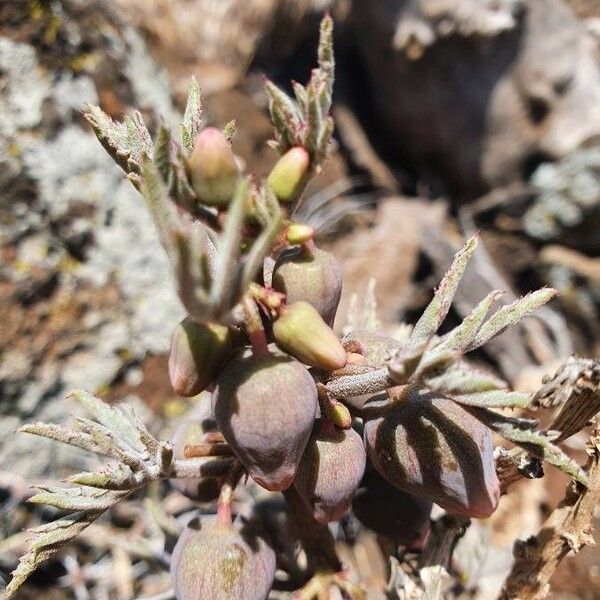
Plant Overview
Known to collectors as the "Kili-pot," Adenia volkensii is a striking succulent that looks like a relic from a prehistoric era. Hailing from the arid regions of East Africa, particularly Kenya and Tanzania, this plant is famous for its massive, swollen underground tuber (caudex) and its sprawling, vine-like branches. It is a slow-growing masterpiece of survival, perfectly adapted to withstand long periods of drought in its native savannah.
🔍 How to Identify
- 🏺 The Caudex: It develops a thick, woody, and irregularly shaped base that can grow quite large. In the wild, this is mostly underground, but collectors often raise it above the soil to show off its sculptural form.
- 🍃 The Foliage: The leaves are deeply lobed (usually 3 to 5 lobes) and have a distinctive waxy, bluish-green or glaucous hue that helps the plant reflect intense sunlight.
- 🔔 The Flowers: It produces small, tubular, greenish-yellow flowers. Unlike many garden plants, Adenia are dioecious, meaning you need both a male and a female plant to produce seeds.
🏡 In Your Garden
- 🏜️ Drainage is Key: Because of its desert origins, this plant is highly sensitive to "wet feet." It thrives in a very gritty, mineral-heavy soil mix. If the soil stays damp for too long, the precious caudex will rot from the inside out.
- 💤 The Sleep Cycle: This plant is a seasonal sleeper. When the weather cools or the days shorten, it will drop its leaves and go dormant. During this time, you must stop watering almost entirely, or you risk losing the plant to fungal issues.
- ☀️ Light Nuance: While it loves bright light, the new, tender vines can actually get "sunburned" if moved too quickly from a shady spot to direct afternoon sun. Aim for bright, filtered light for the best leaf color.
⚠️ Safety & Toxicity
- 🚫 Status: HIGHLY TOXIC. This is not a plant for a household with curious pets or small children.
- 🧪 Details: Most members of the Adenia genus contain cyanogenic glycosides and toxic proteins (similar to ricin). All parts of the plant are poisonous if ingested, and even the sap can cause significant skin irritation for sensitive individuals. Always wear gloves when pruning or repotting.
✨ Fun Fact
In its native East Africa, the Adenia volkensii is so well-protected by its internal toxins that very few herbivores will touch it. It effectively uses chemical warfare to ensure it can grow for decades undisturbed in the harsh savannah landscape!

Detailed Care Instructions
| Humidity | Dry |
| Lighting | Full Sun |
| Toxicity | Poisonous |
| Difficulty | Medium |
| Temperature | 21°C - 25°C |
Growing Adenia volkensii, a plant native to East Africa and belonging to the Passifloraceae family, can be relatively straightforward if you follow some key steps. Here's a guide to help you grow this interesting succulent:
1. Obtaining Seeds or Cuttings:
- Seeds: You can purchase seeds from a reputable supplier. Adenia volkensii seeds have a hard coat, which can benefit from scarification (lightly sanding or nicking the seed coat) before planting.
- Cuttings: Taking cuttings from an existing plant is another method, though it’s less common compared to growing from seeds.
2. Soil Preparation:
- Adenia volkensii thrives in well-draining soil. Use a cactus or succulent mix, or make your own mix using equal parts of perlite, coarse sand, and potting soil. Good drainage is crucial to prevent root rot.
3. Planting:
- Seeds: Plant the scarified seeds about 0.5 to 1 cm deep in the soil mix. Gently water the soil so it is moist but not waterlogged.
- Cuttings: Insert the cuttings into the soil mix. It may help to allow cuttings to callus over for a day or two before planting to reduce the risk of rot.
4. Watering:
- Water the seedlings or cuttings sparingly. Adenia volkensii is drought-tolerant and prefers the soil to dry out between waterings. Overwatering can be detrimental.
5. Light Requirements:
- Adenia volkensii prefers bright, indirect light. It can tolerate some direct sunlight, especially morning sun, which helps the plant grow compact and strong. Too much direct afternoon sun may scorch the leaves, especially in hotter climates.
6. Temperature and Humidity:
- This plant thrives in warm climates. Ideally, the temperature should be between 20-30°C (68-86°F). It is not frost-tolerant, so if you live in a cooler climate, consider growing it indoors or in a greenhouse.
- Adenia volkensii prefers low to moderate humidity levels.
7. Feeding:
- During the growing season (spring and summer), feed your Adenia volkensii monthly with a diluted balanced fertilizer. Reduce feeding in the dormant winter months.
8. Pruning and Maintenance:
- Prune the plant to maintain shape and remove any dead or yellowing leaves. This also helps improve air circulation around the plant.
9. Pest Control:
- Regularly inspect your plant for common pests such as aphids, mealybugs, and spider mites. Use insecticidal soap or neem oil if necessary.
10. Repotting:
- Repot your Adenia volkensii every 2-3 years or when it outgrows its current pot. This provides fresh soil and space for growth.
Following these steps will help you successfully grow Adenia volkensii, allowing you to enjoy the beauty and uniqueness of this plant in your home or garden.

Place in a bright room that is sun drenched almost all day. Or directly in a south-facing window.

Adenia Volkensii plant requires regular watering to thrive, especially during the growing months. The frequency of watering can vary depending on the environmental conditions and the growth stage of the plant. Generally, the soil around the plant should be kept moist but not waterlogged.
To water Adenia Volkensii plant, it is recommended to use a well-draining soil mixture. This type of soil allows excess water to drain, preventing root rot and other water-related issues.
When watering Adenia Volkensii, ensure that water reaches the root zone of the plant. This is done by watering at the base of the plant, rather than on the leaves or flowers. It is also recommended to water early in the morning or late in the evening when the temperature is cooler. This will reduce water evaporation and ensure the plant absorbs as much water as possible.
Take care not to overwater the plant as this can lead to root rot and other complications. Before watering, it's best to check the soil moisture level by sticking a finger an inch or two into the soil. If it feels dry, then it's time to water. If it's still moist, wait until the soil dries out a bit before watering.
Overall, Adenia Volkensii plant requires regular but measured watering to thrive. With proper watering techniques, you can help this plant reach its full potential and create a stunning addition to your garden.
When fertilizing Adenia volkensii, follow these guidelines to ensure healthy growth:
- Frequency: During the growing season (spring and summer), fertilize once a month. In the dormant season (fall and winter), reduce or stop fertilization.
- Type of Fertilizer: Use a balanced, water-soluble fertilizer with an equal ratio of nitrogen, phosphorus, and potassium (e.g., 20-20-20). An alternative is a cactus or succulent fertilizer, which typically has a lower nitrogen content.
- Application: Dilute the fertilizer to half the recommended strength. This helps prevent nutrient burn, which can damage the plant's roots and leaves.
- Watering: Water the plant thoroughly before and after applying the fertilizer to help distribute the nutrients evenly through the soil and reduce the risk of root burn.
- Soil: Ensure the plant is in well-draining soil to prevent waterlogging and root rot, which can be exacerbated by frequent fertilization.
- Monitoring: Observe the plant for any signs of nutrient deficiencies or excesses. Yellowing leaves may indicate a lack of nutrients, while browning or wilting can suggest over-fertilization or poor drainage.
Following these steps should help you maintain a healthy Adenia volkensii plant.
When growing Adenia Volkensii plant, it is recommended to use well-draining soil that is comprised of equal parts of sand and loam. The soil should have a slightly acidic pH between 6.0 and 6.5. It is important to avoid using heavy soils that retain water as this can lead to root rot and other fungal diseases. Additionally, it is important to ensure that the pot used for growing the plant has sufficient drainage holes to prevent water from accumulating in the soil. The plant also requires regular watering during the growing season and should be fertilized with a balanced fertilizer every two weeks during this time.
Propagating Adenia volkensii, a member of the Passifloraceae family, can be quite rewarding. This plant is primarily propagated through seeds and cuttings. Below are the detailed steps for each method:
Propagation by Seeds
- Seed Collection and Preparation:
- Collect ripe seeds from a mature fruit. Ensure the seeds are fully developed and not damaged.
- Clean the seeds to remove any pulp or residue, which can help prevent fungal infections.
- Collect ripe seeds from a mature fruit. Ensure the seeds are fully developed and not damaged.
- Seed Treatment:
- Scarify the seeds lightly by rubbing them with sandpaper or a nail file. This helps to break the hard seed coat and promote germination.
- Soak the scarified seeds in warm water for 24 hours. This will further soften the seed coat and initiate the germination process.
- Scarify the seeds lightly by rubbing them with sandpaper or a nail file. This helps to break the hard seed coat and promote germination.
- Sowing the Seeds:
- Prepare a well-draining soil mix, ideally a cactus or succulent mix with added perlite or sand to improve drainage.
- Sow the seeds about 1 cm deep into the soil mix.
- Water the soil lightly to ensure it is moist but not waterlogged.
- Prepare a well-draining soil mix, ideally a cactus or succulent mix with added perlite or sand to improve drainage.
- Germination Conditions:
- Place the seed tray or pots in a warm, bright location, ideally with temperatures between 20-25°C (68-77°F).
- Cover the pots with a transparent plastic cover or place them in a propagator to maintain humidity.
- Ensure good air circulation to prevent mold and fungal issues.
- Place the seed tray or pots in a warm, bright location, ideally with temperatures between 20-25°C (68-77°F).
- Care During Germination:
- Check regularly to ensure the soil remains moist but not overly wet.
- Germination can take several weeks to months, so patience is required.
- Once the seedlings emerge and develop a few true leaves, they can be carefully transplanted into individual pots.
Propagation by Cuttings
- Check regularly to ensure the soil remains moist but not overly wet.
- Cutting Selection:
- Select a healthy, mature stem or branch. Ensure it is free from any diseases or pests.
- Cut a segment of the stem, ideally 10-15 cm in length, using clean, sterile pruning shears.
- Select a healthy, mature stem or branch. Ensure it is free from any diseases or pests.
- Preparing the Cuttings:
- Allow the cut end of the stem to callus over for a few days. This helps to prevent rotting when the cutting is planted.
- Optionally, dip the cut end in rooting hormone powder to encourage faster root development.
- Allow the cut end of the stem to callus over for a few days. This helps to prevent rotting when the cutting is planted.
- Planting the Cuttings:
- Prepare a well-draining soil mix, similar to the mix used for seeds.
- Insert the cut end of the stem into the soil mix, burying it about 3-5 cm deep.
- Firm the soil around the cutting to provide stability.
- Prepare a well-draining soil mix, similar to the mix used for seeds.
- Rooting Conditions:
- Place the pot in a warm, bright location, but avoid direct sunlight which can scorch the cutting.
- Keep the soil lightly moist, avoiding waterlogging which can cause rot.
- Place the pot in a warm, bright location, but avoid direct sunlight which can scorch the cutting.
- Care for Rooting Cuttings:
- Check the cuttings regularly and maintain consistent moisture.
- Roots should develop in a few weeks to a couple of months. You can gently tug on the cutting to check for resistance, indicating root growth.
- Once rooted, the new plant can be gradually acclimated to normal growing conditions and transplanted into a more permanent pot.
By following these detailed steps, you can successfully propagate Adenia volkensii and enjoy watching your new plants thrive.
- Check the cuttings regularly and maintain consistent moisture.
Common pests of the kiliambiti include Mealybugs, spider mites, aphids. Make a habit of checking your kiliambiti frequently for pests so that any infestations can be caught and managed early.








