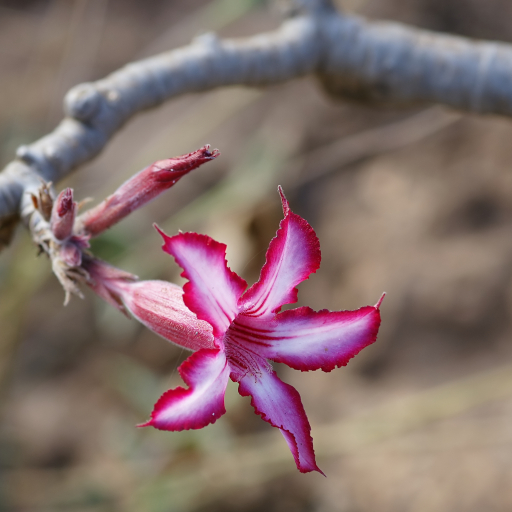
Plant Overview
Often called the Impala Lily or the Sabi Star, Adenium multiflorum is the show-stopping celebrity of the Southern African savanna. While it spends much of the year looking like a humble, stubby shrub, it transforms into a breathtaking explosion of star-shaped blossoms during the cold, dry winter months. In African folklore, its sudden winter bloom is seen as a symbol of resilience, thriving where other plants wither.
🔍 How to Identify
- 🌸 The "Star" Flowers: Distinctive five-petaled flowers that are white or pale pink in the center, dramatically edged with a crinkled, vivid crimson or bright red border.
- 🪵 The Fat Trunk: It features a "caudex," a swollen, succulent trunk that stores water. The bark is smooth and grayish-green, giving it a prehistoric, miniature-tree appearance.
- 🍃 Seasonal Foliage: The leaves are large, shiny, and wedge-shaped. Crucially, this plant is deciduous; it usually drops all its leaves before the flowers appear, making the blooms look even more striking against the bare stems.
🏡 In Your Garden
- ☀️ The Sun Worshipper: This plant craves intense light. If grown indoors, it must sit in your brightest south-facing window. Without enough sun, the stems become "leggy" and weak, and those famous flowers may never appear.
- 💧 Winter Rest Period: Because it hails from regions with distinct dry seasons, it is highly sensitive to overwatering during its winter dormancy. Think of it as a desert dweller; if the soil stays wet while the plant is "sleeping," the swollen base will quickly succumb to rot.
- 🪴 Pot Preferences: It actually enjoys being slightly root-bound. Moving it to a giant pot too early can lead to "sour" soil that stays damp too long, which is the Impala Lily's only true enemy.
⚠️ Safety & Toxicity
- 🚫 High Risk: Like its cousin the Desert Rose, the Impala Lily is highly toxic.
- 🐕 Details: The clear or milky sap contains cardiac glycosides, which are dangerous if ingested by dogs, cats, or curious children. Historically, this sap was used by hunters to create poisoned arrows. Always wear gloves when pruning and wash your hands thoroughly afterward.
✨ Fun Fact
In the wild, the Impala Lily is a favorite snack for elephants and baboons, who have evolved to tolerate its toxins—though they usually only munch on it during extreme droughts when other water sources vanish!

Detailed Care Instructions
| Humidity | Dry |
| Lighting | Part Sun |
| Difficulty | Medium |
| Temperature | 10°C - 32°C |
| Hardiness Zones | 10A - 12 |
To grow Adenium Multiflorum plants, you can follow the following steps:
- Choose the right pot: Select a well-draining pot that is at least 10-12 inches in diameter. Ensure that it has drainage holes at the bottom.
- Soil mixture: Create a well-draining soil mixture by mixing equal parts of potting soil, coarse sand, and perlite. This will promote proper drainage and prevent root rot.
- Planting: Place the Adenium Multiflorum seed in water for about 24 hours before planting. Then, plant the seed about half an inch deep in the prepared soil mixture. Gently water the soil after planting.
- Light requirements: Adenium Multiflorum plants require bright, indirect sunlight. Place the pot in a location where it can receive 4-6 hours of filtered sunlight daily. Protect it from direct sunlight, especially during the hottest part of the day.
- Watering: Water the plant when the top inch of the soil feels dry. Avoid overwatering, as it can lead to root rot. Allow the soil to dry out between waterings, but do not let it become bone dry.
- Fertilization: Feed the Adenium Multiflorum plant with a balanced water-soluble fertilizer at half-strength every two weeks during the growing season (spring and summer). Reduce fertilization during the dormant winter months.
- Pruning: Prune the plant to maintain a desired shape and size. Regular pruning also promotes branching and enhances flower production.
- Cold protection: Adenium Multiflorum is sensitive to cold temperatures. Protect the plant from frost by bringing it indoors or using horticultural frost blankets during winter.
- Pest control: Monitor the plant for any signs of pests, such as aphids or spider mites. Treat infestations with appropriate organic or chemical pest control methods.
- Repotting: As the plant grows, it may require repotting every 2-3 years. Choose a slightly larger pot each time, and use fresh, well-draining soil mixture.
By following these steps and providing proper care, you can successfully grow Adenium Multiflorum plants.

Place in a bright room that is sun drenched almost all day. Or directly in a south-facing window.

To properly care for this plant, ensure that the soil is completely dry before watering. When watering, use a controlled flow of water to avoid washing away the soil. It is important to avoid overwatering this plant, as it can cause root rot. Watering once a week during the growing season and once every two weeks during the dormant season is typically sufficient. Be sure to plant this species in a well-draining soil mix to prevent waterlogging.
To fertilize this plant, use a balanced fertilizer with equal parts of nitrogen, phosphorus, and potassium. Feed it every two weeks during the growing season and reduce fertilizer application during the dormant period. Dilute the fertilizer to half strength and apply it directly to the soil around the plant, avoiding contact with the leaves and stem. Always water the plant after fertilizing to prevent root burn.
The recommended soil for Adenium Multiflorum plant is a well-draining and nutrient-rich soil mix that is specifically formulated for desert plants. It should be a combination of sand, perlite, peat moss, and bark. The soil pH should be slightly acidic to neutral (6.0-7.0). The soil should be well-draining to prevent waterlogging, which can lead to root rot. Additionally, it should be able to retain moisture to avoid drying out the plant. It is also important to avoid compacting the soil around the plant's roots, as this can restrict growth and cause stress.
To propagate this plant, you will need to take a stem cutting from a mature, healthy plant. Use a clean, sharp knife or pruning shears to remove a section of stem that is at least 4 inches long. Make sure the cutting has at least two pairs of leaves and remove any leaves or flowers from the bottom of the stem.
Next, dip the cut end of the stem in a rooting hormone powder to encourage root growth. Plant the cutting in a well-draining potting mix and water thoroughly. Keep the soil moist but not waterlogged.
Place the pot in a warm, bright location but out of direct sunlight. You can cover the pot with a plastic bag or clear plastic wrap to create a greenhouse effect and keep the cutting humid. Be sure to remove the cover periodically to prevent mold or mildew from forming.
Within a few weeks, you should begin to see new growth and roots forming. Once the cutting has established roots and is growing well, you can transplant it into a larger pot or directly into the ground. Remember to water regularly and fertilize as needed to keep your new plant healthy and happy.
Common pests of the impala lily include Scale insect, mealybugs, spider mites. Make a habit of checking your impala lily frequently for pests so that any infestations can be caught and managed early.








