Plant Overview
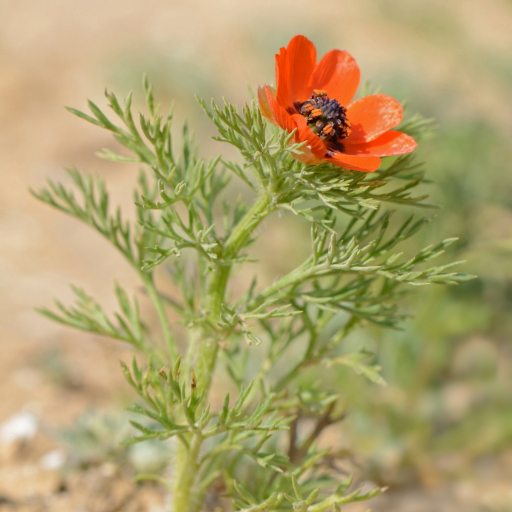
Often called the Summer Pheasant’s-eye, Adonis aestivalis is a jewel of ancient grain fields and traditional meadows. According to Greek mythology, these striking red flowers sprouted from the blood of the fallen hunter Adonis, coloring the earth in his memory. This hardy annual is prized for its dramatic contrast between blood-red petals and delicate, fern-like greenery.
🔍 How to Identify
- 🌸 The Bloom: Small, cup-shaped flowers (about 1 inch wide) featuring 5 to 8 petals that range from intense crimson to bright orange.
- 👁️ The "Eye": A very distinct, dark purple or coal-black center where the reproductive organs cluster, giving it its "pheasant's-eye" nickname.
- 🌿 The Foliage: Intricately divided, feathery leaves that look almost like dill or carrot greens, providing a soft, airy texture to the plant.
🏡 In Your Garden
- ☀️ Sun Seeker: This plant is a child of the open fields; it requires full sun to prevent the stems from becoming "leggy" or flopping over.
- 🌱 Direct Sowing: Because it develops a sensitive taproot, the Summer Pheasant’s-eye hates being moved. It is best to sow the seeds directly into their permanent home rather than starting them in pots.
- 🌾 Soil Preference: It thrives in well-drained, slightly alkaline soil. It is remarkably drought-tolerant once established but appreciates consistent moisture during the seedling stage.
⚠️ Safety & Toxicity
- 🚫 Status: Highly Toxic. All parts of the plant are poisonous if ingested.
- ❤️ Details: The plant contains cardiac glycosides (similar to Foxglove) which can affect heart rate. It is particularly dangerous to livestock (especially horses) if it becomes mixed into dry hay, and it should be kept away from curious pets and small children.
✨ Fun Fact
In the language of flowers, the Summer Pheasant's-eye represents "painful recollections" or "sorrowful memories," a nod to its mythological origin in the tragic death of Adonis. Regardless of its somber history, it is a vital nectar source for bees and small pollinators!

Detailed Care Instructions
To grow Adonis aestivalis, also known as summer pheasant's eye or summer adonis, follow these steps:
- Select a well-drained location: Adonis aestivalis prefers full sun to partial shade and soil that drains well. Avoid waterlogged areas to prevent root rot.
- Prepare the soil: Amend the soil with well-rotted compost or organic matter to improve its fertility and drainage. Remove any weeds or rocks from the planting area.
- Sow seeds: Adonis aestivalis is typically grown from seeds. Sow the seeds directly into the garden bed in early spring or fall. Lightly press the seeds into the soil or cover them with a thin layer of soil (about 1/4 inch deep).
- Watering: Keep the soil consistently moist but not waterlogged during germination. Provide regular watering during the growing season, especially during dry periods.
- Thin the seedlings: Once the seedlings emerge, thin them to 6-8 inches apart to allow enough space for growth. Remove the weaker seedlings to give the stronger ones more room to thrive.
- Fertilization: Apply a balanced, slow-release fertilizer according to the manufacturer's instructions to provide essential nutrients throughout the growing season. Alternatively, you can use a liquid fertilizer every few weeks during active growth.
- Mulching: Apply a layer of mulch around the plants to help retain soil moisture, suppress weed growth, and regulate soil temperature.
- Pruning: Adonis aestivalis does not require extensive pruning. However, you can remove spent flowers to encourage continuous blooming and prevent self-seeding if desired.
- Pests and diseases: Adonis aestivalis is relatively resistant to common pests and diseases. However, regular inspection is recommended to spot any potential issues early on. Remove any affected leaves or plants to prevent the spread of diseases.
- Enjoy the blooms: Adonis aestivalis typically blooms in late spring to early summer, showcasing bright red or yellow flowers. Admire the beautiful flowers and allow them to go to seed if you want self-sowing for the following year.
By following these steps, you should be able to successfully grow Adonis aestivalis in your garden and enjoy its vibrant blooms.

Place in a bright room that is sun drenched almost all day. Or directly in a south-facing window.

To water this plant, you should gently pour water onto the soil around the base of the plant. Try to avoid getting the foliage wet. Water deeply enough so that the water reaches the roots, but be careful not to over-water as this can lead to root rot. Allow the soil to dry slightly between waterings, but do not let it completely dry out. The amount of water needed will depend on factors such as the climate, humidity, and size of the plant. It's best to water in the morning or evening when the temperatures are cooler to prevent water evaporation.
For optimal growth and flowering of this species, it is recommended to fertilize the soil with a balanced, all-purpose fertilizer in early spring, just as the new growth begins to emerge. Apply the fertilizer at the base of the plant, mixing it into the top 1-2 inches of soil, and water thoroughly. Repeat the application every 4-6 weeks until the end of the flowering season. Avoid over-fertilizing, as this can lead to excessive vegetative growth and reduced flowering.
Adonis Aestivalis prefers to grow in well-draining soil that is rich in organic matter. The soil should not be too heavy or clay-like, as this could lead to poor drainage and root rot. Ideally, the pH of the soil should be slightly acidic to neutral, with a range between 6.0 and 7.5. When potting or planting Adonis Aestivalis, it is important to ensure that the soil is loose and airy so that the roots can easily grow and expand. Adding compost or other organic matter to the soil can help to improve its structure and fertility, providing the plant with the nutrients it needs to thrive. Generally, Adonis Aestivalis can be grown in any soil type as long as it is well-draining and nutrient-rich.
To propagate this plant, you can collect the ripe seeds from the plant and sow them in well-draining soil in a container or directly in the garden during the spring. The seeds should be lightly covered with soil and kept moist until they germinate. Once the seedlings have emerged, thin them to ensure they have enough space to grow.
Another method of propagation is through cuttings, which should be taken in the spring or early summer. Choose a healthy stem and cut a 4-6 inch section below a node. Remove the lower leaves and dip the cut end into rooting hormone before planting it in moist soil or a rooting medium. Keep the cutting in a warm, bright, and humid location until roots develop.
Division is another way to propagate this plant, which can be done in the spring or fall. Carefully dig up the plant and separate the clumps into smaller sections, ensuring each section has roots and some foliage. Plant the divisions in well-draining soil and keep them evenly moist until they establish.








