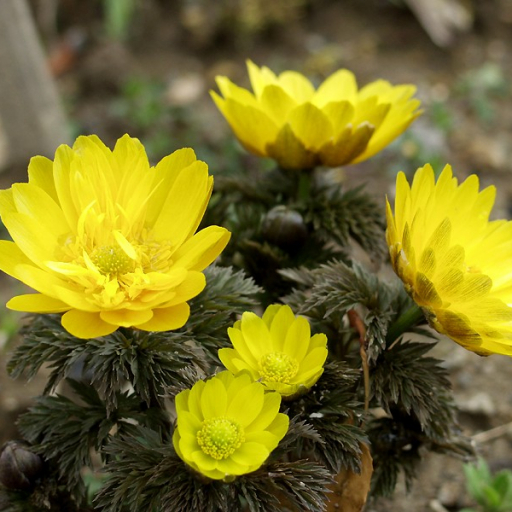
Plant Overview
Known as the "Bringover of Spring" or Fukujuso in Japan, the Amur Adonis is a symbol of resilience and wealth. This golden perennial is famous for its ability to bloom through melting snow in late winter, providing one of the first splashes of color in a dormant landscape. In East Asian culture, it is often gifted during the Lunar New Year to represent the wish for long life and happiness.
🔍 How to Identify
- 🌼 The Blooms: Brilliant yellow, bowl-shaped flowers with a waxy texture. They have numerous petals that surround a dense cluster of yellow stamens.
- 🌿 The Foliage: Delicate, feathery, fern-like leaves that are deep green and highly dissected. These often emerge fully only after the flowers have begun to open.
- 📏 The Habit: A low-growing, clump-forming plant that stays close to the ground, usually reaching only 6 to 12 inches in height.
🏡 In Your Garden
- 💤 Summer Dormancy: This plant is a "spring ephemeral." This means it will completely disappear by mid-summer as it goes dormant. Be sure to mark its location so you don't accidentally dig it up while planting summer annuals!
- 🛑 Don't Touch the Roots: The Amur Adonis has a deep, brittle root system and a long taproot. It is notoriously difficult to transplant and "sulks" or dies if moved, so ensure you choose a permanent spot with well-draining, humus-rich soil.
- 🌳 The Perfect Canopy: It thrives under deciduous trees. It gets the early spring sun it needs to bloom before the trees leaf out, and the cool shade it requires to survive the summer heat.
⚠️ Safety & Toxicity
- 🚫 High Toxicity: The entire plant is highly toxic. It contains potent cardiac glycosides, similar to those found in Foxglove, which can cause heart palpitations, vomiting, and even death if ingested.
- 🐾 Keep Pets Away: It is dangerous to dogs, cats, and livestock. Because it emerges when little else is green, it can be a tempting but deadly snack for curious animals.
✨ Fun Fact
☀️ Solar Heating: The flowers are "heliotropic," meaning they track the sun across the sky. The bowl shape of the petals acts like a parabolic mirror, reflecting heat into the center of the flower to create a warm microclimate for early-season pollinators!

Detailed Care Instructions
- Location: Adonis Amurensis thrives in full sun to partial shade. Choose a location in your garden that receives at least 6 hours of sunlight a day.
- Soil: The plant prefers well-draining, fertile soil. Amend your soil with compost or well-rotted manure before planting to improve drainage and nutrient content.
- Planting: Plant Adonis Amurensis bulbs in the fall about 4-6 inches deep and 4-6 inches apart. Water the newly planted bulbs thoroughly and maintain even moisture until they establish.
- Watering: Keep the soil evenly moist but not waterlogged. Adonis Amurensis prefers consistently moist soil but can tolerate some drought once established.
- Fertilizing: Fertilize the plants in the spring with a balanced, slow-release fertilizer to encourage healthy growth and blooming.
- Mulching: Mulch around the plants with organic material to help retain moisture, suppress weeds, and protect the bulbs over winter.
- Pruning: Deadhead spent flowers to encourage continuous blooming and remove any yellowing or dead foliage to improve the plant's appearance.
- Overwintering: Adonis Amurensis is hardy in USDA zones 4-9. During winter, protect your plants by applying a layer of mulch or covering them with a frost cloth if temperatures drop significantly.
By following these guidelines, you can successfully grow and care for Adonis Amurensis in your garden.

Place in a bright room that is sun drenched almost all day. Or directly in a south-facing window.

To water the Adonis Amurensis plant, you should first check the soil moisture by touching the top layer of soil. If it feels dry to the touch, it is time to water the plant. Use a watering can or hose to gently water the soil around the plant, making sure to water at the base of the plant and avoid wetting the foliage. Water until the soil is evenly moist, but not waterlogged. Allow any excess water to drain away to prevent root rot. Water the plant regularly, especially during hot and dry weather, but be careful not to overwater as this can lead to root rot. It is also important to water in the morning or early evening to prevent evaporation and allow the plant to absorb the water effectively.
For optimal growth and blooming of this plant, fertilize it in early spring with a low-nitrogen fertilizer high in phosphorus and potassium. Apply the fertilizer evenly around the base of the plant, making sure not to touch the stems or leaves. Water thoroughly after fertilizing to help the nutrients penetrate the soil. Repeat this fertilizing process once more in late spring or early summer to support continued growth and flowering. Avoid over-fertilizing as it can harm the plant's delicate root system.
Adonis amurensis plants prefer well-draining soil that is rich in organic matter. A sandy loam soil with a pH level between 5.5 and 6.5 is ideal for these plants. Adding compost or other organic materials to the soil can help improve its fertility and drainage. It's important to avoid using heavy clay soils, as they can cause water to pool around the roots of the plant. Additionally, avoid using soil that is overly alkaline, as Adonis amurensis plants prefer slightly acidic conditions. Proper soil preparation is essential for the health and vigor of Adonis amurensis plants, helping them to thrive and produce beautiful flowers.
Propagation of this plant can be done through division or by collecting and sowing seeds. To divide the plant, carefully dig up a mature plant in the spring or fall and separate the root ball into smaller sections, each with a good amount of roots and shoots. Replant these divisions in a well-draining soil mix and water them regularly to help them establish. To propagate from seeds, collect ripe seeds in late summer or early fall and sow them in a tray or pot filled with a well-draining seed starting mix. Keep the soil moist and provide bright indirect light until the seeds germinate. Transplant the seedlings into individual pots once they have developed several true leaves.








