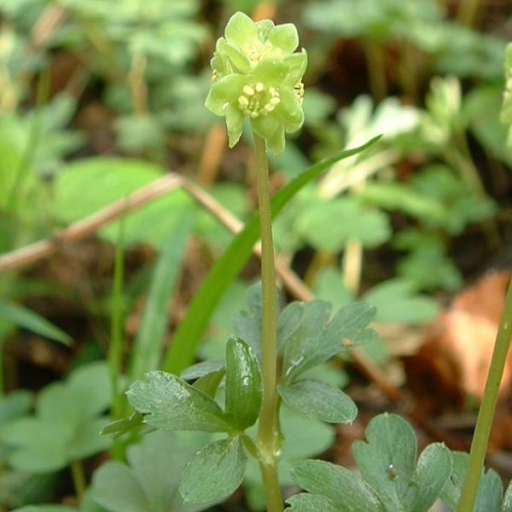
Plant Overview
Often called the Townhall Clock or the Five-faced Bishop, this shy woodland treasure is one of nature’s most charming miniatures. While it is easily overlooked due to its tiny size and green-on-green color palette, it carries a delicate, musk-like scent when dampened by morning dew. It is a true "botanical loner," historically recognized as the only species in its genus, perfectly adapted for the quiet shadows of ancient forests.
🔍 How to Identify
- 🌸 The "Clock" Flower: The most striking feature is its cube-shaped flower head. It typically consists of five tiny lime-green flowers: four facing the cardinal directions (North, South, East, West) and one pointing directly at the sky.
- 🌿 Lacy Foliage: The leaves are light green, thin, and divided into three-lobed leaflets, often resembling a much smaller, more delicate version of a Buttercup leaf.
- 📏 Low Profile: This plant is a true ground-hugger, rarely reaching more than 10 centimeters in height, making it a master of camouflage against the mossy forest floor.
🌲 Habitat & Ecology
- 💧 Woodland Specialist: In the wild, it thrives in damp, shaded hedgerows and deciduous woodlands. It loves "humus-rich" soil—the dark, crumbly earth formed by centuries of fallen leaves.
- ⏳ Spring Ephemeral: This plant is a "here today, gone tomorrow" species. It emerges early in the spring to soak up sunlight before the trees grow their leaves, but by mid-summer, the entire plant turns yellow and retreats completely underground.
- 🐌 Surprising Pollinators: Because its flowers are so small and close to the damp ground, it is often pollinated by crawling insects like flies and even tiny snails or slugs.
⚠️ Safety & Toxicity
- ✅ Low Risk: Adoxa moschatellina is not known to be toxic to humans or common household pets.
- 🌿 Skin Sensitivity: While not poisonous, its sap can occasionally cause mild irritation for those with very sensitive skin. As with any wild plant, it is best admired with the eyes rather than the taste buds.
✨ Fun Fact
The name "Five-faced Bishop" comes from the flower’s resemblance to a traditional four-sided ecclesiastical hat (the biretta), with the fifth flower on top acting as a "hidden" face looking up toward the heavens.

Detailed Care Instructions
To grow Adoxa Moschatellina, also known as musk root, follow these steps:
- Choose the right location: Adoxa Moschatellina prefers damp, shady areas such as woodland slopes or the edge of streams. It thrives in cool, moist conditions.
- Prepare the soil: The soil should be well-draining and rich in organic matter. Amend the soil with compost if needed to improve its texture and fertility.
- Sow the seeds: Adoxa Moschatellina can be grown from seeds. Sow the seeds in early spring or fall, scattering them over the prepared soil. Ensure that they are well-spaced as the plants require room to grow.
- Moisture: Keep the soil evenly moist but not waterlogged. Water the plant regularly, especially during dry spells. Mulching around the plants can help retain moisture.
- Shade: Provide shade to the plants by planting them in a location with dappled sunlight or in an area with filtered light.
- Maintenance: Remove any weeds or competing plants from the growing area to help Adoxa Moschatellina establish successfully. Avoid using herbicides or pesticides that can harm the delicate plant.
- Patience: Adoxa Moschatellina is a slow-growing perennial herb, so be patient as it takes time to establish and grow. It may take several years for the plant to reach maturity.
- Propagation: Adoxa Moschatellina can also be propagated by dividing the plants. Dig up the clumps and carefully separate them, replanting them in desired areas.
Remember that Adoxa Moschatellina is a rare plant and may not be readily available commercially. You may need to source the seeds or plants from specialized nurseries that specialize in native or rare species.

Place in a bright room that is sun drenched almost all day. Or directly in a south-facing window.

Adoxa Moschatellina is a delicate and small plant that requires careful attention when it comes to watering. When you water this plant, you must use a gentle hand to avoid damaging the stems and leaves.
To water Adoxa Moschatellina, use a small watering can or a spray bottle that has a fine mist. You should only water the plant when the soil is dry to the touch. Avoid overwatering, as this can cause the roots to rot.
When watering, aim the water at the base of the plant and let it settle into the soil. Be sure to avoid getting water on the leaves and stems, as this can cause damage and lead to fungal growth.
In addition to watering, it is important to ensure that Adoxa Moschatellina is planted in well-draining soil. This will prevent water from pooling around the roots, which can also cause damage.
Overall, watering Adoxa Moschatellina requires a careful and gentle touch. By paying close attention to the plant's needs and avoiding overwatering, you can help ensure that it thrives in your garden or home.
To fertilize this plant, you should use a balanced fertilizer with equal amounts of nitrogen, phosphorus, and potassium. Apply the fertilizer once per month during the growing season, following the instructions on the packaging for the proper amount. It is important to water the plant well before and after fertilizing to prevent burning the roots.
The most suitable type of soil for the Adoxa Moschatellina plant is a well-draining, humus-rich soil that is moist but not waterlogged. It should ideally have a pH level that is slightly acidic to neutral. The soil should be kept consistently moist but not wet, as overly wet soil can lead to root rot and other fungal diseases. Additionally, the Adoxa Moschatellina plant prefers soil that is slightly cool, so it should be kept out of direct sunlight and in a cool, shady location if possible. Regular fertilization with a balanced, water-soluble fertilizer can help keep the plant healthy and thriving.
There is a plant species that belongs to the Adoxaceae family, and its scientific name is Adoxa Moschatellina. This plant propagates very easily through its rhizomes. It is an herbaceous perennial plant that grows up to 10 cm in height. The plant's main characteristic is a small, greenish-yellow flower that resembles a small star.
To propagate this plant, first, locate a healthy specimen that you wish to divide. Dig up the plant in the fall when it's dormant, so it is easier to work with. Carefully separate the roots and rhizomes from the main plant, making sure each division has at least one or two stems and several roots. Plant each division into well-draining soil, ensuring that the crown of the plant is level with the soil surface. Water the divisions thoroughly and let them establish in their new location.
Alternatively, the plant can also self-seed very easily. As the plant begins to die back in the summer, it will produce small seeds that fall to the ground. These seeds can germinate the following spring and produce new plants. Collect the seeds before they fall to the ground if you wish to plant them elsewhere.
With proper care, propagation of Adoxa Moschatellina can be very successful, and both division and seed propagation can quickly result in establishing a beautiful display of this plant.








