Plant Overview
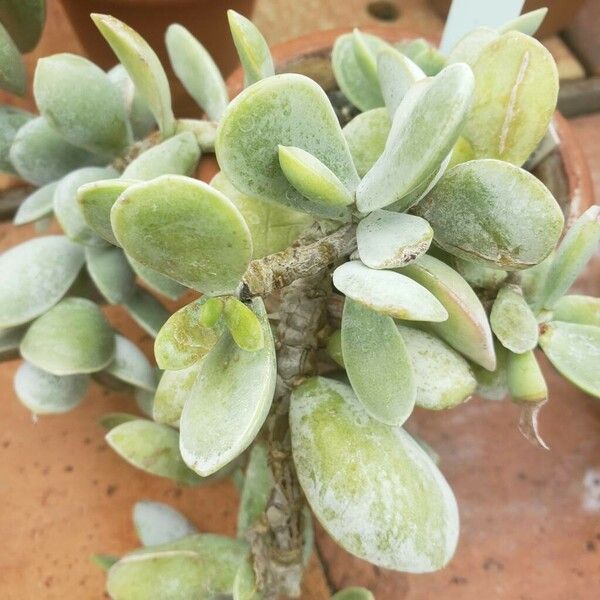
Known as the "White-leaved Adromischus" or sometimes "Silver Hearts," this South African succulent looks like it was sculpted from frosted glass or sea-polished pebbles. This slow-growing gem belongs to the Crassulaceae family and is famous for its ghostly, ethereal glow that stands out in any succulent collection.
🔍 How to Identify
- ☁️ Powdery Leaves: The leaves are thick, plump, and spade-shaped, covered in a dense, chalky white coating called farina.
- 🌸 Subtle Blooms: It produces tall, thin flower stalks with tiny, tubular greenish-white flowers that appear in mid-summer.
- 📏 Compact Stature: It rarely grows taller than 4–6 inches, instead forming tight, clumping mounds that hug the soil surface.
🏡 In Your Garden
- ☀️ Sunscreen Specialist: That thick white powder isn't just for looks; it acts as a natural SPF, reflecting intense sunlight to keep the plant cool in its native arid habitats.
- 💧 The "Hands-Off" Rule: This plant has a very shallow root system and is prone to rot. It thrives in gritty, mineral-heavy soil and prefers to be ignored rather than over-tended.
- 🚫 Fingerprint Warning: Avoid touching the leaves! The white coating does not grow back once rubbed off, leaving permanent dark "fingerprints" that can ruin its pristine appearance.
⚠️ Safety & Toxicity
- ✅ Status: Generally considered non-toxic.
- 🐾 Details: While not known to be poisonous to cats, dogs, or humans, the leaves are brittle and can snap off easily if bumped by curious pets or toddlers.
✨ Fun Fact
The name leucophyllus is derived from the Greek words leukos (white) and phyllon (leaf). In the wild, these plants often grow in the crevices of rocks, where their white color helps them blend into quartz-rich soil to hide from hungry herbivores!

Detailed Care Instructions

Place in a bright room that is sun drenched almost all day. Or directly in a south-facing window.

When the top few inches of soil dry out, water your plants. If the top few inches of soil are still moist, do not water your plant. Wait a few days, then poke your finger into the soil to see if anything has changed. Overwatering poses a disease risk, such as the development of fungal diseases in the roots. These plants have adaptations in there leaves that allow them to survive in low water supply.








