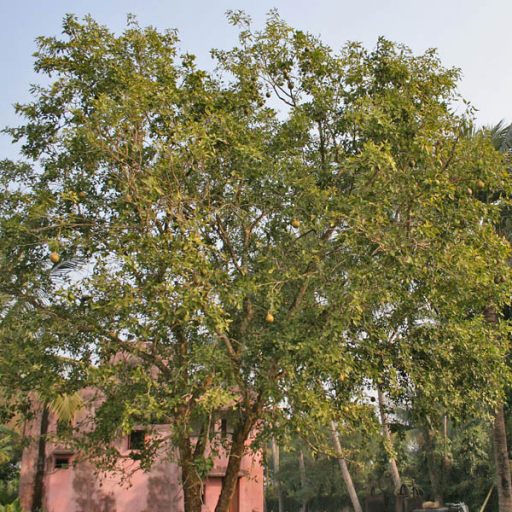
Plant Overview
Known as the "Bael" or "Stone Apple," Aegle marmelos is far more than just a fruit tree—it is a sacred icon across the Indian subcontinent. Often called the "Bengal Quince," this tree is deeply rooted in ancient folklore and Ayurvedic medicine, prized for its cooling fruit pulp and fragrant, trifoliate leaves. It is a rugged survivor, capable of thriving in harsh conditions where other trees might falter.
🔍 How to Identify
- 🍃 Sacred Foliage: The leaves are distinctive, usually growing in clusters of three (trifoliate). This "triplet" shape is why the tree is spiritually associated with the Hindu trinity.
- 🪵 The "Stone" Fruit: It produces large, globe-shaped fruits with a greyish-yellow shell that is so hard it often requires a hammer or a stone to crack open.
- ⚔️ Hidden Thorns: The branches are armed with sharp, solitary thorns that grow alongside the leaves, serving as a natural defense mechanism.
- 🌸 Sweet Scent: During the blooming season, the tree produces small, greenish-white flowers that emit a honey-like fragrance.
🏡 In Your Garden
- ☀️ Sun Seeker: This tree is a true worshiper of the sun. It thrives in intense heat and full light, making it an excellent choice for open, sunny spaces in tropical or subtropical climates.
- 🧊 Taproot Sensitivity: Bael trees develop a deep, aggressive taproot early in life. Because of this, they "hate" being moved. If you are planting one, ensure you choose its permanent location carefully, as transplanting an established tree often leads to failure.
- 🪴 Soil Adaptability: It is famously unfussy about soil. Whether your ground is slightly acidic, alkaline, or poor in nutrients, the Bael tree will likely find a way to grow, provided the drainage is good.
⚠️ Safety & Toxicity
- 🛡️ Physical Hazard: While the plant is non-toxic and the fruit is highly nutritious, the primary danger comes from the thorns. These are long and needle-sharp, posing a puncture risk to children and pets.
- 🍎 Edibility Note: The aromatic pulp is edible and used for "Bael Pana" (a refreshing drink). However, the seeds and the thick mucilage surrounding them can be slightly irritating to some people's digestive systems if consumed in large quantities.
- 🐶 Pet Safety: The tree is generally considered safe for pets, though the hard shell of the fallen fruit could become a choking hazard or cause dental damage if a dog tries to chew through it.
✨ Fun Fact
In Hindu mythology, the Bael tree is believed to be the residence of the Goddess Lakshmi. Its leaves are so sacred to the God Shiva that it is said that offering a Bael leaf with devotion is equivalent to performing a thousand years of penance.

Detailed Care Instructions
| Humidity | Normal |
| Lighting | Full Sun |
| Toxicity | Poisonous |
| Difficulty | Medium |
| Hibernation | Cold Period |
| Temperature | 22°C - 45°C |
| Hardiness Zones | 10 - 12 |
To grow an Aegle marmelos (or Bael) plant, you can follow these steps:
- Obtaining seeds: Collect ripe fruits from an Aegle marmelos tree, or purchase seeds from a reputable nursery or online store.
- Seed preparation: Soak the seeds in water for 24 hours to enhance germination. Change the water daily.
- Pot selection: Choose a pot with good drainage holes and fill it with well-draining soil. Clay or terracotta pots are recommended.
- Planting: Plant the soaked seeds about 2-3 inches deep in the soil. Water gently after planting.
- Location: Aegle marmelos thrives in full sun, so choose a sunny spot for your plant. It can tolerate partial shade, but it may affect the growth and fruiting.
- Watering: Keep the soil consistently moist, but not waterlogged. Water the plant regularly, checking the soil moisture levels before watering each time.
- Fertilizing: Apply a well-balanced, slow-release organic fertilizer once every three months to provide essential nutrients to the plant.
- Pruning: Prune the tree regularly to maintain its size and shape. Remove any dead, diseased, or crowded branches.
- Pest control: Aegle marmelos can be susceptible to pests like aphids or mealybugs. Monitor your plant regularly and use organic pest control methods if necessary.
- Harvesting: Depending on the climate, it may take several years for the plant to mature and bear fruit. Harvest the ripe fruits when they turn yellow and have a pleasant aroma.
Remember, Aegle marmelos is a tropical tree, and its growth may be limited in colder climates. Provide adequate care and patience, as it can take several years for the plant to reach maturity and start producing fruits.

Place in a window with dappled sun or a spot in the middle of a room. Or directly in a window facing west or east.

To water the plant, use a watering can or hose to gently pour water at the base of the plant, taking care not to wet the leaves. Water the plant deeply, ensuring that the water reaches the roots. Wait for the soil to dry out slightly before watering again, as overwatering can lead to root rot. During the hot summer months, the plant may require more frequent watering, but be careful not to waterlog the soil. It's also important to ensure proper drainage to prevent water from sitting in the soil.
To fertilize the Aegle Marmelos plant, begin by selecting an appropriate fertilizer that is rich in organic matter and nutrients. Dilute the fertilizer in water according to the manufacturer's instructions.
Apply the fertilizer mixture to the soil around the base of the plant. Take care not to get any fertilizer on the leaves or stem of the plant, as this can cause damage.
Repeat the fertilization process every two to three weeks during the growing season. In the dormant season, reduce the frequency of fertilization to once a month.
Monitor the plant's growth and adjust the fertilization schedule as needed. Over-fertilization can lead to excess foliage growth at the expense of fruit production, so it's important to find the right balance.
In addition to fertilization, make sure the plant is getting adequate water, sunlight, and other nutrients to ensure healthy growth and fruit production.
Aegle marmelos plant grows well in well-draining soil that is slightly acidic with a pH level of 5.5 to 7.5. The soil needs to be rich in nutrients and organic matter, and it should retain moisture without becoming waterlogged. The texture of the soil should be loamy, with good aeration and drainage to prevent waterlogging. It is also important to ensure that the soil is not contaminated by pollutants, as it can affect the health of the plant. An ideal soil mixture for Aegle marmelos plant can be created by combining garden soil with peat moss, perlite or vermiculite, and compost or well-rotted manure. The ratio of these ingredients can vary depending on the soil type and conditions of the growing environment. Proper soil preparation will help the Aegle marmelos plant to develop strong roots, healthy foliage, and abundant fruit production.
Propagation of this plant can be done through seeds or cuttings. For seed propagation, the seeds should be soaked in water for a few hours before sowing them in a well-draining soil mix. The soil should be kept moist, and the seeds should germinate in 2-3 weeks. Once the seedlings have grown, they can be transplanted into individual pots or directly into the garden.
For cutting propagation, stem cuttings of about 6 inches in length should be taken from the mature plant and dipped in rooting hormone. The cuttings should be planted in a well-draining soil mix and kept in a shaded area. They should be watered regularly and misted occasionally to keep the humidity levels high. The cuttings should root in 4-6 weeks and can then be transplanted into individual pots or directly into the garden.
Propagation of this plant can also be done through air layering, which involves creating a small cut in the stem and wrapping it with moist moss or soil mix. The cut portion should be kept moist, and roots should develop in 6-8 weeks. The rooted portion can then be cut off and planted in soil.
Common pests of the bael fruit include Scale insect, mealybugs, spider mites, aphids. Make a habit of checking your bael fruit frequently for pests so that any infestations can be caught and managed early.








